Women's Organic Cotton Sleepwear Guide
The whole certified sleep wardrobe in one place — nightgowns, sets, sleep shirts, robes and separates in organic cotton for every season.
Shop Women's Organic Cotton Sleepwear Now
Shop Women's Organic Cotton Sleepwear on Amazon Shop Women's Organic Cotton Sleepwear on eBayThe Amazon and eBay links on this page are affiliate links. If you make a purchase through them, Apparel Search may earn a commission.
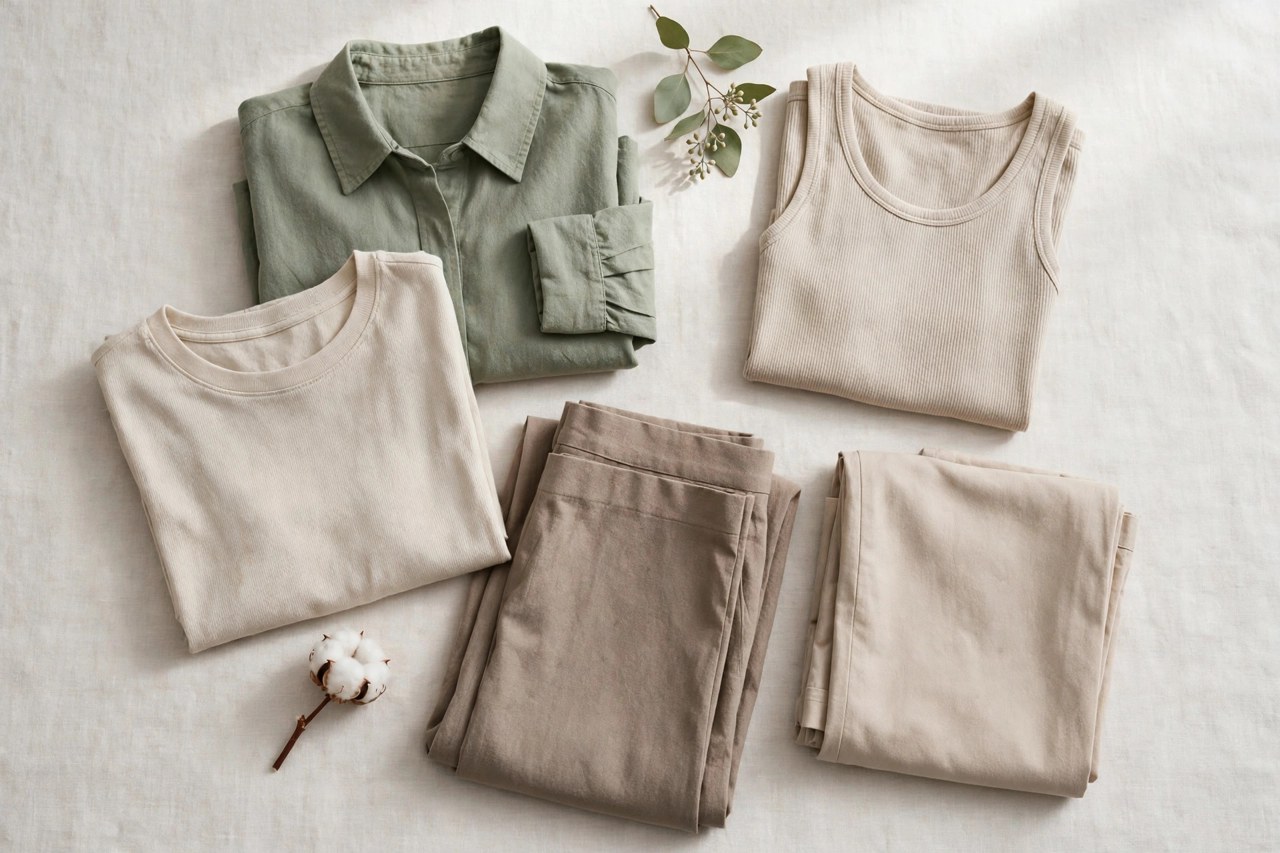
Organic sleepwear is the umbrella category for everything certified-organic that is made for bed: pajama sets, nightgowns and nightdresses, sleep shirts, robes, chemise-style slips for sleeping, and mix-and-match separates such as sleep pants and camisoles. This guide maps that whole territory, which is deliberately broader than the companion organic pajamas page — that page narrows in on matched sets alone. Thinking in umbrella terms helps because most sleep wardrobes are mixed: a gown for summer, a jersey set for spring, flannel for winter, and a robe across all three. The organic thread running through the category is certified fiber grown without synthetic pesticides or genetically modified seed, processed under standards such as GOTS that restrict dye and finish chemistry. For garments worn all night against the skin, those processing rules and the natural softness of well-combed organic cotton are the core reasons shoppers seek the category out.
The Category, Piece by Piece
Nightgowns are the oldest form in the group, ranging from simple knee-length jersey shifts to long woven lawn gowns with gentle gathering; they offer airflow and no waistband at all, which some sleepers strongly prefer. Pajama sets add the structure of a coordinated top and bottom in woven or knit cloth. Sleep shirts split the difference — a long button or pullover shirt worn on its own, popular in poplin for summer and flannel for winter. Robes in organic terry, waffle weave or jersey provide the layer for mornings and evenings rather than sleep itself, while separates let you pair sleep pants with any soft top you own. When you shop the umbrella, decide which of these roles your wardrobe actually lacks.
Certification Across the Whole Sleep Wardrobe
GOTS remains the benchmark label for sleepwear because it certifies the finished garment, including its dyes, prints and finishes, and requires at least 95 percent certified organic fiber for its top grade. Fiber-only schemes verify content without regulating the chemistry that touches your skin overnight, so they support a weaker claim. Certification applies garment by garment: a brand may certify its gowns but not its robes, so read each product's own label and license details rather than assuming a whole line qualifies. Blends deserve a glance too. A small elastane content in a jersey nightgown or waistband is normal and permitted within limits, while a robe blended heavily with conventional fibers should be priced and described accordingly.
Matching Fabrics and Weights to Your Bedroom
Season and sleep temperature should drive fabric choice more than appearance. Hot sleepers and warm climates favor woven organic lawn, voile and poplin — smooth, breathable cloths that feel cool on first contact — plus featherweight single jersey. Average sleepers live happily in midweight interlock sets and jersey gowns that layer under a robe when needed. Cold sleepers and winter bedrooms call for brushed organic flannel, the category's warmest woven option, or looped terry robes over any base layer. As a rough guide, jersey under about 170 grams per square metre reads as summer weight, interlock around 200 to 240 as three-season, and flannel as a dedicated cold-weather cloth. Cotton of every kind absorbs moisture rather than wicking it like synthetics, which most sleepers find comfortable in bed but which means very warm sleepers may prefer the airiest weaves. Expect a small first-wash shrink and buy with a relaxed, sleep-first fit.
Cost, Value and the Honest Trade-Offs
Certified sleepwear costs more because the premium accumulates across a small garment's whole journey: costlier lower-yield fiber, segregated handling, approved dye houses, inspection fees and, in better brands, fairer labor standards audited under the same certification. Nightgowns and robes, which use flowing yardage, show the premium most clearly. The trade-offs should be stated plainly: organic production reduces synthetic pesticide and fertilizer use and restricts processing chemicals, but cotton remains water-intensive in dry regions and lower yields can increase land use per garment. Durability is where a purchase earns its footprint back — a gown washed weekly for five years has a fraction of the per-wear impact of a flimsy piece replaced twice a year. Judge value by seam quality, fabric substance, opacity and waistband or strap construction, and let certification confirm the chemistry story rather than substitute for garment quality.
Building and Caring for an Organic Sleep Wardrobe
A workable rotation is smaller than most shoppers expect: one warm-weather piece, one cold-weather piece, one three-season set and a robe covers nearly every bedroom, with a spare set for laundry days if you wash weekly. Buy the piece you will wear most in the best quality you can afford, and let sales fill secondary roles. Care is uniform across the umbrella: wash cool or warm with mild detergent, avoid chlorine bleach and heavy softener coatings, dry low or on a line, and store fully dry and folded or hung by inner loops. Wash new pieces before first wear to remove any transit finishes and to settle shrinkage before judging fit. Treated this way, organic sleepwear keeps the gentle hand-feel that made it appealing and justifies choosing certified cotton for the third of life spent asleep.
More to Explore on Apparel Search
- about sleepwear
- Clothes
- Cotton
- Cotton Definition
- Cotton News
- Organic Clothing
- Organic Cotton
- Women's Cotton Clothing
- Women's Cotton Sleep Shirts
- Women's Organic Cotton Clothing
- Women's Organic Cotton Fashion
- Women's Organic Cotton T-shirts
- Women's Organic Cotton Tees
- Women's Organic Cotton Womenswear
- Women's Organic Fashion
Photos From Our Original Guide

Looking for Women's Clothing Stores?
This guide helps you choose women's organic cotton sleepwear across gowns, sets and robes. To browse where to buy, visit our women's clothing store directory, where you can find retailers that carry them.