Women's Organic Cotton T-Shirts Guide
The basic tee, certified — plain crew and V-neck staples in organic jersey, and exactly what the premium buys over a conventional basic.
Shop Women's Organic Cotton T-Shirts Now
Shop Women's Organic Cotton T-Shirts on Amazon Shop Women's Organic Cotton T-Shirts on eBayThe Amazon and eBay links on this page are affiliate links. If you make a purchase through them, Apparel Search may earn a commission.
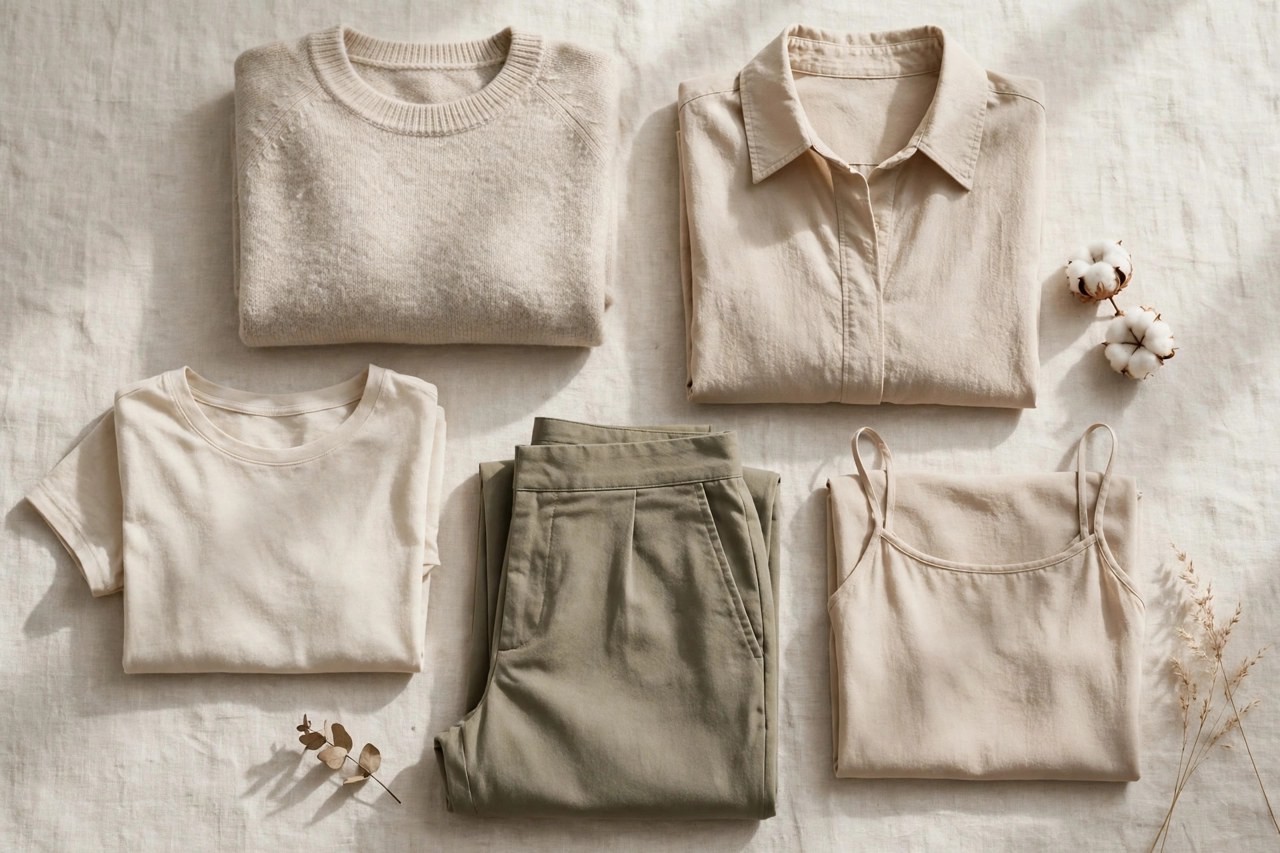
An organic cotton T-shirt, as this guide uses the term, is the basic tee: a plain, hard-working wardrobe staple in crew-neck or V-neck form, cut straight or with gentle shaping, made to be worn on its own, layered under everything, and replaced without ceremony when its years are up. That basic-first definition matters because the companion organic tees page covers the styled, fashion-led side of the same cloth — fashion drape, prints and dressed-up cuts. An organic basic starts with cotton grown without synthetic pesticides or genetically modified seed, knitted into jersey and, at its best, certified at garment level under GOTS so dyes and finishes are regulated too. The sections below answer each staple question in turn, with the trade-offs stated plainly.
Certification on a Basic: What to Check
Start with the label hierarchy. GOTS-certified organic on the finished shirt — at least 95 percent organic fiber, regulated dyeing and finishing, and a license number you can verify — is the complete claim. Fiber-only verification confirms the cotton was organic but says nothing about the dye house, and a vague organic-style or eco-cotton headline with no standard named is marketing, not certification. On a basic tee the composition should be simple: 100 percent organic cotton for classic cuts, or a small elastane share, typically up to five percent, in fitted styles for shape recovery, which certification permits within limits. Side seams versus tubular knitting, a ribbed collar with a touch of elastane or a self-fabric band, and taped shoulder seams are the construction markers that predict whether the shirt keeps its shape.
Hand-Feel and Durability Versus Conventional Jersey
Shoppers often report that organic tees feel softer, and there is a physical basis beyond suggestion: organic lines frequently use combed, longer-staple cotton and skip the harsh scouring, resin finishes and heavy silicone softeners common in fast basics, so the fiber's natural smoothness survives to the rail. Weight is the more reliable guide: lightweight jersey near 140 to 160 grams per square metre drapes and breathes for summer and layering, midweight cloth around 180 to 200 holds opacity and shape for standalone wear, and the two behave differently regardless of certification. Durability is a draw when cloths are comparable: the same strong yarn and dense knitting last, the same skimpy jersey twists and thins. Expect slightly more shrinkage from organic basics, commonly three to five percent, because anti-shrink resins are usually absent; buying your true size with a relaxed fit absorbs it comfortably.
Why a Plain Shirt Costs More
A basic tee shows the organic premium at its starkest, because there is no design work to hide inside the price. The costs are upstream: organic fiber commands a higher price per kilo thanks to lower yields, costlier approved inputs, certification fees and the expense of keeping organic lots separate through ginning, spinning, knitting and dyeing. Approved dyes and audited factories add more, and basic tees are produced in huge conventional volumes whose economies of scale organic runs rarely match. What the premium buys, verifiably, is farming without synthetic pesticides or fertilizers, regulated processing chemistry against your skin, and traceability from a named standard. What it does not buy automatically is thicker cloth or better sewing, which is why comparing fabric weight and construction between a certified basic and a premium conventional basic is the fairest test. Environmentally the picture is mixed, as with all cotton: cleaner inputs, yet still a thirsty crop with land-use costs. The premium makes most sense on the white, black and grey staples you will wear a hundred times each.
Choosing the Staple: Neckline, Fit and Color
Build the basic rotation deliberately. A crew neck is the most versatile neckline, sitting cleanly under jackets and sweaters and standing alone without fuss; a V-neck lengthens the neckline and layers smoothly under open shirts and cardigans. Fit should skim rather than cling for a true basic, with enough length to tuck or leave out and sleeves that end mid-upper-arm without binding. Because organic basics shrink a touch and soften with washing, judge fit after imagining one wash rather than demanding perfection off the rail. Color strategy is simple: white, black, navy and a soft grey or natural ecru cover nearly every outfit a basic is asked to support, and undyed ecru has the quiet bonus of no dye chemistry at all.
Care That Protects a Simple Shirt
Basics earn their keep through the wash, so care habits decide their lifespan. Wash organic tees in cool or warm water with similar colors, inside out to protect the face of the jersey, and avoid chlorine bleach, which yellows whites and weakens the fiber. Tumble dry low or line dry: line drying is gentler on both the cotton and the planet, and organic jersey without resin finishes relaxes into softness naturally after a shake, no softener required. Fold rather than hang to prevent shoulder stretch in knits. Treat stains promptly with an oxygen-based remover, and expect natural and lightly dyed shades to mellow gradually — a graceful fade most wearers accept as part of organic basics' character. A staple bought well and washed kindly commonly gives several years of weekly wear, which is exactly the service on which its certification premium was justified.
More to Explore on Apparel Search
Photos

Looking for Women's Clothing Stores?
This guide helps you choose women's organic cotton T-shirts as basic certified staples. To browse where to buy, visit our women's clothing store directory, where you can find retailers that carry them.