Women's Crew Neck Cotton T-Shirt Guide
The original T-shirt neckline — a round ribbed collar, a clean line, and a place in every wardrobe since the beginning.
Shop Women's Crew Neck Cotton T-Shirts Now
Shop Women's Crew Neck Cotton T-Shirts on Amazon Shop Women's Crew Neck Cotton T-Shirts on eBayThe Amazon and eBay links on this page are affiliate links. If you make a purchase through them, Apparel Search may earn a commission.
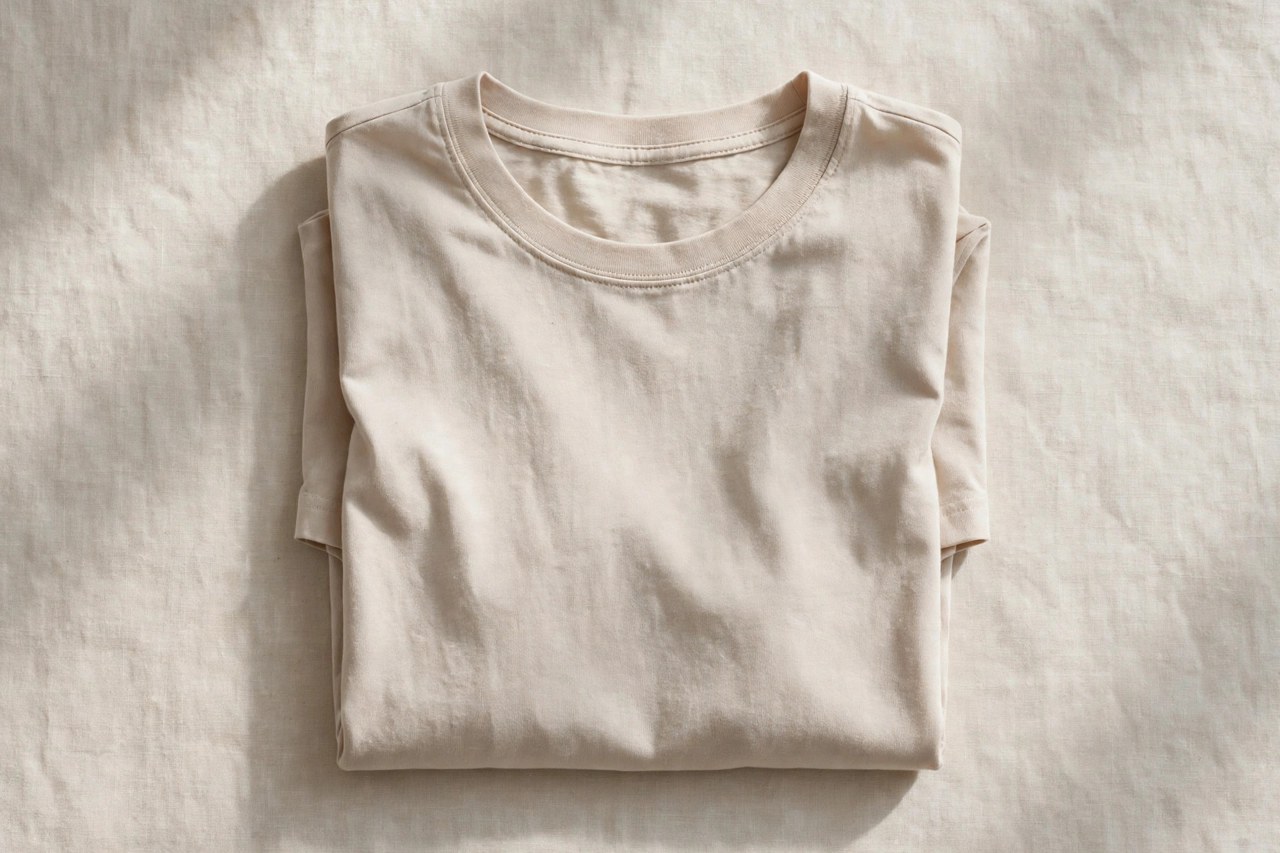
Every T-shirt silhouette in the drawer descends from the crew neck. Named for the round necklines of rowing crews, the crew neck cotton T-shirt is the classic basic garment in its purest form: a body of cotton jersey finished with a close-fitting ribbed collar that sits at the base of the neck. This page is deliberately about the basic version — the dependable staple judged on collar quality, honest fit, and longevity. Its styled sibling, the crew neck tee, has its own page covering fashion drape and outfit building; the split matters because the two garments are bought for different reasons. Here, the questions are practical ones. What makes one collar stay crisp for years while another sags into a wavy ring by June? How should a classic crew fit through the shoulder and body? And which colours and weights make a crew-neck basic earn its keep across the widest range of outfits in a real wardrobe?
The Collar: Ribbing That Lasts
The collar is the crew neck's signature and its most common failure point, so it deserves first attention. A good crew collar is cut from rib knit, often with a small percentage of elastane blended in, giving it the stretch to pass over the head and the recovery to spring back flat against the neck. Width matters: a band roughly one and a half to two centimetres wide holds its shape and looks classic, while very narrow bands curl and very wide bands read as sportswear. The join matters too. Better shirts attach the collar with a cover-stitched seam and a reinforcing tape running across the back neck and shoulders, which stops the neckline stretching into an oval over time. Test a collar in the shop by stretching it gently sideways and releasing: it should return to a smooth circle with no ripples.
Classic Fit Through Shoulder and Body
A classic crew-neck basic follows a settled pattern: shoulder seams at the natural shoulder, sleeves ending mid-bicep, a body with modest ease that skims rather than clings or billows, and a straight hem around the hip. That template endures because it tucks cleanly, layers invisibly, and suits the widest range of figures without trend risk. Within it, small variations help different bodies. Curvier figures often prefer a body with slight side shaping so the hem does not flare stiffly over the hips. Straighter figures can wear the classic straight cut exactly as designed. Length is the fit detail women most often get wrong: for tucking, choose a body that reaches at least mid-hip so the tuck survives movement; for wearing loose over leggings, a longer tunic length is a different garment and should be bought deliberately as one.
Why the Basic Crew Works Everywhere
The crew neck's closed, round line is what makes it the most layerable neckline ever designed. It fills V-neck sweaters and cardigans neatly, sits under blazers and shirt collars without competing, and frames the face in a way that accepts jewellery from fine chains to statement pieces placed above or below the collar. Worn alone, it is the neutral canvas of casual dressing: with denim it is timeless, with a printed skirt it calms the pattern, with tailored trousers and smart shoes it delivers the clean contrast modern smart-casual dressing runs on. The basic crew also crosses seasons without help — sleeves roll for warmth, a crew under an open overshirt handles spring, and the same shirt anchors winter layering. No other neckline covers this much ground, which is why wardrobe audits consistently find the crew neck basic at the top of cost-per-wear tables.
Staple Colours and Weights for Basics
Basics are bought to disappear into outfits, so colour discipline pays. White is the essential crew — and the most demanding, since it shows wear first; in white, choose midweight or heavyweight cotton for opacity and consider owning two in rotation. Black is the second essential, fading gradually to charcoal over years of washing, which many women embrace as a softer look rather than a flaw. Navy, heather grey, and a warm neutral such as stone or taupe complete a five-shirt foundation that covers nearly every bottom in a typical wardrobe. Weight follows the same foundation logic: midweight jersey around 150 to 180 GSM is the all-purpose choice, opaque enough solo and slim enough to layer. Reserve lightweight crews for dedicated under-layer duty and heavyweight crews for standalone wear in cooler months.
Care That Keeps a Basic Looking Basic
A basic only works if it stays looking crisp, and crew necks show neglect at the collar and underarms first. Wash crews inside out in cool water with similar colours, buttoning nothing and zipping neighbouring garments so hardware cannot snag the jersey. Underarm marks respond best to prompt treatment — a paste of bicarbonate of soda or a dedicated stain treatment before washing — because set marks on white cotton are stubborn. Avoid the hottest dryer cycle, which attacks both the collar's elastane and the body's length; a medium dry or line dry preserves the dimensions you bought. Fold crews rather than hanging them, since even midweight jersey gradually lengthens on hangers. Pilling at the sides, where bags and seatbelts rub, tidies in a minute with a fabric shaver.
More to Explore on Apparel Search
Photos

Looking for Women's Clothing Stores?
This guide helps you choose women's crew neck cotton T-shirts the classic wardrobe basic. To browse where to buy, visit our women's clothing store directory, where you can find retailers that carry them.