Women's Cotton Jersey T-Shirts Guide
Single jersey is the cloth behind nearly every T-shirt — here is how the knit is made, how it stretches, and how to spot a good one.
Shop Women's Cotton Jersey T-Shirts Now
Shop Women's Cotton Jersey T-Shirts on Amazon Shop Women's Cotton Jersey T-Shirts on eBayThe Amazon and eBay links on this page are affiliate links. If you make a purchase through them, Apparel Search may earn a commission.
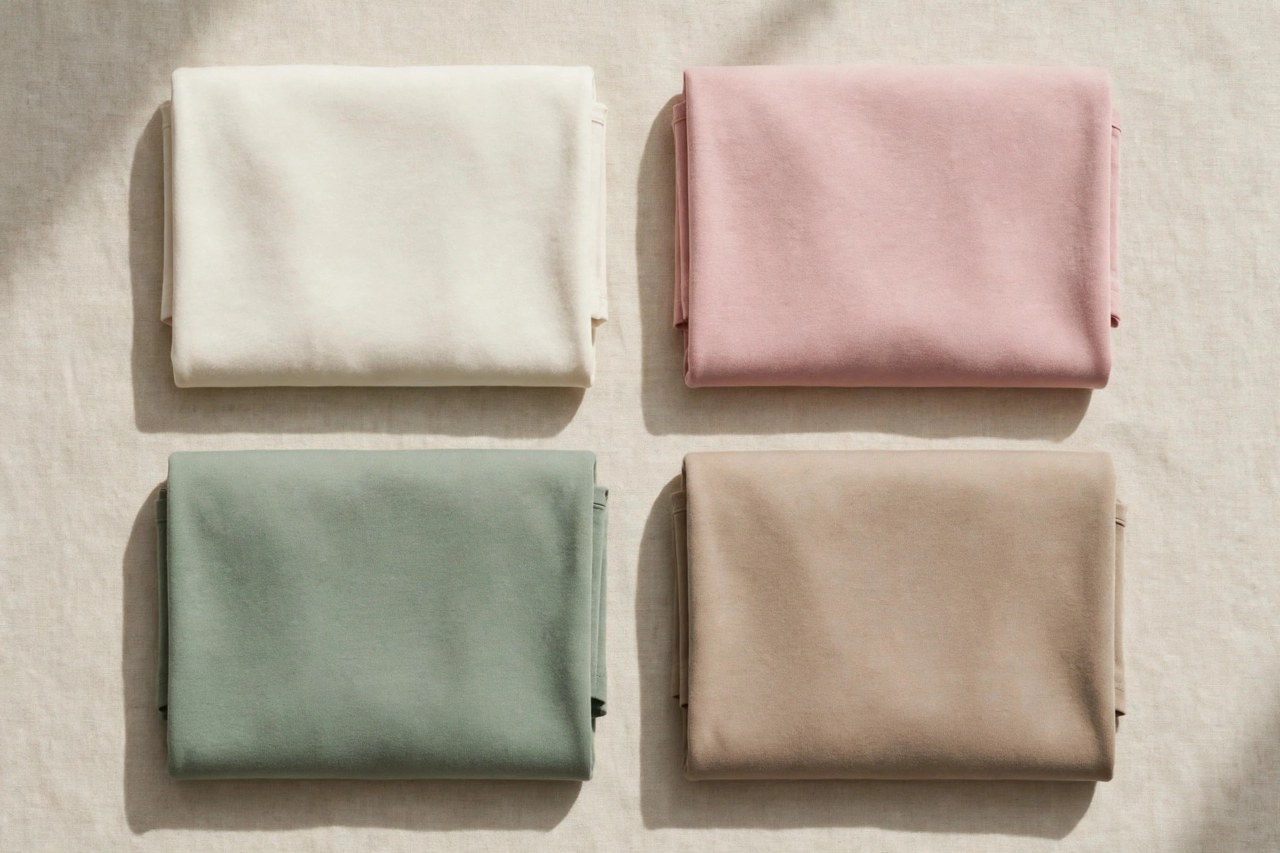
Every T-shirt you own is almost certainly made of jersey, yet the word rarely gets explained. Jersey is not a fibre and not a finish; it is a knit structure, a single set of yarns looped through each other in rows, which is why jersey T-shirts are sometimes labelled single jersey. That looped construction is what gives the cloth its natural give, its soft hand, and its tendency to curl at cut edges. This page is about the knit itself: how single jersey differs from its cousins interlock and rib, what slub jersey does differently, why some jersey springs back after stretching and some bags out, and how weight and yarn quality show up in a finished shirt.
Single Jersey: How the Knit Works
Single jersey is knitted on one set of needles, producing a fabric with a distinct face and back: smooth vertical ribs on the front, small horizontal arcs on the reverse. Because only one yarn system is at work, single jersey is the lightest and most economical T-shirt cloth, and it stretches more across its width than along its length. That crosswise stretch is why a jersey shirt moves comfortably over shoulders and bust without woven-style darts. The trade-offs are known to every maker: raw edges curl toward the face, thin jerseys can ladder if a loop breaks, and the knit can skew — twist around the body — if it was not properly relaxed and finished before cutting. Good manufacturers rest the fabric, cut carefully on grain, and stabilise shoulder seams with tape so the finished shirt hangs straight wash after wash.
Jersey Versus Interlock and Rib
Interlock is jersey's sturdier sibling: two sets of needles knit two interlocked layers, so both faces look smooth like the front of single jersey. The result is thicker, more opaque, less stretchy, and far less prone to curling, which is why interlock is chosen for polo-style collars, smarter T-shirts, and any shirt where a crisp edge matters. It costs more and breathes slightly less, so it appears less in summer basics. Rib knit uses alternating raised and recessed columns, giving it strong crosswise elasticity; you know it from cuffs, collars, and fitted tank tops. A shirt body in fine rib hugs and recovers beautifully but shows more texture. Pique, the dimpled knit of classic polo shirts, is another jersey relative with a more open, breathable structure.
Slub Jersey and Texture
Slub jersey is knitted from yarns that are deliberately uneven, thick in places and thin in others, producing a subtle horizontal texture and a soft, slightly heathered look even in solid colours. The irregular yarn gives slub shirts their relaxed, vintage character and excellent breathability, because the thinner sections let more air through. Slub is a deliberate aesthetic choice, not a defect, but it does come with practical notes: the thin spots wear marginally faster than even yarn, and slub shirts look best in their natural, slightly rumpled state, so perfectionists who want a glass-smooth basic should choose regular jersey instead. Texture also hides minor pilling and small marks better than flat jersey, which is one reason slub tees are travel favourites. When shopping, run your palm across the fabric; good slub feels consistently textured without rough or scratchy thick sections, and the colour should look evenly dyed despite the yarn variation underneath.
Stretch, Recovery, and the Elastane Question
Pure cotton jersey stretches because its loops change shape, but cotton has limited memory, so a pure-cotton shirt stretched hard at the neckline or hem may not fully return. Recovery improves dramatically with even two to five percent elastane in the blend, which is why many fitted jersey shirts include it: the elastane acts like a spring inside the knit, pulling loops back to shape after every wear. The choice is a genuine trade-off. Purists prefer one hundred percent cotton for its breathability, its feel, and its simpler end-of-life story, accepting gentler shaping. Women who want a close fit that survives a full day usually prefer a small elastane content. Either way, you can test recovery in the shop: stretch the fabric gently across the body of the shirt and release it. Quality jersey, cotton or blended, snaps back flat with no ripples.
Weight, Opacity, and Care for Jersey Knits
Jersey weight follows the same GSM scale as other T-shirts, but the knit makes weight feel different: a 160 GSM single jersey drapes and breathes more than a woven cloth of the same weight because air moves through the loop structure. Opacity is the key summer question, especially in white. Hold a single layer up to light; if you can clearly read shapes through it, the shirt will need a skin-tone layer beneath in bright conditions, or you should step up to a heavier jersey or interlock. Care for jersey is forgiving but not careless: wash inside out in cool water, avoid hanging wet shirts by the shoulders since water weight stretches the loops, and dry flat or tumble low. Iron on a medium setting if you like a smooth finish, though most jersey sheds wrinkles with a short hang after washing.
More to Explore on Apparel Search
- about t-shirt printing
- different types of t-shirts
- Jersey Shirts Definition
- What is Jersey?
- Women's Cotton Clothing
- Women's Cotton Hooded T-shirts
- Women's Cotton V-neck T-shirts
- Women's Crew Neck Tees
- Women's Designer T-shirts
- Women's fashion guide
- Women's jersey shirts
- Women's jersey t-shirts
- Women's Shirts
- Women's T-shirts
- Women's Tees
- Women's Tops
Photos

Looking for Women's Clothing Stores?
This guide helps you choose women's cotton jersey T-shirts by knit, weight and finish. To browse where to buy, visit our women's clothing store directory, where you can find retailers that carry them.