Women's Cotton T-Shirts Guide
The wardrobe basic done right — cotton jersey weight, neckline shape, and fit decide whether a T-shirt lasts one season or five.
Shop Women's Cotton T-Shirts Now
Shop Women's Cotton T-Shirts on Amazon Shop Women's Cotton T-Shirts on eBayThe Amazon and eBay links on this page are affiliate links. If you make a purchase through them, Apparel Search may earn a commission.
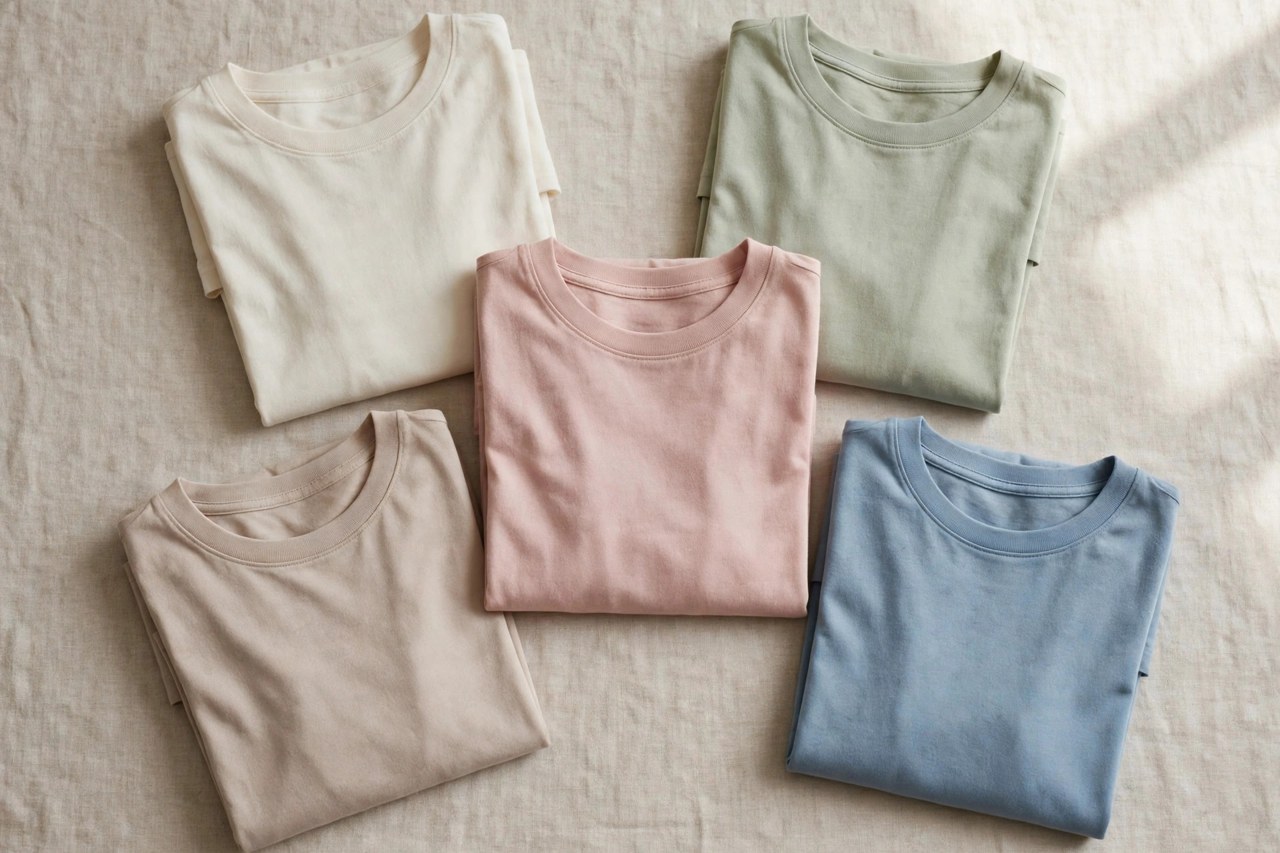
The cotton T-shirt is the most-owned garment in most women's wardrobes, and also the one bought with the least thought. Yet two shirts that look identical on a hanger can behave completely differently after ten washes: one keeps its shape and softness, the other twists, thins, and pills. The difference is almost always the cotton jersey itself — its weight, its yarn quality, and how the shirt was cut and finished. This page treats the T-shirt as what it is, a basic garment with a job to do. It covers the weights worth knowing, the necklines and fits that suit different bodies and outfits, and the small construction details that predict how a shirt will age. If you want the styled, fashion-led version of the same idea, that is the tee, covered on its own page; here the focus stays on the dependable staple.
Cotton Jersey Weights: Lightweight to Midweight
Jersey weight is measured in GSM, grams per square metre, and it is the single best predictor of how a cotton T-shirt feels. Lightweight jerseys around 120 to 150 GSM drape softly, breathe well in heat, and layer invisibly under sweaters, but they can turn sheer in white and show every wrinkle. Midweight jerseys from about 150 to 180 GSM are the classic T-shirt cloth: opaque, smooth, with enough body to hold a clean line over jeans or skirts without clinging. Most quality basics sit in this band because it balances summer comfort with year-round usefulness. Yarn matters as much as weight. Ring-spun and combed cotton use longer, smoother fibres that resist pilling and feel softer against skin, while basic carded cotton is cheaper, slightly rougher, and pills sooner.
Necklines and Fit Cuts
Crew necks are the default for a reason: the round ribbed collar sits flat, frames most faces, and works alone or under jackets. Scoop necks drop lower and feel more open, suiting warmer weather and anyone who finds a high collar restrictive. Square and boat necklines appear less often in basics but add polish without jewellery. Fit cuts divide into classic, relaxed, and fitted. A classic cut follows the body with modest ease and a straight hem, the safest choice for tucking or wearing loose. Relaxed and boxy cuts add width through the torso and drop the shoulder slightly, giving a modern, easy silhouette that pairs well with high-waisted trousers. Fitted cuts rely on side shaping or a touch of elastane to skim the waist; in pure cotton they look neat but show every layer beneath.
Staple Colours and Building a Rotation
A T-shirt rotation works best when it is built like a foundation, not a rainbow. White, black, navy, and heather grey cover the majority of outfits most women actually wear, from denim and blazers to printed skirts and work trousers. Add one soft neutral such as stone or blush and one deeper seasonal colour, and six to eight shirts will rotate for years. Cotton takes dye beautifully, which is why colours stay rich longer than on many synthetics, but dark shades will fade gradually with hot washing, so wash them inside out in cool water. Buying two of a perfect white shirt is not indulgence; white shows wear and underarm marking first, and rotating two extends the life of both.
Shrinkage, Pilling, and Everyday Care
Cotton shrinks because its fibres relax and tighten in hot water and tumble heat, typically three to five percent in length on the first wash for untreated jersey. Pre-shrunk shirts have already been through a finishing process and change far less, so check the label if exact length matters for tucking. To keep shrinkage minimal, wash in cold or warm water, avoid the hottest dryer setting, and reshape the shirt gently while damp. Pilling — the small bobbles that form where fabric rubs — is worse on short-staple cotton and in high-friction spots under arms and bag straps. A fabric shaver restores the surface in minutes. Turn shirts inside out before washing to protect the outer face, close any zips on neighbouring garments that could snag the knit, and fold rather than hang heavy wet cotton, since its own weight can stretch the shoulders out of shape on a hanger.
How to Judge Quality Before You Buy
Hold the shirt up and check that the side seams hang straight; a twisted seam after washing starts with poor cutting on the grain. The collar deserves close attention: quality ribbing contains a little elastane or is cut generously enough to recover after being pulled over the head, and it should be stitched with a cover-stitched band rather than a thin overlocked edge that curls. Shoulder seams reinforced with tape stay flat instead of wavy. Hem stitching should be even, with no skipped stitches, and the fabric should spring back when you stretch a small section gently and release it. None of this requires expertise, just thirty seconds of looking. A basic T-shirt is inexpensive, but a well-made one in good midweight cotton costs little more and outlasts three flimsy ones, which is why the humble basic rewards more scrutiny than almost any other purchase in the drawer.
More to Explore on Apparel Search
Photos


Looking for Women's Clothing Stores?
This guide helps you choose women's cotton T-shirts by weight, neckline and fit. To browse where to buy, visit our women's clothing store directory, where you can find retailers that carry them.