Women's Heavyweight Cotton T-Shirts Guide
Dense, structured, and built to last — heavyweight tees trade a little softness for opacity, shape, and years of wear.
Shop Women's Heavyweight Cotton T-Shirts Now
Shop Women's Heavyweight Cotton T-Shirts on Amazon Shop Women's Heavyweight Cotton T-Shirts on eBayThe Amazon and eBay links on this page are affiliate links. If you make a purchase through them, Apparel Search may earn a commission.
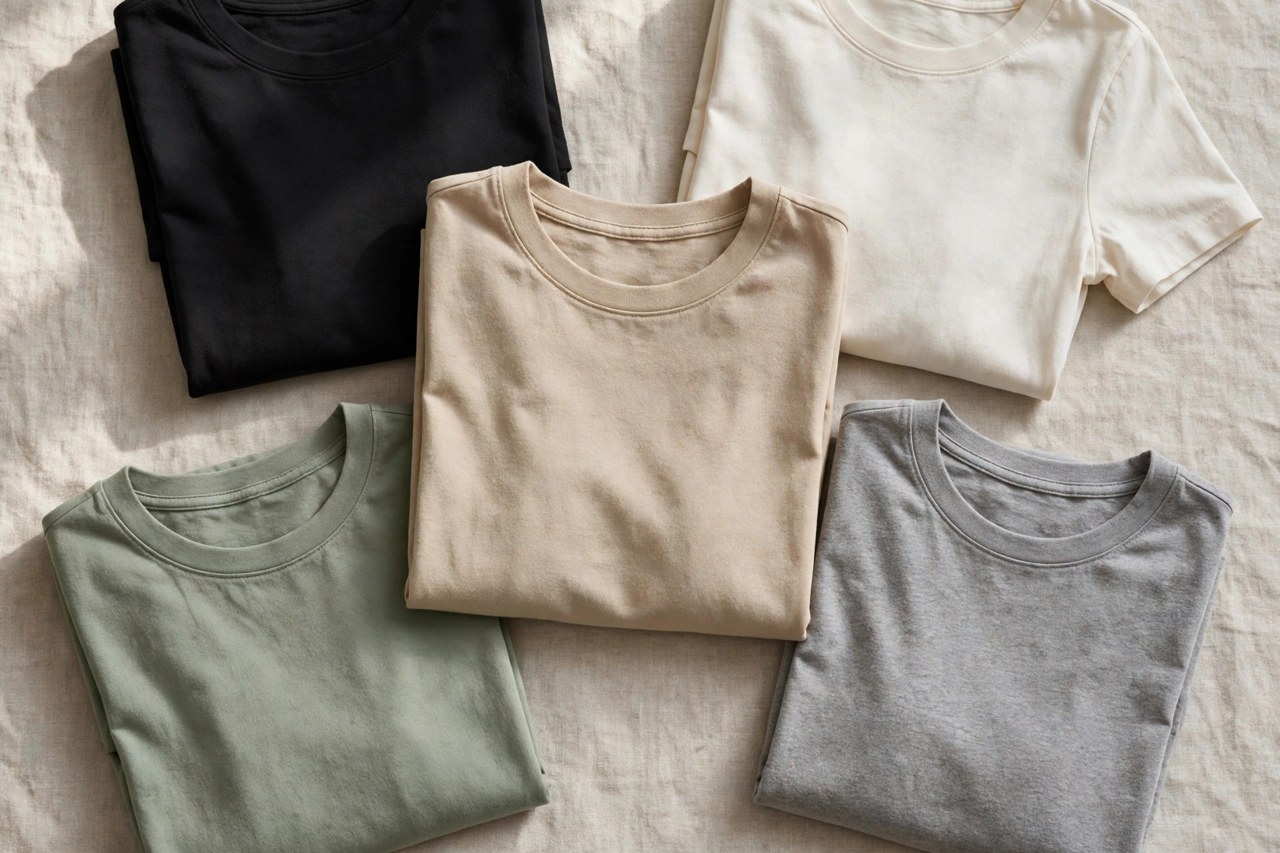
A heavyweight cotton T-shirt announces itself the moment you pick it up. The jersey is dense and dry to the touch, the shirt holds its own shape on the hanger, and light does not pass through it. Heavyweight in women's T-shirts generally means 180 GSM and above, with serious workwear-inspired versions reaching 220 GSM or more — roughly half again as much cotton per shirt as a standard basic. That extra cloth buys real things: complete opacity, a structured silhouette that skims rather than clings, collars that stay flat for years, and a lifespan measured in seasons of hard wear rather than months. The cost is equally real: heavyweight shirts are warmer, stiffer at first, and slower to dry. This guide explains where that trade-off pays off, how the boxy fits borrowed from workwear actually flatter, and how to break in and care for dense cotton so it softens without ever going limp.
What 180 GSM and Above Really Means
GSM counts grams of fabric per square metre, and at 180 plus the jersey is knitted from thicker yarns packed more tightly. You feel it as substance: the shirt drapes in heavier folds, resists wind better, and does not flutter or cling in heat the way fine jersey can. Tight knitting also changes durability. Abrasion that would thin a lightweight shirt in a year barely marks a heavyweight one, and pinholes at friction points take far longer to appear. Long-staple cotton in a heavy knit pills less too, because the longer fibres anchor more securely in the yarn. The one structural caution is weight on seams: heavy cloth pulls harder on stitching, so quality heavyweight shirts use denser stitch counts and reinforced shoulder tape.
Structure, Boxy Fits, and Workwear Roots
Heavyweight T-shirts descend from work shirts and mid-century undershirts made to be worn hard and washed hot, and their modern women's versions keep that honest, boxy architecture: straighter body, dropped or set-in shoulders with room, sleeves that end a touch longer, and a hem that sits at the hip rather than curving. The surprise for many women is how flattering that structure is. Because the cloth stands slightly away from the body, a boxy heavyweight tee skims the midsection, creates a clean line over trousers, and never outlines undergarments. Tucked fully or French-tucked at the front, the firm hem holds the tuck instead of creeping out. Boxy does not mean oversized: the right size still places the shoulder seam near your shoulder and the body width in proportion. If you size up too far, heavy cotton's stiffness turns volume into bulk.
When Heavyweight Beats Lightweight
Choose heavyweight when opacity is non-negotiable — a white heavyweight tee needs no layering camisole, which alone justifies it in many wardrobes. Choose it for cooler seasons and air-conditioned offices, where midweight jersey feels thin, and as a standalone top under open overshirts and jackets, where its structure holds an outfit together. It is also the natural pick for anyone hard on clothes: gardeners, makers, dog owners, and frequent travellers whose shirts face constant abrasion and laundering. Lightweight jersey keeps its crown in peak summer heat and as an invisible layer under knitwear, where heavy cotton would add bulk and bunch. Many women end up with both: fine jerseys for layering and heat, heavyweights as the visible, outfit-carrying shirts. Thinking of weight as a seasonal and functional tool rather than a quality ladder — heavier is not automatically better, just different — leads to far better buying decisions across the whole T-shirt drawer.
Breaking In and Caring for Dense Cotton
A new heavyweight shirt can feel almost board-like, and that stiffness is normal. It comes from tight knitting and finishing, and it relaxes over the first five to ten washes into a firm but comfortable hand that fans describe as broken-in rather than soft in the fashion-tee sense. Wash in warm water for the first cycles if the label allows, since dense cotton pre-shrunk at the factory changes little, and avoid overdrying, which bakes stiffness back in. Heavy jersey takes noticeably longer to dry than standard cloth; give it a full dryer cycle on medium or line-dry with air moving, because a half-dry heavy shirt put away damp can develop a musty smell in its folds. Ironing is rarely needed — the weight pulls most wrinkles out as it hangs — but a steam pass sharpens the collar nicely.
Colours, Longevity, and Cost Per Wear
Heavyweight cotton holds dye deeply, and dark colours — black, navy, forest, burgundy — look especially rich in dense jersey, fading slowly and evenly into the soft, washed tones that workwear fans prize. White heavyweight tees stay bright and opaque longer than any other white tee, though they still appreciate inside-out washing and prompt treatment of collar marks. Price is the honest objection: a heavyweight shirt costs more because it literally contains more cotton and takes longer to knit and sew. The arithmetic that matters is cost per wear. A heavy shirt worn weekly for four years easily undercuts three cheap shirts replaced annually, and it looks better at the end of that span than the cheap shirt looked new.
More to Explore on Apparel Search
- Clothes
- Cotton
- Cotton Definition
- Cotton News
- fabric Weight Conversion Charts
- Organic Cotton
- types of t-shirts
- Women's Cotton Clothing
- Women's Cotton Clothing Pg. 2
- Women's Cotton Clothing Pg. 3
- Women's Cotton Clothing Pg. 4
- Women's Cotton Clothing Pg. 5
- Women's Cotton Clothing Pg. 6
- Women's Cotton Hooded T-shirts
- Women's Cotton Shirts
- Women's Cotton Tops
- Women's T-shirts
- Women's Tees
Photos

Looking for Women's Clothing Stores?
This guide helps you choose women's heavyweight cotton T-shirts by weight and fit. To browse where to buy, visit our women's clothing store directory, where you can find retailers that carry them.