Women's Heavyweight Cotton Sweatshirts Guide
Dense fleece, serious grams — the sweatshirt built like workwear, and how to tell a genuinely heavy one from a merely thick one.
Shop Women's Heavyweight Cotton Sweatshirts Now
Shop Women's Heavyweight Cotton Sweatshirts on Amazon Shop Women's Heavyweight Cotton Sweatshirts on eBayThe Amazon and eBay links on this page are affiliate links. If you make a purchase through them, Apparel Search may earn a commission.
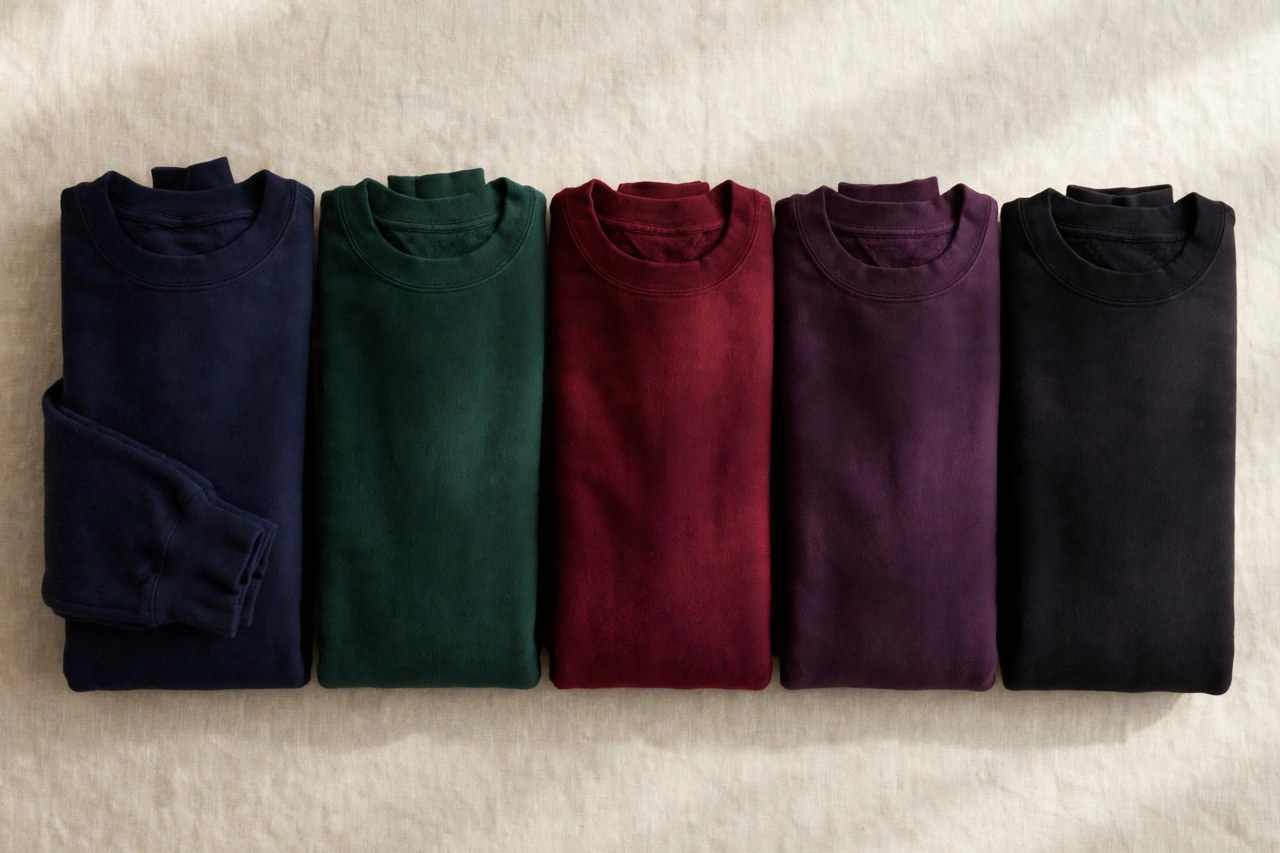
A heavyweight cotton sweatshirt is a different class of garment from the standard fleece crew: denser cloth, sturdier construction, and a working life measured in decades rather than seasons. Where an ordinary sweatshirt might use fleece around 300 GSM, heavyweight versions start near 400 GSM and climb past 450, with yarns and knits chosen for structure as much as softness. Fans prize them for cold weather, outdoor work, and that particular substantial feel no lightweight layer imitates. This guide explains what the weight actually consists of, the construction tricks — including reverse-weave style knitting and side gussets — that keep a heavy sweatshirt from shrinking and twisting, and how to buy and care for one.
Where the Grams Go
Fabric weight in a sweatshirt is the sum of its parts: the outer jersey face, the looped yarns on the back, and the density of the knitting itself. Heavyweight fleece uses thicker yarns in the face for abrasion resistance, packs more loop yarn into the interior, and brushes it into a deep pile that insulates seriously. The cotton is often ringspun for strength, and many heavyweight designs are nearly all cotton, since dense cotton fleece hangs and ages the way devotees expect; small polyester shares appear in some lines to steady the fit. Pick one up and the difference is immediate: the garment has heft and body, holds its fold on a shelf, and does not flutter. That density also slows drying — a heavyweight sweatshirt is a line-dry commitment in humid weather, a fair trade most owners accept without complaint.
Reverse-Weave Style Construction
The signature technology of the heavyweight sweatshirt is the reverse weave, a construction patented in the 1930s for athletic sweatshirts and still imitated generically today. Ordinary fleece is knitted and cut with the fabric's grain running vertically, which lets a sweatshirt shrink in length wash after wash. Reverse-weave cloth is cut across the grain, with panels running horizontally, so shrinkage expresses itself in width — where the garment has room to spare — instead of length. The result is a sweatshirt that keeps its body length and sleeve length through years of laundering. Look for the tell-tale details that accompany the method: side gusset panels under the arms, cut on the original grain to restore stretch and movement, and wide, sturdy ribbing at cuffs and hem. Makers who use the construction usually say so; makers who imply it vaguely usually have not.
Built Details: Gussets, Ribbing, and Seams
Heavyweight construction shows everywhere once you look. Side gussets — long ribbed or self-fabric panels running from hem to cuff under the arm — let the cross-cut body move without pulling and are the single most reliable marker of a serious heavyweight sweatshirt. Cuffs and hems use wide, dense ribbing knitted with a strong elastane core, because trims carry more load on a heavy garment: a stretched-out cuff on dense fleece never recovers and ruins the line. Seams are typically flatlock or double-needled, collars are reinforced with twill tape at the back neck, and shoulder seams may be taped so the weight of the body does not stretch them out of line. The collar itself sits higher and firmer than on fashion sweatshirts. None of this is decoration: every element answers the problem of a heavy garment hanging from a body for years.
Warmth, Weight, and When to Wear One
A heavyweight sweatshirt is a cold-weather tool. As a mid-layer under a coat it insulates like a light sweater; as an outer layer on a dry, cold day it blocks more breeze than standard fleece simply through density, though it is not windproof and a shell still wins in real wind. It is too warm for heated indoor wear for most people, and too absorbent to be a rain layer — wet heavyweight cotton becomes genuinely heavy and dries slowly, the traditional cotton caveat multiplied by the grams. Where it shines: outdoor work and spectating, cold workshops and studios, winter walking, and any situation where one layer must do steady duty for hours. Fit should allow a tee or thin thermal underneath, with enough room that the gussets can work; a heavyweight sweatshirt bought skintight wastes its engineering.
Care for a Garment Built in Decades
Caring for heavyweight fleece is mostly about respecting its mass. Wash inside out, cool or warm, with zips and hardware from other clothes kept away from the face. Because a soaked heavyweight sweatshirt is heavy enough to stretch on a line at the shoulders, dry it flat or over a broad hanger bar, or tumble on low with patience; high heat shrinks even cross-cut cloth at the ribbing. Expect the first washes to release loose pile — wash separately or with dark, sturdy companions. The brushed interior will slowly compact over years of wear, trading a little loft for a smoother, almost polished softness many owners consider the garment's best age. Cuffs and collar are the wear points to inspect; a tailor can replace ribbing far more cheaply than the body can be replaced. Bought well and washed gently, a heavyweight sweatshirt is the rare garment that justifies the phrase buy it for life.
More to Explore on Apparel Search
- Clothes
- Clothing Retail Stores
- college sweatshirts in various weights
- Cotton
- Cotton Definition
- Cotton News
- fabric Weight Conversion Charts
- Fashion
- Fashion Designers
- Organic Cotton
- Popular Brands
- Selecting Sweat suit fabric
- types of shirts
- What are hoodies?
- What are sweatshirts?
- What are the benefits of cotton?
- Women's Clothing Stores
- Women's Clothing Wholesalers
- Women's Cotton Clothing
- Women's Cotton Shirts
- Women's Cotton Tops
- Women's Fashion
- Women's Shirts
- Women's Sweatshirts
- Women's Tops
Photos

Looking for Women's Clothing Stores?
This guide helps you choose women's heavyweight cotton sweatshirts in dense, durable fleece. To browse where to buy, visit our women's clothing store directory, where you can find retailers that carry them.