Women's Cotton Sweatshirts Guide
The crewneck classic explained — cotton fleece construction, brushed interiors, weights, and why the simplest top in the closet lasts longest.
Shop Women's Cotton Sweatshirts Now
Shop Women's Cotton Sweatshirts on Amazon Shop Women's Cotton Sweatshirts on eBayThe Amazon and eBay links on this page are affiliate links. If you make a purchase through them, Apparel Search may earn a commission.
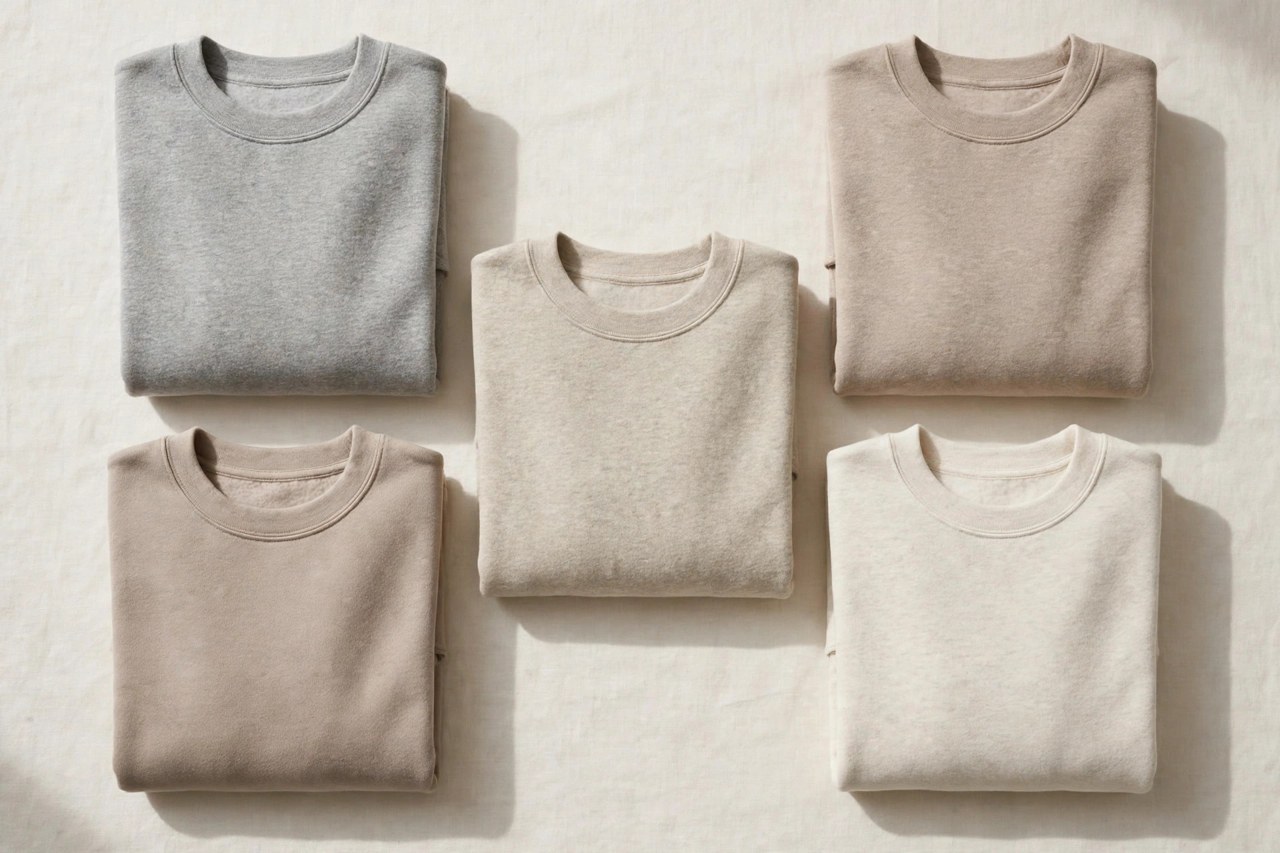
The cotton sweatshirt is one of the most durable ideas in clothing: a knitted cotton top with a soft, raised interior, ribbed cuffs and hem, and a shape that has barely changed in a century. It began as athletic wear, migrated to workwear and campus wear, and now serves as the default comfort layer for everything from morning walks to long flights. This guide looks at general cotton sweatshirts — the fleece family as a whole — covering how the fabric is made, how brushed fleece differs from French terry, what weights mean in wear, and how to choose and care for a sweatshirt that keeps its shape for years. Specialized pages cover heavyweight and hooded versions in depth.
How Cotton Fleece Is Built
Sweatshirt fleece starts as a jersey knit whose back face is formed with extra, looser yarns. In classic fleece, that back is then brushed — passed over fine metal bristles that raise the loose yarns into a soft, fuzzy pile. The brushed interior traps still air against the body, which is where the warmth comes from, while the smooth outer face takes color and prints cleanly. The result is a fabric typically running 280 to 400 GSM, thick enough to insulate yet flexible enough for a pullover. Cotton-rich fleece is usually at least eighty percent cotton, with polyester sometimes blended in to improve recovery and reduce shrinkage; a small polyester share changes the price and durability more than the feel. Turn any sweatshirt inside out and you can read its construction at a glance: plush, even brushing means a warmer, softer garment.
Fleece Versus French Terry Interiors
Not every sweatshirt is brushed. French terry leaves the back loops unbrushed, producing a smoother, cooler interior that absorbs a little moisture without trapping as much heat. Terry sweatshirts are the three-season choice: warm enough for a spring evening, breathable enough not to stifle indoors, and lighter in the wash. Brushed fleece is the winter and comfort choice, noticeably warmer and plusher against a t-shirt. A third option, double-faced or bonded knits, appears in fashion sweatshirts that trade some softness for structure. Neither interior is better in the abstract — the question is whether the sweatshirt is a mid-layer for cold days or an all-day top for heated rooms. Many women end up owning one of each and rotating them by forecast, which is exactly how the category quietly expands.
The Classic Details: Collar, Cuffs, and the V-Stitch
A traditional crewneck sweatshirt is finished with ribbed trims knitted from cotton with a touch of elastane: a banded collar that should lie flat and spring back when stretched, cuffs that grip the wrist without squeezing, and a hem band that keeps the body from flaring. Older designs include the small stitched V insert at the front of the collar, originally a sweat-absorbing and stretch-giving detail on athletic crews; today it is mostly a heritage marker, but its presence usually signals a maker following classic construction. Side gussets or underarm panels on better sweatshirts add movement and prevent the body from twisting. Shoulder seams should sit at the shoulder bone, and the body should skim rather than cling — fleece is meant to layer over a tee, so allow room for one. These small structural details decide whether a sweatshirt looks intentional or merely oversized.
Choosing Weight and Fit
Weight maps to season. Lightweight sweatshirts around 260 to 300 GSM work as cool-evening layers and post-workout cover; midweight fleece at 320 to 360 GSM is the versatile standard most people reach for daily; true cold-weather pieces push higher and are covered on our heavyweight page. Fit has loosened over the decades: the classic regular fit gives a straight body with room to layer, relaxed and oversized cuts add width and dropped shoulders for a casual look, and cropped sweatshirts shorten the body to meet high-waisted bottoms. Because cotton fleece relaxes slightly with wear and contracts with washing, a new sweatshirt should feel comfortably full, never tight — tight fleece pulls at the ribbing and loses its easy drape. Check length after imagining one wash: an inch of length shrinkage is normal on untreated cotton, and better makers pre-shrink or garment-wash to keep it minimal.
Washing and Keeping the Pile Soft
Fleece care is simple but specific. Wash sweatshirts inside out in cool or warm water so the smooth outer face is protected and the brushed interior is not ground against other garments; zips and hooks from other clothing are fleece's worst laundry enemies. Avoid high dryer heat, which drives shrinkage and can mat the pile; a low tumble or line dry keeps both fit and softness. New fleece sheds loose pile fibers for the first few washes — normal, and a reason to wash dark and light pieces separately at first. Pilling on the outer face comes from friction at straps and seatbelts; longer-staple cotton pills least. Skip heavy softeners, which flatten the brushed pile over time. Stored folded rather than hung — hangers stretch wet-heavy fleece at the shoulders — a good cotton sweatshirt easily serves a decade, softening into the garment people reach for without thinking.
More to Explore on Apparel Search
Photos

Looking for Women's Clothing Stores?
This guide helps you choose women's cotton sweatshirts in fleece and French terry. To browse where to buy, visit our women's clothing store directory, where you can find retailers that carry them.