Women's Cotton Sweatpants Guide
The comfort benchmark of the casual wardrobe — cotton fleece and terry, cuffed or open, built for warmth and ease.
Shop Women's Cotton Sweatpants Now
Shop Women's Cotton Sweatpants on Amazon Shop Women's Cotton Sweatpants on eBayThe Amazon and eBay links on this page are affiliate links. If you make a purchase through them, Apparel Search may earn a commission.
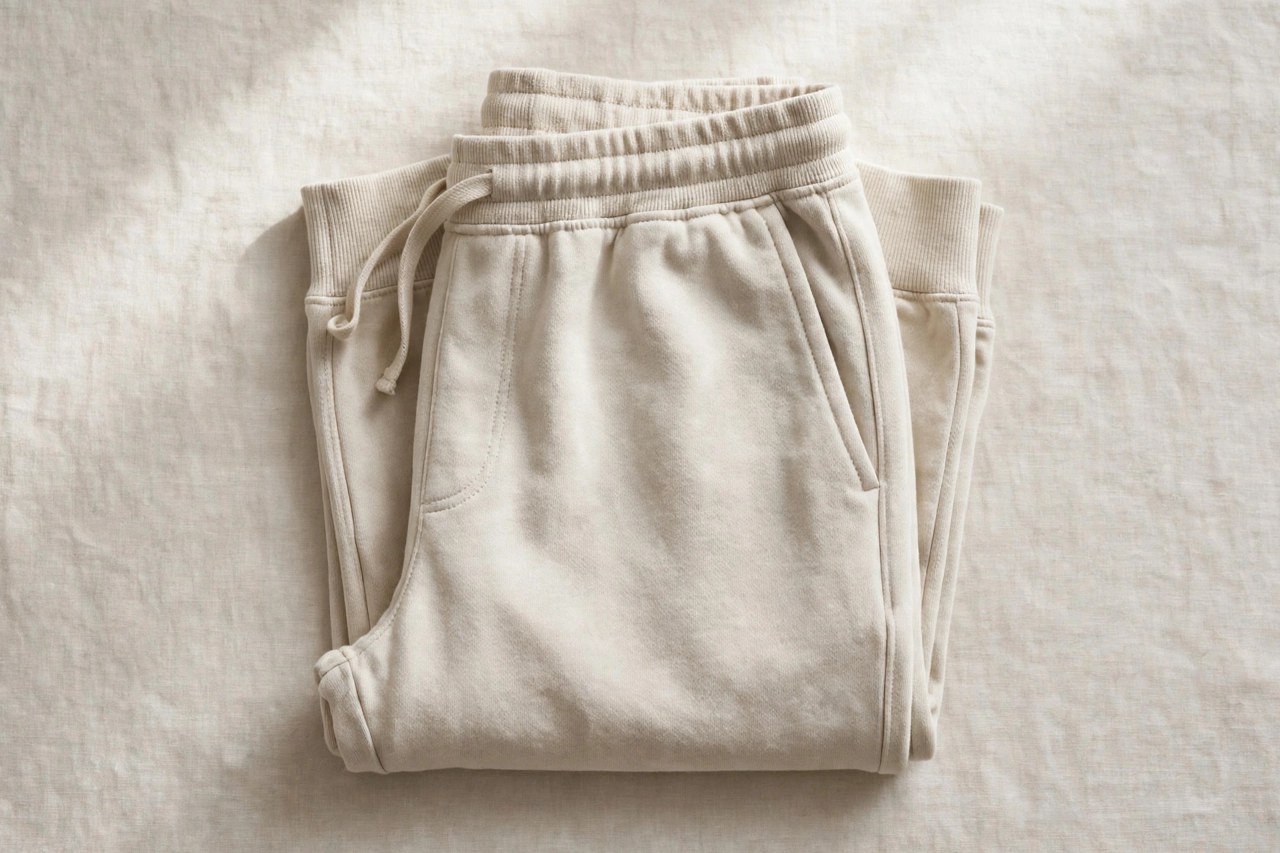
Sweatpants began as athletic warm-up wear in the 1920s and never really left, because cotton knit does their job almost perfectly: it is warm, soft, forgiving in fit, cheap to make well, and comfortable for hours at a stretch. A women's cotton sweatpant is usually built from one of two knits. Cotton fleece has a smooth outer face and a brushed, fluffy inner face that traps warm air. French terry keeps the same smooth outside but finishes the inside with small unbrushed loops, making it lighter, cooler, and a little more breathable. Typical weights run from about 240 GSM for a summer terry to 400 GSM or more for a heavy winter fleece. That single choice — fleece or terry, light or heavy — predicts how a pair will feel more than any styling detail, so it is the right place to start shopping.
Fleece Versus French Terry
Brushed fleece is the warmer, cosier option and the classic sweatpant interior. The brushing raises fibres into a soft pile that feels instantly warm on a cold morning and insulates well during sedentary hours at home or on a sideline. Its weaknesses are bulk and heat: fleece pants can feel too warm for a heated gym, and the brushed face pills where thighs rub. French terry, with its looped back, sits flatter, drapes more cleanly, and releases heat better, which makes it the better three-season and travel choice. Terry also tends to look a touch smarter — closer to a knit trouser than a blanket. Many women end up owning both: a heavy fleece pair reserved for deep winter, and a terry pair that handles spring, autumn, flights, and post-workout evenings without overheating. Check the product description for the interior finish, because photos of the outside rarely reveal it.
Cuffed Joggers Versus Open Hems
The cuffed jogger is now the default sweatpant shape: a tapered leg gathered into a ribbed ankle band. Cuffs keep hems off wet pavements, stay put on a bike or exercise mat, and give the pant a deliberate, finished outline that pairs easily with trainers. Open-hem sweatpants fall straight to the shoe, read more traditional and relaxed, and suit taller wearers who find cuffs ride up the calf. Wide-leg and straight-leg cotton sweatpants have also returned as a fashion cut, worn long over trainers for a softer silhouette. Fit through the seat matters more than the leg style: a good pair follows the hip without a tight waistband, because cotton knit relaxes during wear. Drawcords matter for the same reason — elastic alone often lets a heavy fleece pant slide by evening, and a real tying cord, not a decorative one, is worth checking for before you buy.
Lounging, Gym, and Everything Between
At home, almost any cotton sweatpant succeeds. For the gym, choose more carefully. Cotton fleece is excellent for warm-ups, stretching, mobility work, and steady lifting sessions where sweat stays moderate and the fabric's softness against benches and bars is a plus. It is a poor choice for hard conditioning or hot classes: like all cotton, it absorbs sweat, grows heavy, and dries slowly, so a soaked pair stays damp through the drive home. For training days, a cotton-rich blend with some polyester dries faster and keeps its shape better between washes. Also consider rise and waistband for floor work: a mid or high rise with a wide, flat waistband stays comfortable in planks and hinges, while a low rise with a thin cord tends to migrate. Deep side pockets or a secure back pocket decide whether the pair works for errands straight after a session.
Shrinkage, Pilling, and Care
Expect cotton sweatpants to shrink roughly 3 to 5 percent in length in early washes, with fleece at the higher end, so a slightly long inseam when new is insurance rather than a fault. Wash inside out in cold water to protect the smooth outer face, and tumble dry low or air dry: high heat is the main driver of both shrinkage and waistband-elastic fatigue. Fleece pilling is normal in the first months as loose brushed fibres work free; washing inside out in a full but not crowded load reduces it, and a fabric comb restores the inner thigh area neatly. Cotton holds odour more than synthetics, so wash sweatpants after gym use rather than airing them for another session. Colour loss is gradual and even, especially in garment-dyed pairs, which simply fade toward a softer vintage tone that many wearers prefer.
Building a Small Sweatpant Rotation
Two or three well-chosen pairs cover nearly every use. Start with a midweight French terry jogger in a dark neutral — the pair that handles travel, errands, light training, and most evenings at home. Add a heavyweight fleece pair, cuffed or open according to your height and taste, for winter warmth and genuine lounging. A third pair can be the personality piece: a wide-leg fashion cut, a garment-dyed colour, or a lighter summer terry for warm evenings. Check each listing for cotton content, because sweatpants described loosely as cotton may be half polyester; that is not a defect, but it changes warmth, drying, and feel, and you should know which you are buying. Finally, compare them honestly with their close relatives in this guide: for easy runs see the running pants page, and for team warm-ups and training sets see athletic pants, which overlap with sweatpants but are cut and detailed for sport first.
More to Explore on Apparel Search
Photos

Looking for Women's Clothing Stores?
This guide helps you choose women's cotton sweatpants by fabric and cut. To browse where to buy, visit our women's clothing store directory, where you can find retailers that carry them.