Women's Cotton Sweat Suits Guide
The matching set, from gymnasium warm-up to travel uniform — how cotton fleece two-pieces are made, matched, and worn.
Shop Women's Cotton Sweat Suits Now
Shop Women's Cotton Sweat Suits on Amazon Shop Women's Cotton Sweat Suits on eBayThe Amazon and eBay links on this page are affiliate links. If you make a purchase through them, Apparel Search may earn a commission.
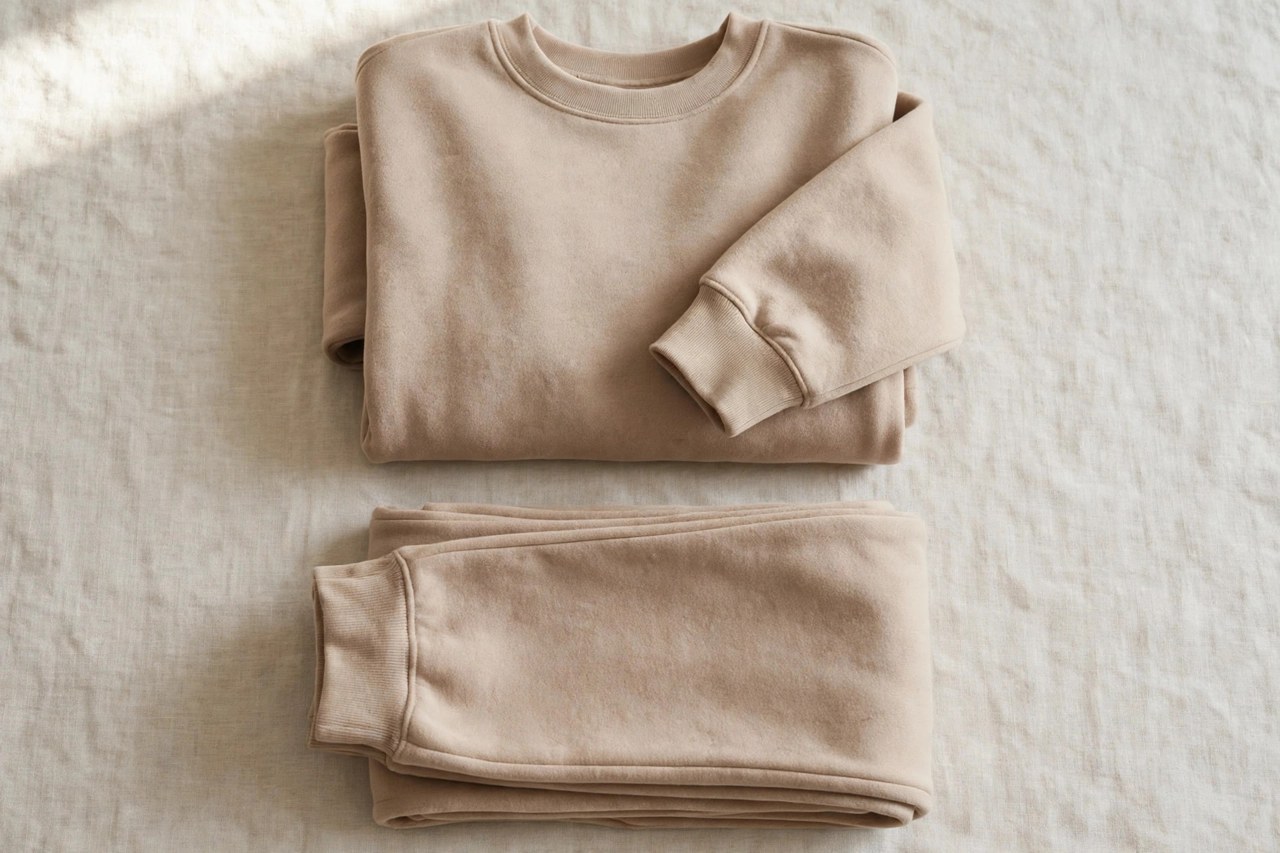
A cotton sweat suit is a matched pair — a fleece sweatshirt or zip jacket with coordinating sweatpants, cut from the same cloth and dyed to the same shade — sold and worn as one outfit. What looks like the simplest purchase in casual clothing carries a surprising amount of construction logic, because two garments must fade, shrink, and soften together for years without drifting apart in color or fit. This guide covers how sweat suits are built, why the matching matters, how to size a two-piece set when your top and bottom sizes differ, and the travel-and-leisure roles that turned the humble tracksuit's cotton cousin into a permanent wardrobe category.
From Warm-Up Suit to Leisure Uniform
Cotton sweat suits began as athletes' warm-up clothing in the early twentieth century — loose fleece layers worn before competition and pulled back on afterward, when a cooling body needs gentle insulation. Through the later decades the sweat suit escaped the stadium: it became the standard outfit for long drives, early flights, weekend errands, and convalescence, valued because it looks deliberate while feeling like pajamas. Velour and synthetic tracksuits had their fashion moments, but the cotton fleece version endured on comfort and washability. Today's sweat suits range from plain heathered basics to fashion sets with cropped tops or wide-leg pants, all descended from that original warm-up logic.
What Makes a Set a Set
The defining feature is shared fabric. A true set's top and bottom come from the same fleece — same fiber blend, same knit, same dye lot — so they age as one garment. This matters more with cotton than with synthetics, because cotton fades measurably with washing: separates bought to look matched will drift apart in shade within a season, while a genuine set fades in step and still reads as an outfit years later. Sets also coordinate their trims: ribbing, drawcords, and zipper tapes are dyed or selected to match both pieces. When shopping, check product descriptions for whether pieces are sold as a set or merely styled together, and if buying separates from the same range, compare them side by side in daylight and plan to always wash them together, which is the home method for keeping any pair matched.
Top and Bottom Styles
Set tops come in three main forms: the classic crewneck pullover, the zip-front jacket, and the hoodie. Zip jackets are the travelers' favorite because they layer and remove without disturbing hair or glasses, and they ventilate on stuffy planes. Bottoms divide into cuffed jogger styles, which stay tidy at the ankle and suit walking and travel, open-hem pants with a straighter, more trouser-like fall, and drawstring lounge cuts with the roomiest fit. Better sets match the fleece weight across both pieces — a heavyweight top over flimsy pants looks and wears unbalanced. Rise, pockets, and drawcord hardware echo across the set in coordinated finishes. Some sets add a matching short or tee for warm-weather travel, extending the system into a small capsule.
Sizing a Two-Piece Problem
The eternal sweat suit question is what to do when your top and bottom sizes differ — a common situation the single-size set handles badly. First option: buy the set to fit the bottom, since fleece tops forgive extra room gracefully while tight sweatpants forgive nothing. Second option: choose brands that sell the set as coordinated separates, letting you pair a medium top with a large bottom in the same dye lot. Third: consider the intended use — a set for sleeping-adjacent lounging can run generous everywhere, while a set meant for public travel looks better closer to true size. Allow for cotton's behavior: fleece relaxes slightly during the day and resets with washing, and length shrinkage of a few percent is normal on untreated cotton, so pants that just clear the floor when new are a safer buy than pants that only just reach the shoe.
Wearing the Set, and Splitting It
Worn together, a sweat suit is a complete casual outfit that needs only shoes and perhaps a tee underneath the top. Travelers prize sets because the pieces insulate in air conditioning, forgive long sitting without creasing badly, and wash as one load at the destination. The modern styling upgrade is separation: wear the crewneck with jeans or twill trousers, and the joggers with a fitted tee or a poplin shirt, tripling the set's wardrobe value. Keep the pieces visually related to the rest of your closet — heather grey, navy, black, and soft neutrals split most successfully.
Care for Matched Fleece
The golden rule of sweat suit care is togetherness: wash both pieces in the same load, every time, so water temperature, detergent, and drying treat them identically and their color and shrinkage stay synchronized. Wash inside out in cool or warm water, close any zippers so they cannot snag the fleece faces, and dry on low heat or on the line to protect the brushed interiors. Drawcords should be knotted before washing to keep them from retreating into their channels. New fleece sheds some pile in early washes; this settles quickly and is no cause for concern. If one piece of an older set is damaged, retire the set to home wear rather than mixing in a new piece of the same nominal color — the shade difference will show in daylight, and the intact piece still serves well split among your other casual clothes.
More to Explore on Apparel Search
Photos


Looking for Women's Clothing Stores?
This guide helps you choose women's cotton sweat suits as matching fleece sets. To browse where to buy, visit our women's clothing store directory, where you can find retailers that carry them.