Women's Hooded Cotton Sweatshirts Guide
The hoodie in cotton fleece — pullover versus zip-front, hood construction, kangaroo pockets, and fit that layers well.
Shop Women's Hooded Cotton Sweatshirts Now
Shop Women's Hooded Cotton Sweatshirts on Amazon Shop Women's Hooded Cotton Sweatshirts on eBayThe Amazon and eBay links on this page are affiliate links. If you make a purchase through them, Apparel Search may earn a commission.
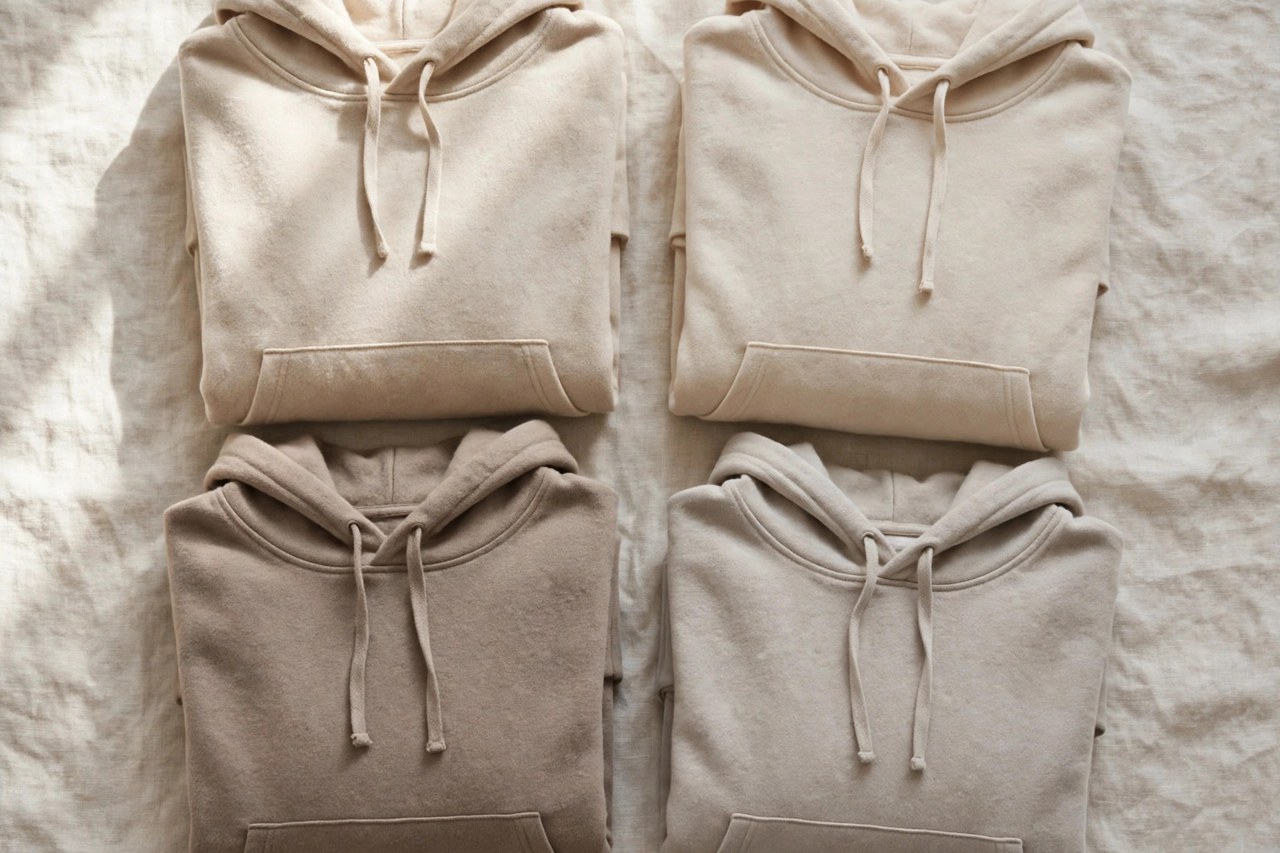
The hooded cotton sweatshirt — the hoodie — adds one deceptively simple feature to the sweatshirt formula: a hood. That hood changes everything about how the garment works. It warms the head and neck without a separate hat, turns a fleece layer into light weather protection, and gives the sweatshirt its unmistakable casual character. Cotton fleece hoodies come in two great families, pullover and zip-front, with meaningful differences in hoods, pockets, and construction between good and indifferent versions. This guide walks through the choices: fleece weights, single versus double-layer hoods, drawcord details, pocket styles, and the fit rules that let a hoodie layer comfortably under and over other clothes.
Pullover Versus Zip-Front
The pullover hoodie is the original: no hardware, an uninterrupted fleece front, and usually a kangaroo pocket. It is the warmest format, since nothing interrupts the insulating layer, and the simplest to care for. Its compromises are practical ones — it goes on and off over the head, and temperature regulation means taking the whole layer off. The zip-front hoodie trades a little warmth for total convenience: it layers like a jacket, ventilates in seconds, leaves hairstyles and glasses undisturbed, and dresses up a fraction more easily. Zip quality matters accordingly; look for a sturdy metal or chunky molded zipper that runs smoothly one-handed, a chin guard at the top, and fleece facings behind the zip so it never touches skin cold. Many wardrobes hold both: the pullover for cold and comfort, the zip for travel, layering, and changeable days.
Hood Construction: Where Quality Shows
A good hood is engineered, not decorative. The best are double-layer, using two plies of fleece or a fleece outer with a jersey lining, which gives the hood shape, warmth, and a finished look when worn down the back. Single-layer hoods are lighter but flop and show their raw interior. Three-panel construction — a center panel between two side panels — shapes the hood to the head so it stays up in a breeze and does not balloon behind the neck when down; two-panel hoods are simpler and sit flatter under a jacket collar. The neckline where the hood joins the body should overlap at the front so no gap opens at the throat, and the hood's drawcord channel should be stitched so the cord cannot twist or retreat. Try the hood up before buying: it should clear your peripheral vision and turn with your head rather than around it.
Pockets: Kangaroo, Split, and Hidden
The kangaroo pocket — one wide through-pocket entered from both sides — defines the pullover hoodie. It is a hand-warmer and a carry-all for phones, keys, and dog treats, sewn at an angle that keeps contents in while walking. Check its stitching: the pocket corners take real strain and should be bar-tacked or reinforced, since a torn kangaroo pocket is the classic hoodie failure. Zip-front hoodies use split welt or patch pockets, one per side, sometimes with a small interior media pocket. Fashion hoodies may hide pockets in side seams for a cleaner front. Whatever the style, pockets in fleece add bulk at the waist; if you plan to layer the hoodie under a fitted coat, a style with flat side-seam pockets will sit smoother than a thick kangaroo pouch.
Fleece Weight, Fit, and Layering
Hoodies use the same fleece family as crew sweatshirts: brushed fleece for warmth, French terry for a lighter, cooler layer. A midweight fleece around 320 to 360 GSM is the all-season standard; lighter terry hoodies serve as summer-evening and post-workout layers, while heavyweight versions follow the dense construction covered on our heavyweight page. Fit has range: classic regular hoodies layer over a tee and under a jacket; relaxed and oversized cuts are worn as the main event; cropped hoodies pair with high-waisted bottoms. Sleeve and body length deserve attention because fleece shrinks a few percent in length on untreated cotton — sleeves that reach the wrist bone when new are about right. The hood itself adds bulk at the neck, so if the hoodie will live under a coat, check the combination before committing; a three-panel hood folds flattest.
Drawcords, Trims, and Care
Drawcord details separate thoughtful hoodies from basic ones. Flat woven cords stay tied better than round ones, metal or dipped aglets keep ends from fraying, and eyelets should be stitched or metal-rimmed so the channel does not tear. Knot cords before washing so they cannot slip inside the channel — retrieving a lost cord is a safety-pin ordeal. Brushed cotton drawcords on budget hoodies pill and fuzz quickly, a small but honest quality tell. Washing follows standard fleece rules: inside out, cool or warm water, zips closed on zip-fronts, low heat or line dry, and avoid hanging a wet hoodie by its hood, which stretches the neck join. The hood's double layers dry slowest, so give hoodies extra airing time in humid weather. Treat drawcords and pockets kindly and a cotton hoodie holds its shape and softness for many seasons.
More to Explore on Apparel Search
Photos


Looking for Women's Clothing Stores?
This guide helps you choose women's hooded cotton sweatshirts in pullover and zip-front styles. To browse where to buy, visit our women's clothing store directory, where you can find retailers that carry them.