Women's Cotton Athletic Apparel Guide
The honest umbrella guide — where cotton still earns its place in sportswear, and where modern synthetics honestly beat it.
Shop Women's Cotton Athletic Apparel Now
Shop Women's Cotton Athletic Apparel on Amazon Shop Women's Cotton Athletic Apparel on eBayThe Amazon and eBay links on this page are affiliate links. If you make a purchase through them, Apparel Search may earn a commission.
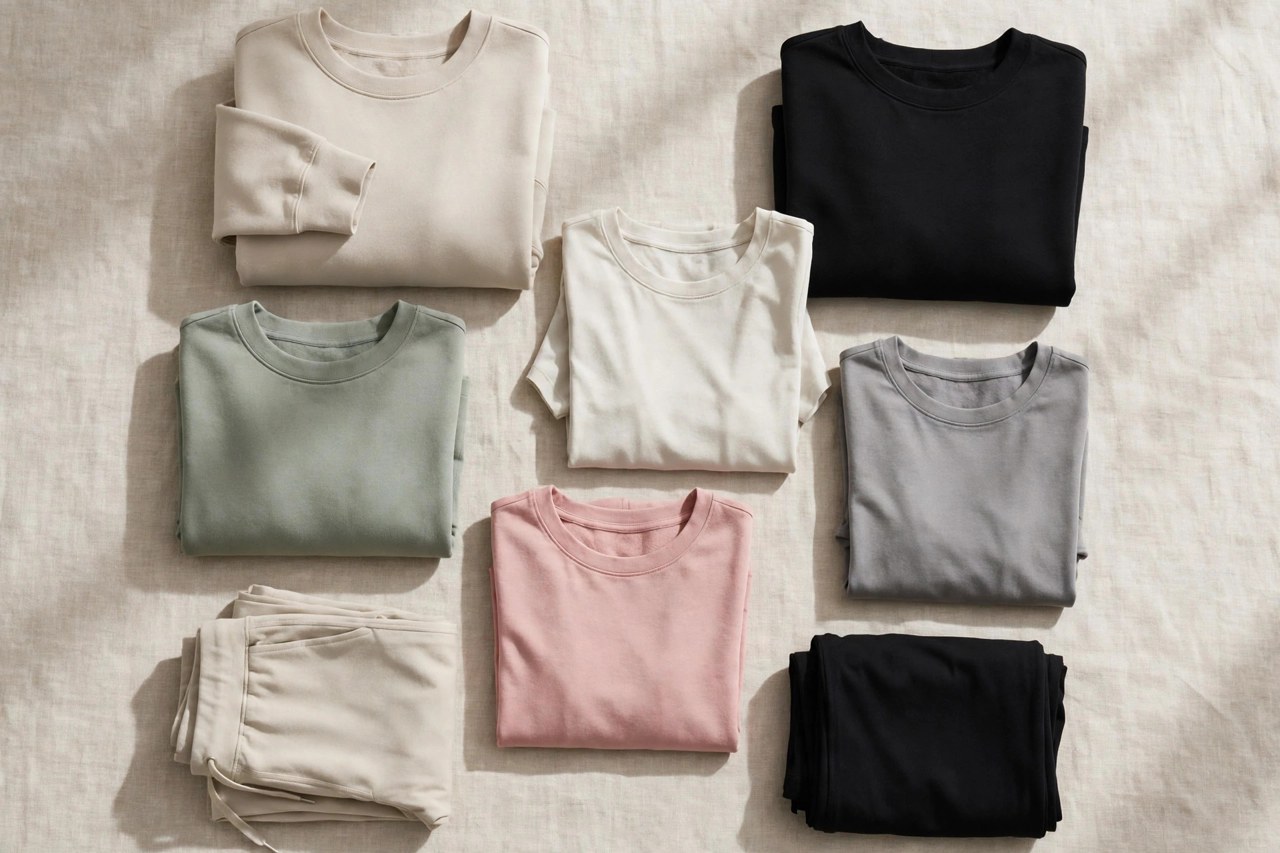
Cotton athletic apparel is the broad category covering every cotton garment made to move in: warm-up tops and bottoms, training tees, fleece sweatshirts, jogger pants, cotton-rich leggings, and the casual sportswear worn before and after the workout itself. Cotton built this category long before synthetic performance fabrics existed, and it still holds real ground in it — but not everywhere, and not for every activity. This umbrella guide maps the territory honestly: where cotton's softness, breathability in dry air, and natural feel make it the right choice, and where its habit of absorbing sweat and holding it against the skin makes technical fabrics the smarter buy. Knowing which is which saves money and blisters.
The Honest Trade-Off: Absorption Versus Moisture Management
Cotton fiber can absorb roughly a quarter of its weight in water before it feels wet, and that absorbency is a double-edged tool. For short, low-intensity sessions — a gentle stretch class, a warm-up, walking, light strength work — absorbed sweat simply feels comfortable, and cotton's soft hand prevents the chafing that some synthetics cause on sensitive skin. The problem arrives with sustained, heavy effort: a saturated cotton top gets heavy, cools the body too fast when you stop, and stays damp for the rest of the session. Technical polyester and nylon move liquid along the fabric surface so it evaporates; cotton stores it. The practical rule many athletes settle on is intensity-based: cotton for warming up, cooling down, and low-sweat training; synthetics for long runs, hot rooms, and anything where you will be drenched.
The Knits Behind Cotton Athleticwear
Almost all cotton athletic apparel is knitted, not woven, and three knits do most of the work. Single jersey, the t-shirt knit, is light, stretchy across the width, and the standard for training tees and tanks. French terry carries small loops on its inside face that trap a little air and absorb light moisture while staying smooth outside, making it the favorite for warm-up pants and midweight tops. Fleece goes further, brushing those loops into a soft pile that insulates — the construction behind sweatshirts and sweatpants. Interlock, a double knit with two smooth faces, gives leggings and fitted tops more opacity and recovery than single jersey. Most modern cotton athletic pieces blend in two to ten percent elastane, which does not change the cotton character but keeps knees, seats, and cuffs from bagging out mid-season.
Where Cotton Still Wins
Several corners of athletic life remain cotton's by right. Warm-up and cool-down layers are the clearest: a fleece sweatshirt pulled on before a session traps heat gently, and cotton's lack of static and odor-retaining polymers means it smells fresher wash after wash than many synthetic tops, which can hold onto odor in their fibers. Cotton also wins for skin comfort — it rarely triggers the contact irritation some people get from synthetic finishes, and it feels pleasant against skin in a way that matters during yoga, Pilates, stretching, and rehabilitation exercise. Cotton athletic pants and shorts serve sideline and team-travel roles well, looking presentable off the field. And for anyone who simply dislikes the feel and sheen of technical fabrics, a well-made cotton training wardrobe covers more real-world exercise than marketing suggests.
Building a Cotton Athletic Wardrobe
Start with the layers you will use most. A midweight French terry warm-up pant and a fleece crewneck cover the before-and-after hours of almost any sport. Add two or three cotton jersey training tees in a weight around 160 to 200 GSM — heavy enough to stay opaque when stretched, light enough to dry overnight. A cotton-rich legging with elastane suits studio work; cotton gym shorts suit lifting and general training. Choose flat or taped seams on anything worn for movement, since raised seam ridges are the main chafing source in cotton knits. Colors matter practically: mid-tones hide sweat marks better than pale grey marl, which shows every drop, while dark colors absorb heat outdoors. Buy for the rotation you actually keep — cotton rewards frequent washing, so three pieces washed often outlast six left damp in a gym bag.
Care for Cotton Training Clothes
Cotton athletic apparel lives a hard washing life, and a few habits extend it considerably. Turn garments inside out to protect outer faces from abrasion, wash in cool or warm water, and skip fabric softener on elastane blends, since softener coats the stretch fibers and slowly kills their recovery. Fleece and terry should be dried on low heat or line-dried; high dryer heat is the main cause of the gradual length shrinkage that turns a good jogger into a cropped one. Wash new dark pieces separately for the first cycles while loose dye clears. Pilling at inner thighs and under straps signals shorter-staple cotton working loose — a fabric shaver restores the surface, and longer-staple cotton in the next purchase prevents it. Stored clean and fully dry, cotton training clothes stay fresh without the odor treatments synthetics often need.
More to Explore on Apparel Search
Photos From Our Original Guide

Looking for Women's Clothing Stores?
This guide helps you choose women's cotton athletic apparel by knit, weight and activity. To browse where to buy, visit our women's clothing store directory, where you can find retailers that carry them.