Women's Cotton Gym Shorts Guide
The classic PE-style short in soft cotton jersey — what it does well in training, and where mesh synthetics honestly win.
Shop Women's Cotton Gym Shorts Now
Shop Women's Cotton Gym Shorts on Amazon Shop Women's Cotton Gym Shorts on eBayThe Amazon and eBay links on this page are affiliate links. If you make a purchase through them, Apparel Search may earn a commission.
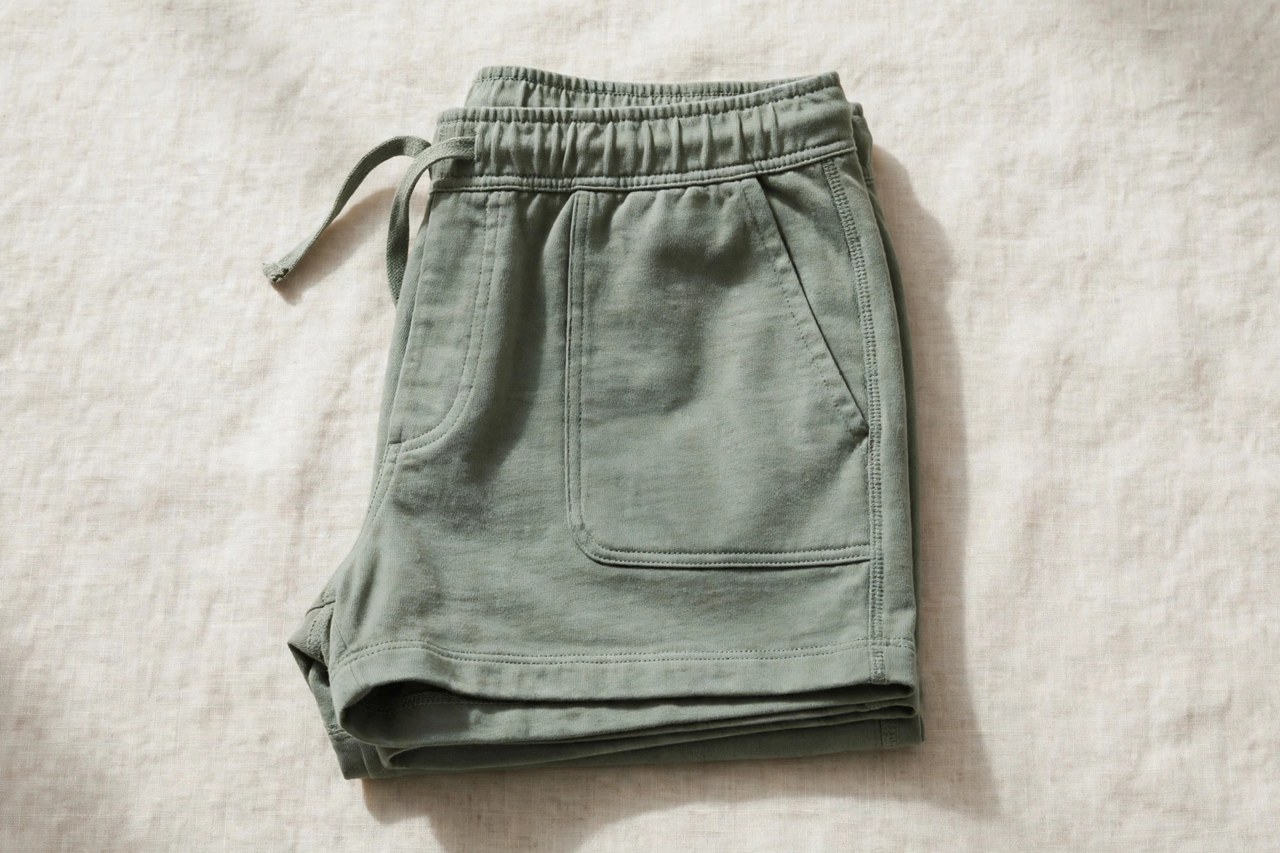
The cotton gym short is one of the oldest pieces of athletic clothing still in daily use: a short, free leg in cotton jersey or interlock, an elastic waist usually with a drawcord, and nothing else to discuss — which is precisely its appeal. Generations of school PE kits and gym bags have been built around it because cotton is soft, cheap, washable, and comfortable for the stop-start, moderate-sweat reality of most general training. Modern gym floors are dominated by mesh and technical synthetics, and this guide will be honest about where those fabrics win. But for lifting, general fitness classes, walking programmes, and training in cool gyms, a good cotton gym short remains a rational, pleasant choice, and it doubles as summer lounge and sleep wear in a way no mesh short ever quite does.
The Classic Construction
A traditional cotton gym short is knitted, not woven: single jersey for the lightest versions, interlock or a cotton-rich French terry for more substance, typically 180 to 240 GSM. The cut is deliberately free — a higher rise than fashion shorts, a leg that ends mid-thigh, and enough width through the leg opening that a deep squat or a high step never binds. Side vents or a small notch at the hem add the last degree of movement. The waist is wide elastic, often with an internal drawcord, because a short that migrates during a circuit is worse than useless. Pockets, when present, are shallow and honest — a locker key and a card, not a phone, which belongs in a bag rather than swinging through a set of lunges.
Cotton Versus Mesh: The Honest Comparison
Synthetic mesh gym shorts dry fast, weigh almost nothing wet or dry, and shrug off sweat through an entire tournament; for running, hot yoga, spin, and any session where you expect to be soaked, they are simply the better tool, and no loyalty to cotton should pretend otherwise. Cotton's case rests on different ground. It feels softer and warmer at the start of a cool morning session, it does not carry the slick static cling of polyester knits, it is kinder to skin that reacts to synthetics, and it comes off the gym floor and into the rest of your day — errands, the garden, the sofa — without looking or feeling like sports kit. Cotton also grips benches and mats slightly, which lifters quietly appreciate. Its weaknesses are the family weaknesses: it absorbs sweat, grows heavy, dries slowly, and a soaked pair in a cold gym chills quickly. Many women solve the comparison by owning both and choosing by session, which is not indecision but good kit management.
Best Uses in the Gym
Cotton gym shorts suit strength training particularly well: the free leg never interferes with a squat or deadlift, the knit gives over a lifting belt, and the fabric is quiet against benches and bars. General fitness and aerobics-style classes at moderate intensity sit comfortably within cotton's range, as do walking circuits, mobility and stretching sessions, and warm-ups before a main workout in another kit. They are a sensible choice for school and team settings where uniforms must survive industrial washing — cotton jersey tolerates hot washes that would age technical fabrics, though it will shrink and fade a little in the process. Reserve your synthetic shorts for the sessions that demand them: long cardio, hot rooms, and outdoor summer training.
Fit and Modesty Checks
Try gym shorts in movement, not at the mirror. Squat fully, lunge, lift a knee to hip height, and sit on the floor cross-legged: the leg should open without gripping, the waistband should stay where the drawcord tied it, and the back rise should cover you at the bottom of the squat. That last test is the one that matters, and a slightly longer inseam — many cotton gym shorts run 5 to 7 inches for women, longer than fashion training shorts — solves most coverage worries while staying free. Interlock knits are more opaque than single jersey at the same weight, a point worth weighing if your gym work involves mirrors and floor exercises. Because cotton jersey stretches a little with warmth and wear, a pair that fits perfectly in the shop may ride looser mid-session; use the drawcord, and if between sizes, the smaller usually trains better, provided the leg opening still clears your thigh at full flexion.
Care, Shrinkage, and Team-Wash Reality
Gym kit gets washed constantly, and cotton gym shorts should be bought with that life in mind. Wash after every wear — cotton holds odour deep in the fibre, and airing is not a strategy — in warm water with ordinary detergent, which cotton tolerates happily. Expect 3 to 5 percent length shrinkage across the first few washes, more with hot tumble drying, so a slightly generous new fit is correct buying. Tumble drying softens cotton jersey and is realistic for kit in constant rotation; accept the gradual fade and slight shortening as the cost. Check drawcords and waistband elastic monthly in hard rotation: elastic dies from heat and sweat long before the cotton body wears out, and a dead waistband ends a short's career even with the knit intact.
More to Explore on Apparel Search
- Athletic Clothing
- Athletic Fashion
- Athletic Pants
- Athletic Shoes
- Athletic Style T-shirts
- Athletic Swimwear
- Athletic Wear
- compression shorts
- Cotton
- Cotton Definition
- Cotton News
- Organic Cotton
- running shorts
- shorts
- types of fitness pants
- Women's Athletic Apparel
- Women's Athletic Shorts
- Women's Cotton Clothing
- Women's Shorts
Photos From Our Original Guide

Looking for Women's Clothing Stores?
This guide helps you choose women's cotton gym shorts by fabric and fit. To browse where to buy, visit our women's clothing store directory, where you can find retailers that carry them.