Women's Athletic Shoes Guide
Trainers, runners and court shoes — how cushioning, stability and fit work, and how to choose for your sport.
Shop Women's Athletic Shoes Now
Shop Women's Athletic Shoes on eBay Shop Women's Athletic Shoes on AmazonThe eBay and Amazon links on this page are affiliate links. If you make a purchase through them, Apparel Search may earn a commission.
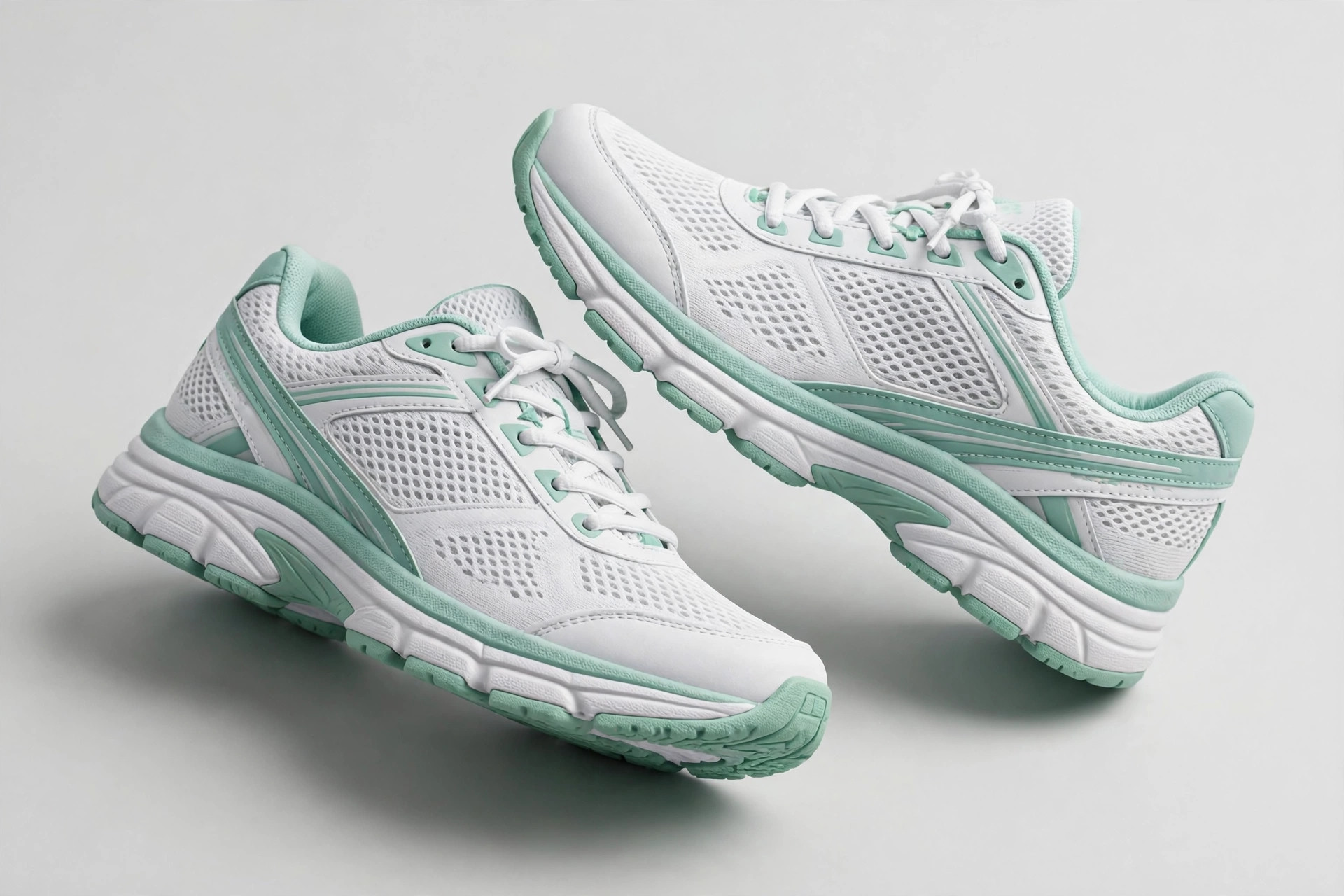
Athletic shoes are the one piece of training gear that qualifies as safety equipment: they cushion impact, stabilize landings, and grip the surfaces your sport happens on. They are also the most specialized — a shoe built for marathon miles will sabotage a heavy squat, and a lifting shoe will punish a run. Women's athletic shoes now use women-specific lasts and research rather than scaled-down men's designs. This guide explains the main types, the cushioning and stability vocabulary, and how to fit a pair that protects your feet, ankles, and knees.
Types: Running, Training, Court & Lifestyle
Running shoes are built for forward motion: cushioned, curved, and light, in neutral, stability, and motion-control families matched to how your foot rolls. Training (cross-training) shoes trade some cushion for a flatter, wider, more stable base that handles lifting, agility, and gym classes safely. Court shoes for tennis, volleyball, and basketball add lateral support and grippy outsoles for side-to-side movement and jumping. Walking shoes emphasize all-day cushion and rocker geometry. Lifestyle sneakers borrow the look but not the engineering — fine for errands, wrong for workouts. If you do one sport seriously, buy its shoe; cross-trainers are the honest compromise for varied gym weeks.
Cushioning, Drop & Stability
Three terms decode any athletic shoe. Cushioning is the midsole foam: soft and thick for impact absorption in distance running, firmer and thinner where ground feel and stability matter in lifting. Heel-to-toe drop is the height difference between heel and forefoot — higher drops (10–12 mm) suit heel-striking runners; low or zero drops feel stable for training but demand adaptation. Stability features — firmer foam posts, wider bases, structured heel counters — guide feet that roll inward excessively. None of these is 'best' in the abstract: the right combination is the one matched to your sport, your gait, and your injury history, ideally with a specialty store's fitting help for your first serious pair.
Fitting Athletic Shoes Properly
Shop late in the day, in your workout socks, and fit to your larger foot with a thumbnail of space ahead of the longest toe — feet swell and slide forward in sport. The heel should lock without slipping, the midfoot should feel held rather than squeezed, and no shoe should need 'breaking in' to stop hurting: modern athletic shoes are comfortable in the store or they are the wrong pair. Women with narrow heels or wide forefeet should seek out women-specific lasts and the growing range of width options. Jog in place, cut side to side, and jump — a fitting room test beats a guess, especially at athletic shoe prices.
Lifespan & Care
Midsole foam dies before the outside shows it. Running shoes typically deliver 300–500 miles; gym trainers last roughly six to twelve months of regular sessions. Warning signs include new aches, a compressed or wrinkled midsole, and worn heel counters that let your foot roll. Extend life by rotating two pairs (foam recovers between sessions), untying rather than kicking shoes off, keeping them out of hot cars, and never machine-drying them. When a beloved pair retires from sport, it can live on as walking shoes — but respect the mileage: your joints can tell the difference even when your eyes cannot.
When to Get a Professional Fitting
Most athletes can choose shoes well with the guidance in this guide, but some situations call for a specialist. Visit a running or sports-medicine store for a gait analysis if you are new to a sport, returning from injury, training for a first race, or experiencing recurring pain in the feet, shins, knees, or hips. Bring your old shoes: their wear pattern is a readable record of how you move. A good fitting considers your arch, your strike pattern, your training surface, and your goals — and it is usually free with a purchase. Treat it as you would a bike fitting or a coaching session: a small investment that protects every mile that follows.
Related Women's Guides
More to Explore on Apparel Search
- Athletic Clothing
- Athletic Jerseys
- Athletic Pants
- Athletic Shirts
- Athletic Shoes
- Athletic shoes
- Athletic Socks
- Athletic Swimwear
- Athletic Wear
- Jogging Sneakers
- Performance Apparel
- Popular Brands
- Sneakers
- Soccer Cleats
- Turf Shoes
- Types of Shoes
- Women's Athletic Fashion
- Women's Boots
- Women's Casual Shoes
- Women's Clothes Guide Pg. 2
- Women's Clothing Directory Pg. 3
- Women's Dress Shoes
- Women's Footwear
- Women's Footwear
- Women's Sandals
- Women's Shoe Stores
- Women's Shoes
- Women's Trend Shoes
Looking for Women's Clothing Stores?
This guide helps you choose women's athletic shoes by sport and support type. To browse where to buy, visit our women's clothing store directory, where you can find retailers that carry them.