Women's Cotton Exercise Clothing Guide
Studio and aerobics basics in cotton — the comfortable staples that suit gentle classes, stretching, and everyday movement.
Shop Women's Cotton Exercise Clothing Now
Shop Women's Cotton Exercise Clothing on Amazon Shop Women's Cotton Exercise Clothing on eBayThe Amazon and eBay links on this page are affiliate links. If you make a purchase through them, Apparel Search may earn a commission.
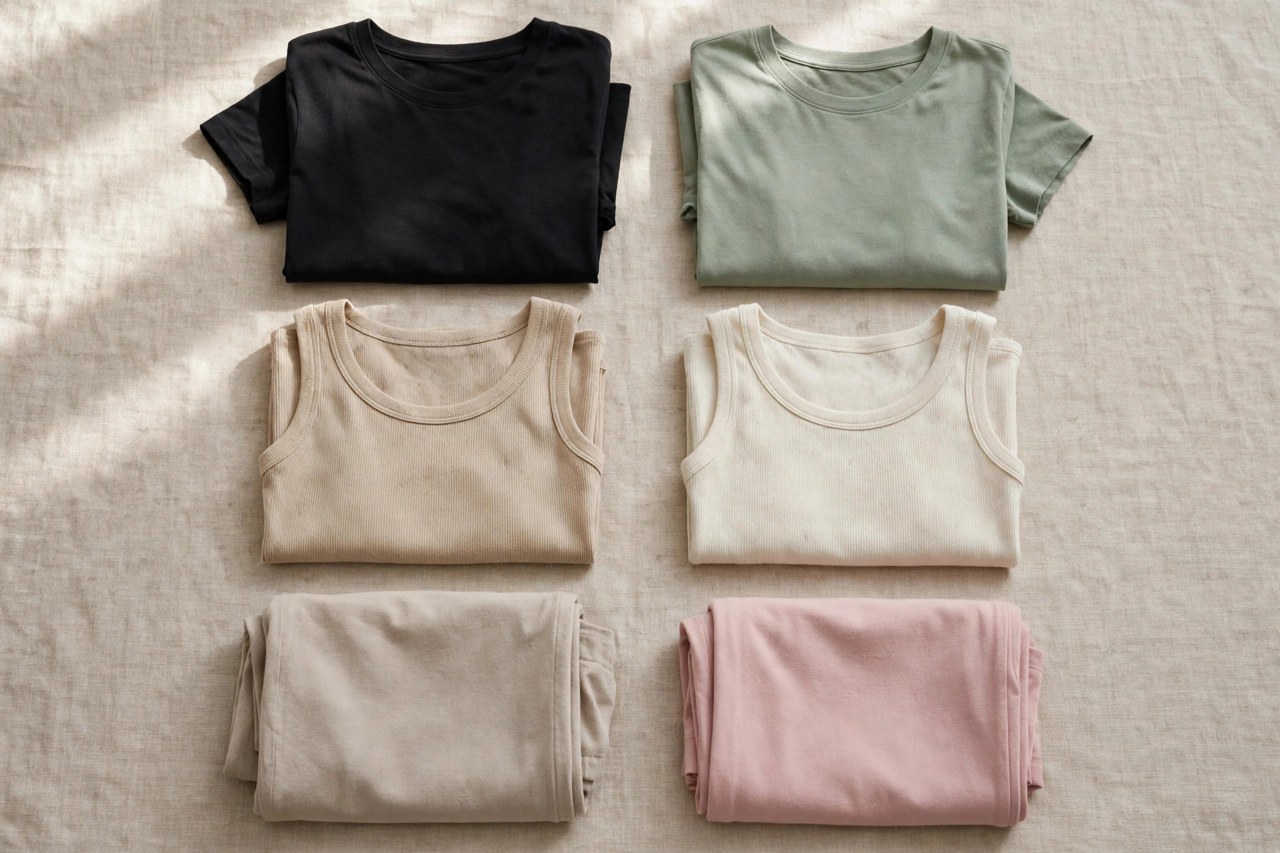
Cotton exercise clothing is the everyday kit for studio classes, aerobics, stretching, and light training: soft jersey tees and tanks, cotton-rich leggings and pants, gym shorts, and a fleece layer for the walk in. It is not built for marathon efforts, and it does not pretend to be. For the way most exercise classes actually run — moderate intensity, indoor temperatures, an hour or less — cotton's natural softness, freedom from static, and easy care make it a genuinely sensible choice. This guide covers the staple pieces, the knits they are made from, how to fit them for movement, and how to manage cotton's one real weakness, its love of absorbing sweat.
The Studio Staples
A working cotton exercise wardrobe needs surprisingly little. Two or three cotton jersey tops — a mix of tees and tanks — cover most classes; look for a midweight jersey around 160 to 200 GSM that stays opaque when you bend and stretch. Bottoms divide by activity: cotton-rich leggings with five to ten percent elastane for floor work and stretching, French terry pants for general classes, and classic cotton gym shorts for aerobics and circuits. A cotton jog bra or soft cotton-rich sports top suits low-impact studio work. Finish with a fleece sweatshirt or zip hoodie for warm-ups and the trip home. Bought in coordinating neutrals, this small kit mixes freely, which matters more than owning any single special piece.
Jersey, Terry, and Fleece: Picking the Knit
Single jersey is the exercise workhorse — light, breathable across its surface, and quick to wash and dry. Its weakness is cling: a fine jersey shows every line once damp, which is why slightly heavier or slub-textured jerseys are the smarter studio buy. French terry, smooth outside with fine loops inside, adds a touch of warmth and structure without bulk; terry pants hold their shape through a class better than jersey ones and look tidier afterward. Brushed fleece is the warm-up knit, insulating and soft, but too warm for the class itself in a heated studio. Ribbed cotton knits appear in tanks and fitted tops, hugging without compression. Across all of them, a little elastane is your friend: pure cotton stretches out during wear and only recovers in the wash, while a blend keeps its fit class after class.
Sweat Management, Honestly
Cotton absorbs sweat readily and releases it slowly, so an honest guide has to address the damp t-shirt problem. For gentle and moderate classes this is mostly a comfort question rather than a performance one: you will feel damp by the end, and changing out of wet cotton promptly afterward is the real discipline, since lingering in a sweat-soaked top chills the skin quickly. Choose mid-tone and heathered colors that show moisture least, avoid very pale greys, and prefer slightly looser cuts for high-sweat classes so damp fabric touches less skin. In hot studios, a cotton tank absorbs less overall than a tee simply because there is less of it. If you regularly leave a class drenched, treat that as the signal to reserve cotton for your gentler sessions and let a technical top handle the intense ones.
Fit for Movement
Exercise clothing should be fitted in the fitting room the way it will be worn in class: bend, reach overhead, twist, and squat, then check the mirror. Tops should not ride up past the waistband when arms lift, and necklines should stay put when you bend forward — a consideration that makes scoop necks with a bit of ribbing, or higher crew and boat necks, practical studio choices. Waistbands matter most of all: a wide, flat cotton waistband with elastic or a drawstring stays comfortable through floor work, while thin elastic digs in during every forward fold. Leggings should pass the squat-opacity test in bright light, and inseam gussets or flat seams reduce the inner-thigh friction that cotton's absorbency can aggravate. When between sizes, choose the one that fits after a wash — cotton relaxes with wear and snugs back with washing, so a slightly firm new fit usually settles perfectly.
Laundering a Hard-Working Kit
Exercise cotton earns frequent washing, and it tolerates it well with a few precautions. Wash soon after class rather than leaving pieces balled in a bag, where damp cotton mildews and holds odor; if you cannot wash immediately, hang pieces to dry first. Cool or warm water preserves elastane, which heat degrades wash by wash, and turning garments inside out protects outer surfaces from the abrasion of zips and other clothes. Skip heavy fabric softener on stretch pieces, since it coats the elastic fibers. Low tumble heat or line drying prevents the creeping shrinkage that shortens leggings and pants over a season. Cotton's reward for this modest care is freshness: unlike many synthetics, it does not build up the stubborn stale smell that survives washing, so a cotton kit stays pleasant far longer.
More to Explore on Apparel Search
- about fitness fashion
- Athletic Apparel
- Athletic Fashion
- Athletic Pants
- Athletic Shoes
- Athletic Style T-shirts
- Athletic Swimwear
- Athletic Wear
- benefits of cotton
- Clothes
- Clothing Retail Stores
- Cotton
- Cotton Definition
- Cotton News
- Exercise Clothing Stores
- Fashion
- Fashion Designers
- fashionista
- Organic Cotton
- Popular Brands
- Women's Athletic Clothing
- Women's Clothing Stores
- Women's Clothing Wholesalers
- Women's Cotton Clothing
- Women's Fashion
Photos

Looking for Women's Clothing Stores?
This guide helps you choose women's cotton exercise clothing for studio classes and aerobics. To browse where to buy, visit our women's clothing store directory, where you can find retailers that carry them.