Women's Cotton Athletic Pants Guide
Warm-up and training pants in cotton-rich knits — the sideline and studio staple, garment first and sport-specific where it counts.
Shop Women's Cotton Athletic Pants Now
Shop Women's Cotton Athletic Pants on Amazon Shop Women's Cotton Athletic Pants on eBayThe Amazon and eBay links on this page are affiliate links. If you make a purchase through them, Apparel Search may earn a commission.
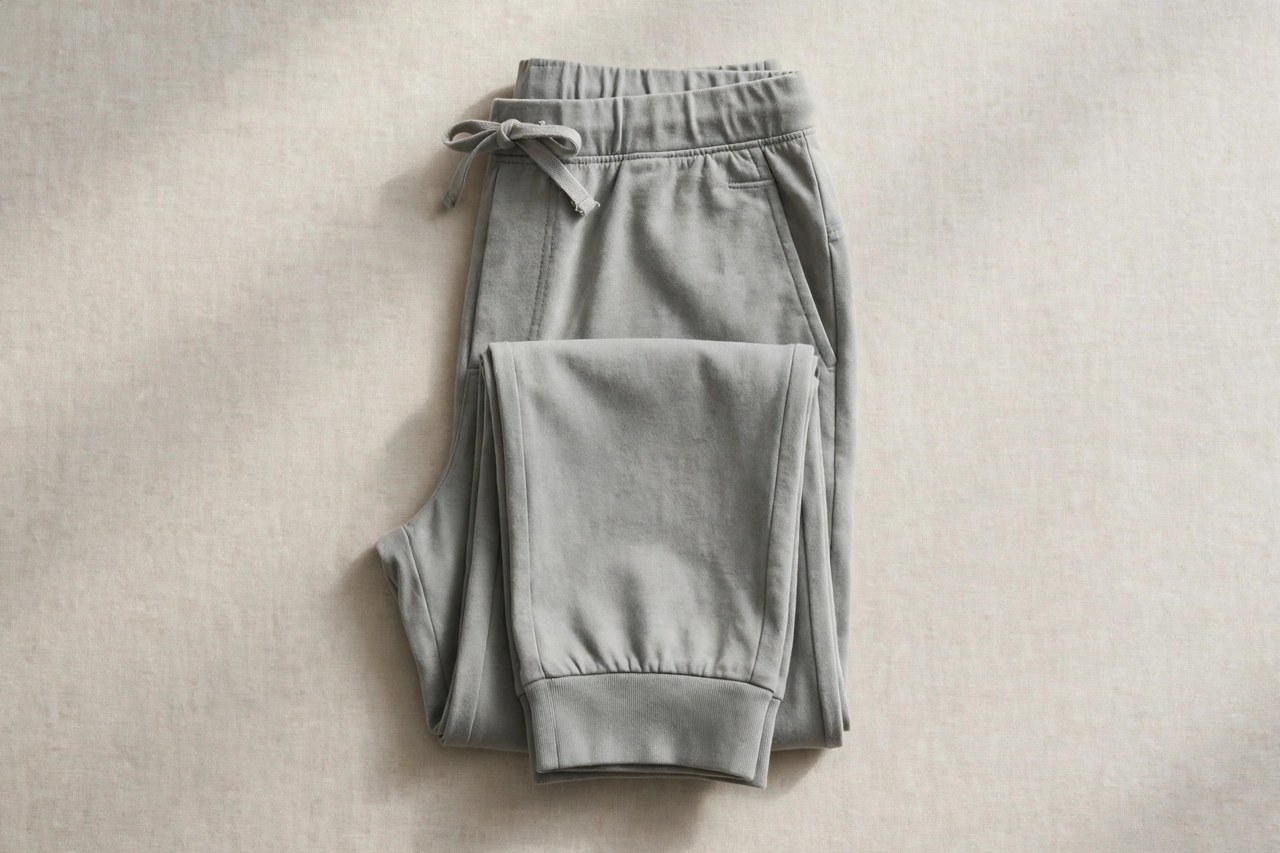
Cotton athletic pants are the training wardrobe's all-rounders: full-length pants in cotton fleece, French terry, or jersey, cut to warm up in, train in, travel to the venue in, and sit on a sideline in. They are garment-first in this guide — what they are made of, how they are cut, and how they behave across a training week — rather than a promise of performance technology. Cotton-rich athletic pants, commonly 280 to 360 GSM in fleece for winter training or lighter terry and jersey for indoor and summer use, dominate school teams, dance studios, martial arts halls, and community sport precisely because they are warm, tough, washable in bulk, and comfortable for the long stretches of a training day that are not spent at full exertion. Understanding where they overlap with sweatpants and running pants, and where they separate, helps you buy the right pair once.
Athletic Pants Versus Sweatpants Versus Running Pants
The three categories blur in shops, so separate them by design intent. Sweatpants are comfort-first: the softest fleece, the most relaxed cuts, made for home and casual wear that can visit a gym. Running pants are movement-specific: tapered, cuffed, cut close so nothing flaps or catches through a stride, and judged by what happens at mile three. Athletic pants sit between and slightly apart: they are training garments, usually straighter or gently tapered with an open or lightly cuffed hem, often with details sweatpants skip — ankle zips or snaps so they pull on over shoes and braces, reinforced knees or seats for floor work, and waistbands built to stay put through drills. If your main use is warming up, coaching, team travel, and general training sessions, the athletic pant is your category; if it is the run itself, see the running pants page, and if it is the sofa after, the sweatpants page is the honest destination.
Fabrics for the Training Week
Cotton fleece is the winter training standard: brushed inside, warm on a cold pitch or in an unheated hall, and forgiving of being sat on grass and concrete alike. French terry is the indoor and three-season choice, its looped back lighter and less likely to overheat through a full session. Cotton jersey athletic pants, the lightest branch, shade toward studio and summer training. Blends matter more here than in loungewear, because these pants work harder: a cotton-polyester mix, often around 60/40, dries faster after a sweaty session, resists the shrinkage pure cotton shows under constant washing, and keeps knees from bagging across a season. A few percent of elastane preserves the fit through the hip. None of these cloths wicks like a technical synthetic, and for maximal-effort sessions in heat that remains the right tool — but the cotton-rich athletic pant is bought for the whole training day, most of which is warm-ups, drills, instruction, and waiting, where warmth and comfort outrank drying speed.
Details Built for Sport
Read an athletic pant by its working details. Ankle zips, snaps, or generous cuffs that open wide let the pant come off over trainers and shin guards without a changing room, the defining sideline manoeuvre. A drawcord over strong elastic keeps the waist seated through jumping and floor work, and it should be bar-tacked or eyeleted to survive a season of hard tying. Pockets sit deep or zip shut, because keys and a phone must survive a warm-up jog. Reinforced or double-layer knees appear on pants meant for volleyball, martial arts, and coaching from the floor, and they genuinely extend life at the first wear point. Flat seams reduce chafing during repeated drills.
Fit for Movement
An athletic pant should allow a full training vocabulary without adjustment: a deep lunge, a high knee, a squat, a hamstring stretch with a straight leg. Test all four when trying on. The waist should sit secure at your natural waist or mid-rise without the cord tied to its limit, because cotton knits relax as they warm. Through the thigh, choose ease over sleekness — a close, legging-like athletic pant in cotton will chafe sooner and show sweat more than one with a centimetre of air in the leg. Length is functional: an open hem should clear the floor and the back of your shoe so it never slides under a heel mid-drill, and a cuffed hem should grip the ankle without climbing the calf.
Care Under Constant Washing
Athletic pants live a washed life, and cotton-rich knits are chosen for teams partly because they tolerate it. Wash after sweaty sessions — cotton holds odour — inside out, in warm water, and expect the familiar cotton behaviour: 3 to 5 percent early length shrinkage in pure cotton, less in blends, and gradual even fading that dark team colours disguise well. Tumble drying on medium is the realistic team and family routine; it softens fleece and terry but slowly tires waistband elastic, the component that will end most pairs' careers, so air drying your own pair between sessions extends its life noticeably. When a pair finally bags at the knee beyond a hot wash's power to restore, it graduates honourably to home workouts and gardening, the standard retirement path of hard-working cotton training clothes.
More to Explore on Apparel Search
Photos

Looking for Women's Clothing Stores?
This guide helps you choose women's cotton athletic pants by fabric and use. To browse where to buy, visit our women's clothing store directory, where you can find retailers that carry them.