Women's Cotton Pants Guide
Start with the cloth, not the silhouette — twill, poplin, and canvas weaves decide how a pair of cotton pants drapes, wears, and washes.
Shop Women's Cotton Pants Now
Shop Women's Cotton Pants on Amazon Shop Women's Cotton Pants on eBayThe Amazon and eBay links on this page are affiliate links. If you make a purchase through them, Apparel Search may earn a commission.

Most guides to women's cotton pants start with leg shapes. This one starts with the cloth, because the weave is what you actually live with all day. Cotton pants are cut from three workhorse woven families — twill, poplin, and canvas — plus lighter lawns and brushed flannels at the seasonal edges. The same straight-leg pattern sewn in a dense 280 GSM twill feels structured, holds a crease, and resists bagging at the knee, while the identical pattern in a 120 GSM poplin feels cool and fluid but wrinkles within an hour of sitting. Learning to read weave, weight, and finish before you read a size chart is the fastest way to stop buying pants that disappoint by the second wash.
Twill, Poplin, and Canvas: The Three Core Weaves
Twill is woven with a diagonal rib, visible as fine slanted lines running across the fabric. That diagonal structure makes twill naturally hard-wearing, good at hiding soil, and forgiving of creases, which is why chinos, khakis, and most everyday cotton trousers use it. Poplin is a plain weave with a very fine horizontal rib and a smooth, almost crisp surface; it is lighter than twill, breathes better, and suits warm-weather and dressier pants, but it shows wrinkles and shine sooner. Canvas, sometimes called duck, is a plain weave made with heavier yarns, giving a firm, matte cloth that softens slowly with washing. Canvas pants feel substantial and hold their shape, though they can feel stiff for the first few wears. Seersucker and cotton sateen appear at the margins: seersucker for puckered summer coolness, sateen for a smooth, slightly lustrous face.
Weight Matters: Reading GSM in Cotton Pants
Fabric weight, measured in grams per square metre, predicts more about a pair of pants than any styling description. Lightweight cotton pants at roughly 110 to 160 GSM — most poplins, lawns, and summer canvases — breathe well and dry quickly, but they can look thin against strong light and lose their line by evening. Midweight cloth from about 170 to 240 GSM is the year-round sweet spot: most quality twills live here, balancing structure, opacity, and comfort through a full workday. Heavyweight pants above 250 GSM, including dense twills and true duck canvas, offer durability and warmth and resist wind, at the cost of slower drying and a longer break-in period. If no weight is stated, judge by hand: hold the cloth up, check opacity, and note whether it springs back after you crush it in your fist.
Shrinkage, Stretch, and Fit Over Time
Cotton fiber swells when wet and contracts as it dries, so unsanforized cotton pants can shrink three to five percent in length on the first warm wash — enough to turn a perfect break into an ankle grazer. Reputable makers pre-shrink the cloth or cut with a shrinkage allowance, and labels that say garment-washed or pre-shrunk are worth trusting more than a bare size number. A small elastane content, usually one or two percent blended into the weft, is not a different fabric; it is insurance against knee bagging and seat sag, and it helps twill recover its shape between wears. Pure cotton relaxes through the day and tightens again after washing, so a pair that feels snug from the dryer and comfortable by noon is behaving normally. Buy the length with shrinkage in mind, hem after the first wash if you can, and never judge final fit in the fitting room alone.
Breathability, Pilling, and Everyday Wear
Cotton breathes because the fiber itself absorbs moisture vapor and the weave leaves microscopic air paths, with open plain weaves such as poplin and lawn moving the most air and dense canvas the least. That absorbency is a comfort in dry heat and a drawback in rain, since wet cotton dries slowly and feels heavy. Pilling — the small fiber balls that form at inner thighs, seat, and pocket edges — comes from shorter staple fibers working loose under friction. Longer-staple, tightly spun yarns pill far less, so a smooth, even fabric surface with no fuzz when new is a genuine quality signal. Dark twills also fade along abrasion lines and creases; that soft, lived-in fading is characteristic of cotton and is slowed, not stopped, by washing inside out in cool water. Reinforced pocket corners, bar-tacked stress points, and flat-felled or bound inseams all extend working life.
Care That Keeps the Cloth Honest
Wash cotton pants in cool to warm water with like colors, turn them inside out to protect the face and any dye, and avoid overloading the machine, which grinds twill ribs against zips and buttons. Tumble drying on high heat is the main driver of extra shrinkage and premature fading; line drying or a low tumble followed by a brief hang preserves both length and color. Poplin benefits from a warm iron while slightly damp, twill usually needs only a shake and smooth by hand, and canvas softens best when it is not over-dried to board stiffness. Store pants folded or hung by the waistband so the cloth rests in its woven shape rather than stretching over a thin hanger bar. Treated this way, a well-chosen midweight twill pair should give years of service, which is exactly what the fiber was bred for.
More to Explore on Apparel Search
- benefits of cotton
- Cotton
- Cotton Definition
- Cotton News
- cotton prices
- Organic Cotton
- What are pants?
- Women's Cotton Athletic Pants
- Women's Cotton Clothing Guide
- Women's Cotton Flannel Lounge Pants
- Women's Cotton Flannel Sleep Pants
- Women's Cotton Gingham Pants
- Women's Cotton Lounge Pants
- women's cotton maternity pants
- Women's Cotton Running Pants
- Women's Cotton Sleep Pants
- Women's Cotton Sweatpants
- Women's Cotton Trousers
- Women's Pants
Photos
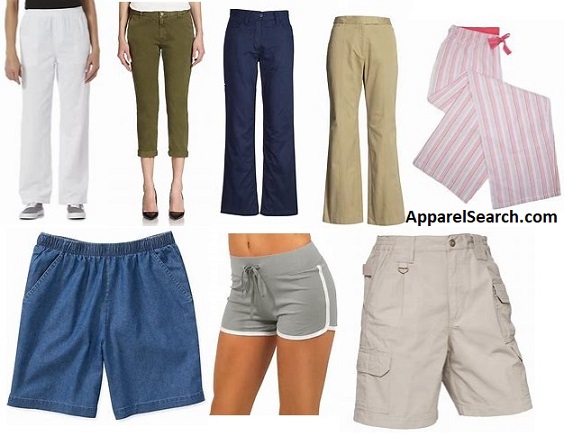
Looking for Women's Clothing Stores?
This guide helps you choose women's cotton pants by weave, weight and fabric. To browse where to buy, visit our women's clothing store directory, where you can find retailers that carry them.