Women's Cotton Jeans Guide
Jeans are a cotton story first — denim is a cotton weave, and everything about a pair follows from that cloth.
Shop Women's Cotton Jeans Now
Shop Women's Cotton Jeans on Amazon Shop Women's Cotton Jeans on eBayThe Amazon and eBay links on this page are affiliate links. If you make a purchase through them, Apparel Search may earn a commission.
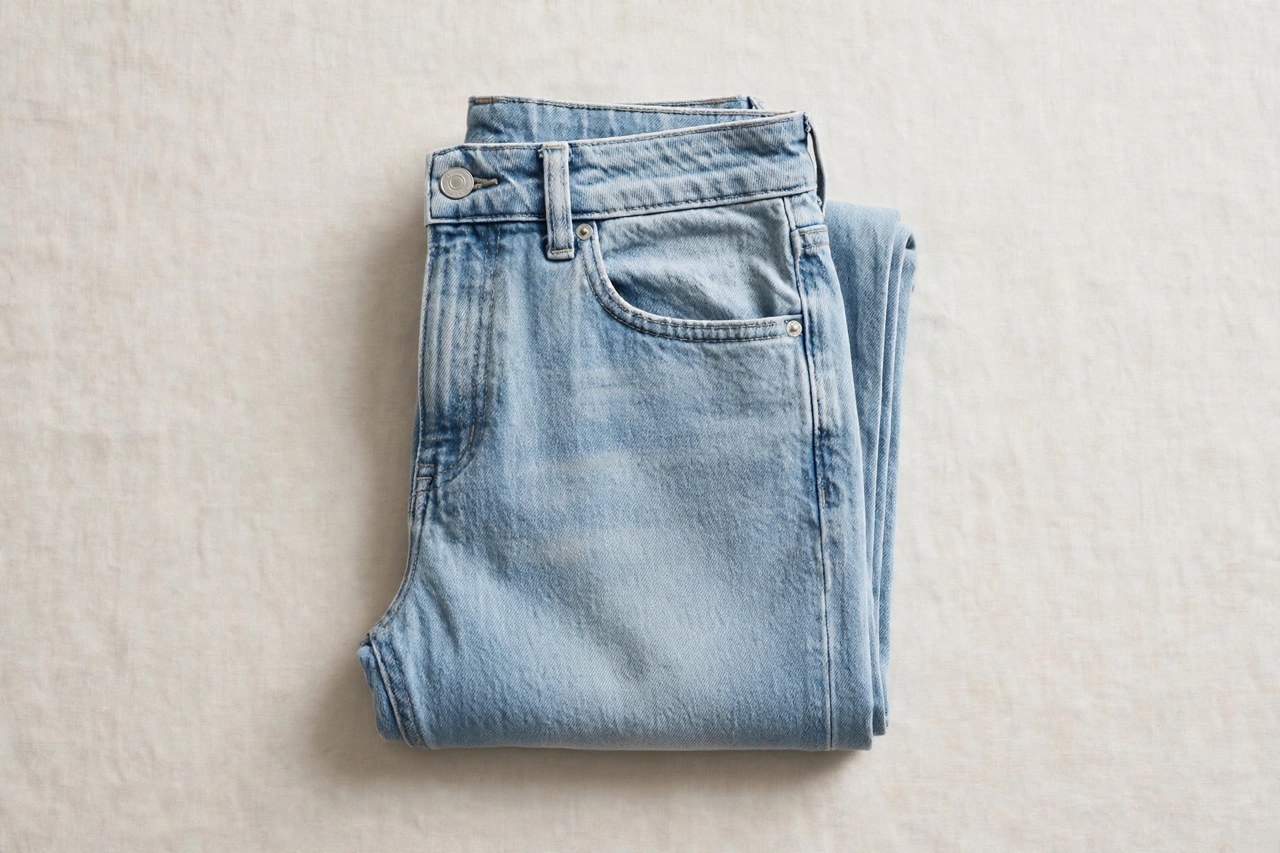
Every pair of jeans is, at root, a cotton garment. Denim is not a fibre but a weave: a sturdy cotton twill in which indigo-dyed warp yarns cross undyed white weft yarns, producing the blue face and pale underside everyone recognises. That construction explains nearly everything about how jeans behave — why they fade at the thighs and knees where the blue surface yarns abrade away, why they soften so dramatically with wear, and why a 100 percent cotton pair feels completely different from a stretch pair. Women's jeans today span rigid traditional denim, comfort-stretch blends, and high-elastane jegging cloths that are denim in name and appearance only. Knowing which cotton cloth you are buying, in what weight, is the single best predictor of whether a pair will become a favourite or a regret.
Denim Weights and What They Feel Like
Denim weight is measured in ounces per square yard, and it shapes a jean more than its cut does. Lightweight denim, under about 10 ounces, drapes softly, suits summer and wide-leg styles, and wears out fastest at stress points. Midweight denim, roughly 10 to 13 ounces, is the classic all-season jean cloth: structured enough to hold a skinny or straight leg, soft enough after a few wears for all-day comfort. Heavyweight denim above 13 ounces, reaching 16 and beyond in specialist pairs, starts stiff and boardy, moulds slowly and personally to the wearer, and can last for years — the choice of denim traditionalists. Most mainstream women's jeans sit in the 9 to 12 ounce range with stretch added.
100 Percent Cotton Versus Stretch Denim
Rigid jeans, woven from pure cotton, are having a genuine revival, and they behave exactly as jeans did for a century. They start snug, ease by roughly an inch in the waist with wear, mould to your seat and knees, and do not recover — the bagging at the knee is the trade for that personal fit, and a hot wash tightens everything back up, temporarily. Stretch denim adds elastane: 1 to 2 percent gives comfort stretch that eases movement while keeping a true denim character; higher percentages, especially with polyester blended in, create the soft, legging-like fit of skinny and jegging styles, with better shape retention but a flatter, less denim-like surface and a shorter life, because elastane degrades with heat and time. Neither is superior in the abstract. Choose rigid or low-stretch cotton for straight, wide, and vintage cuts you want to keep for years; choose higher stretch for close fits you expect to replace as fashion or fit changes.
Washes, Fades, and Finishes
A wash is both a colour and a softness treatment. Raw or rinse-washed denim arrives dark, stiff, and closest to the loom state; it will fade fastest and most personally, with whiskers at the hips and honeycombs behind the knees recording your actual habits. Stonewashing tumbles jeans with abrasive stones or modern enzyme equivalents to soften the cloth and lighten the blue evenly. Bleached and acid-style washes push toward pale blue or near-white and weaken the cotton somewhat, so very light pairs rarely outlast dark ones. Distressing, from factory whiskering to ripped knees, is purely cosmetic but removes cotton at exactly the points of greatest stress, so heavily distressed jeans should be bought as fashion pieces, not workhorses. Whatever the wash, darker, simpler denim dresses up furthest and ages most gracefully.
Shrinkage: The Raw Denim Lesson
Cotton denim shrinks, and jeans are where most women meet that fact. Unsanforized, or shrink-to-fit, denim can lose 5 to 10 percent in length and a noticeable amount in the waist on its first hot soak — traditionally bought long and worn into a bath to mould. Almost all modern women's jeans are sanforized, a pre-shrinking process that limits residual shrinkage to about 1 to 3 percent, mostly in length. Stretch denims complicate the picture: the cotton shrinks slightly while the elastane relaxes with wear, so a pair can feel tighter after washing and looser by afternoon, every cycle. Practical rules follow. Never hem jeans before a first wash. Wash cold and line dry if length is precious. Expect rigid jeans to need a belt by the third wear and a warm wash when the knees bag. And when trying on rigid pairs, buy them honestly snug in the waist — comfortable in the shop usually means loose by Friday.
Care for a Long Denim Life
Jeans folklore says never wash them; the truthful version is wash less, and wash gently. Every wash removes indigo and shortens cotton fibre life, so spot-clean small marks, air pairs between wears, and wash inside out in cold water when the whole garment needs it, using a short gentle cycle. Skip the tumble dryer where you can — heat is the fastest killer of elastane and the main driver of shrinkage — and reshape the waistband while damp. Fold or hang from the waistband rather than crushing jeans into a drawer. Repairs extend life honourably: a tailor or darning service can rebuild a worn inner thigh or crotch, the usual failure points, for far less than a new quality pair.
More to Explore on Apparel Search
- blog posts about jeans
- Cotton
- Cotton Definition
- cotton jeans
- Cotton News
- Denim Jean Shorts
- Designer Cotton Jeans
- different types of pants
- Fashion Designers
- history of Levi's jeans for women
- Organic Cotton
- Popular Brands
- Ripped Jeans
- Vintage Jeans
- Women's 5-Pocket Jeans
- Women's Ankle Zip Jeans
- Women's Cotton Clothing
- Women's Flannel Lined Jeans
- Women's Flare Jeans
- Women's Jeans Guide
- Women's Jeans on eBay
- Women's Jeans Stores
- Women's Skinny Jeans
Photos

Looking for Women's Clothing Stores?
This guide helps you choose women's cotton jeans by denim weight and wash. To browse where to buy, visit our women's clothing store directory, where you can find retailers that carry them.