Women's Skinny Jeans Guide
Skinny jeans are denim jeans cut close from waist to ankle, tapering to a narrow opening — the defining jean silhouette of the stretch-denim era.
Shop Women's Skinny Jeans Now
Shop Women's Skinny Jeans on Amazon Shop Women's Skinny Jeans on eBayThe Amazon and eBay links on this page are affiliate links. If you make a purchase through them, Apparel Search may earn a commission.
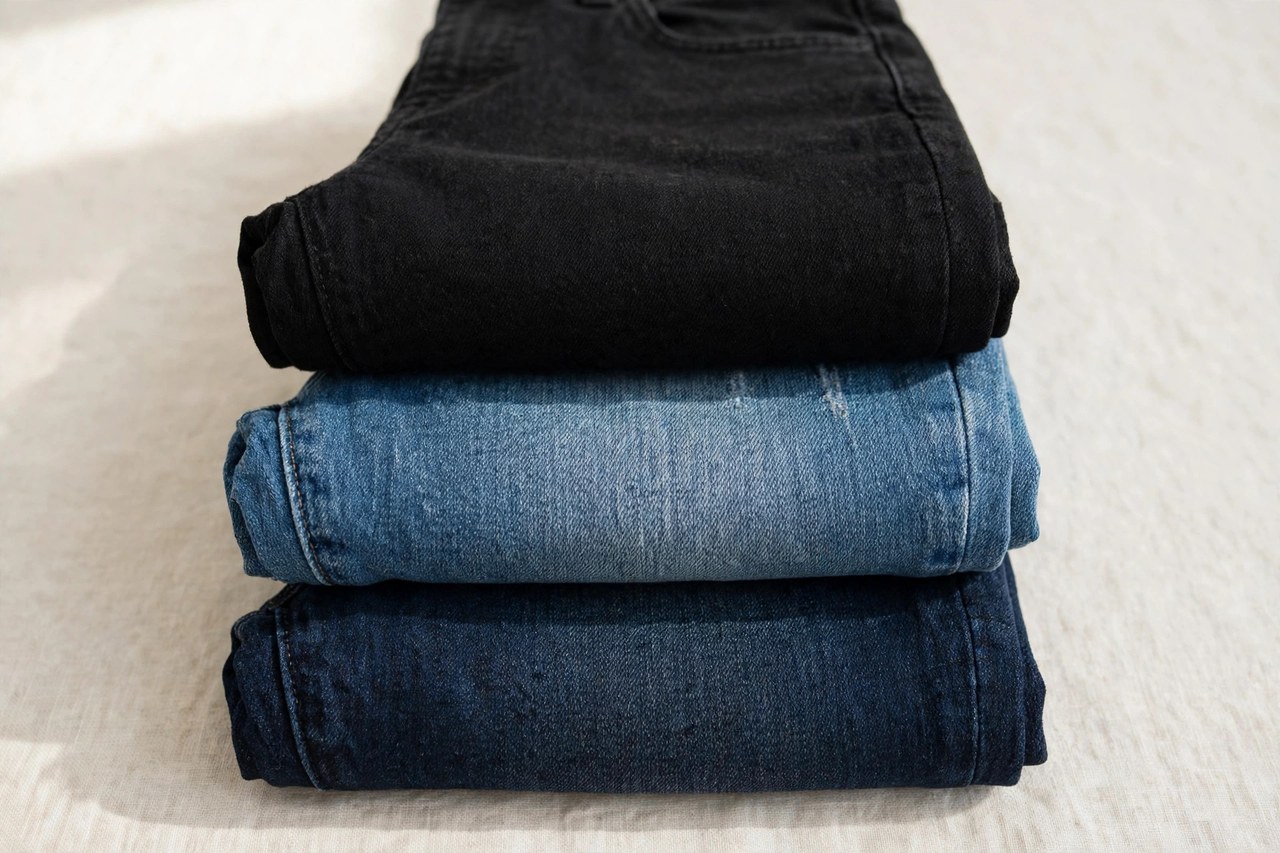
Skinny jeans are jeans cut to follow the leg closely from waist through thigh and calf to a narrow ankle opening, made possible — and wearable — by stretch denim. Before elastane entered denim in meaningful amounts, a jean this close would have been a costume you could not sit down in; with one or two percent stretch, it became the default jean for a generation of women. The silhouette's reign as the only jean has passed, but the skinny remains a working staple: the jean that tucks into boots, shows a shoe, and layers under long tops and sweaters without bulk.
This guide is specifically about the denim garment: stretch levels and denim weights, where skinny ends and its neighbors begin, rises and washes, and the fit checks that separate a good skinny jean from a legging with pockets. The non-denim version — skinny cut trousers and pants in twill, ponte and suiting — has its own page, because fabric changes everything about how the same silhouette behaves.
Skinny, Slim, Cigarette and Jegging
The close-fit family has gradations worth knowing. A slim jean follows the leg with a little air left in it and a moderately tapered opening. A skinny jean hugs through the calf and ends at an opening of roughly 10–12 inches. A cigarette jean is skinny's straighter cousin, narrow but not elastically tight, ending right at the ankle bone. A jegging crosses the line into a legging printed and seamed to imitate denim, with a pull-on waist — comfortable, and honest only if you buy it as a legging, not as a jean.
Ankle length is the skinny's styling lever. A full-length skinny stacks slightly or ends cleanly at the shoe; an ankle skinny stops above the ankle bone to show footwear; a cropped skinny ends mid-calf-adjacent territory and reads as a warm-weather jean. Because the leg is so narrow, half an inch of length changes the whole proportion — buy the length for the shoes you will actually wear the pair with, especially heeled ankle boots, which need the hem to meet the boot shaft without bunching.
Denim Weight and Stretch: The Real Spec Sheet
Judge skinny jeans by their fabric recipe. Denim weight runs from light 9-ounce summer denim to sturdy 12–13-ounce fabric; skinnies usually live at 10–12 ounces, where the cloth still reads as denim but bends with the close cut. Stretch content divides the feel: around 1% elastane gives rigid-look denim a forgiving edge; 2% or a stretch-polyester blend gives the classic body-hugging skinny; anything marketed as ultra-stretch moves toward jegging behavior, including its shorter lifespan at the knees and seat.
The number that predicts disappointment is recovery — whether the stretch snaps back. Quality stretch denim uses better elastane and tighter construction, so the jean fits the same at 6 p.m. as at 8 a.m. Cheap stretch bags at the knee by lunch. Test in the fitting room: squat, sit for a full minute, stand and look at the knees. Cotton content above roughly 90% with the rest as stretch fiber is the classic recipe; high synthetic content lightens the fabric and speeds recovery but can feel less like denim and hold odor more.
Rises, Washes and Details
Rise changes a skinny more than any other variable, because the close fit leaves nowhere to hide. High-rise skinnies (10–11 inches) smooth the waist, hold tucked tops and became the silhouette's standard form. Mid-rise (8–9 inches) is the neutral classic. Low-rise skinnies define the 2000s original and demand a top that meets them honestly. Waistband construction matters at every rise: a contoured yoke and a slightly higher back rise prevent the gaping and pulling-down that plague badly cut close fits.
Washes run the formality scale. Dark indigo and black skinnies dress up furthest and fade slowest, which is why they anchor most wardrobes. Medium and light washes read casual and show whiskering and fading. Coated black skinnies imitate leather for evening. Distressing — rips at the knee especially — sits exactly on the skinny's highest-flex point, so factory rips widen with wear; buy them nearly closed if you want them to last. Five-pocket styling is standard; clean, pocket-minimal versions edge toward trouser territory.
Fit Checks, Styling and Care
A skinny jean fits when the waistband stays put without a belt doing structural work, the seat is smooth without pulling lines, and you can pinch a little fabric — not none, not a handful — at the thigh. The ankle opening should slip over your heel with a tug, not a battle. Buy skinnies snugger than any other jean: denim relaxes about half a size in the first wears, concentrated at waist, knee and seat, and a pair that starts perfect ends up sliding. If a pair starts loose, no wash will save it.
Styling is the skinny's home ground: volume on top balances the close leg, so oversized sweaters, long blazers and tunic tops are its natural partners, and it disappears into knee boots and over ankle boots without a fold of extra cloth. Wash skinnies rarely, inside out and cold, and skip the dryer to protect the elastane — heat is stretch denim's true enemy, aging recovery faster than wear does. Hung by the waistband or folded, a well-chosen pair keeps its line for years, long after the trend cycle has moved on and come back again.
Related Women's Guides
More to Explore on Apparel Search
Women’s Clothes Guide by Letter: A · B · C · D · E · F · G · H · I · J · K · L · M · N · O · P · Q · R · T · U · V · W · X · Y · Z
Looking for Women's Clothing Stores?
This guide helps you choose women's skinny jeans. To browse where to buy, visit our women's clothing store directory, where you can find retailers that carry them.