Women's Suit Pants Guide
Suit pants are the tailored trousers of a suit — cut from suiting cloth to match a jacket, and just as useful worn as a separate with knits, shirts and blazers.
Shop Women's Suit Pants Now
Shop Women's Suit Pants on Amazon Shop Women's Suit Pants on eBayThe Amazon and eBay links on this page are affiliate links. If you make a purchase through them, Apparel Search may earn a commission.
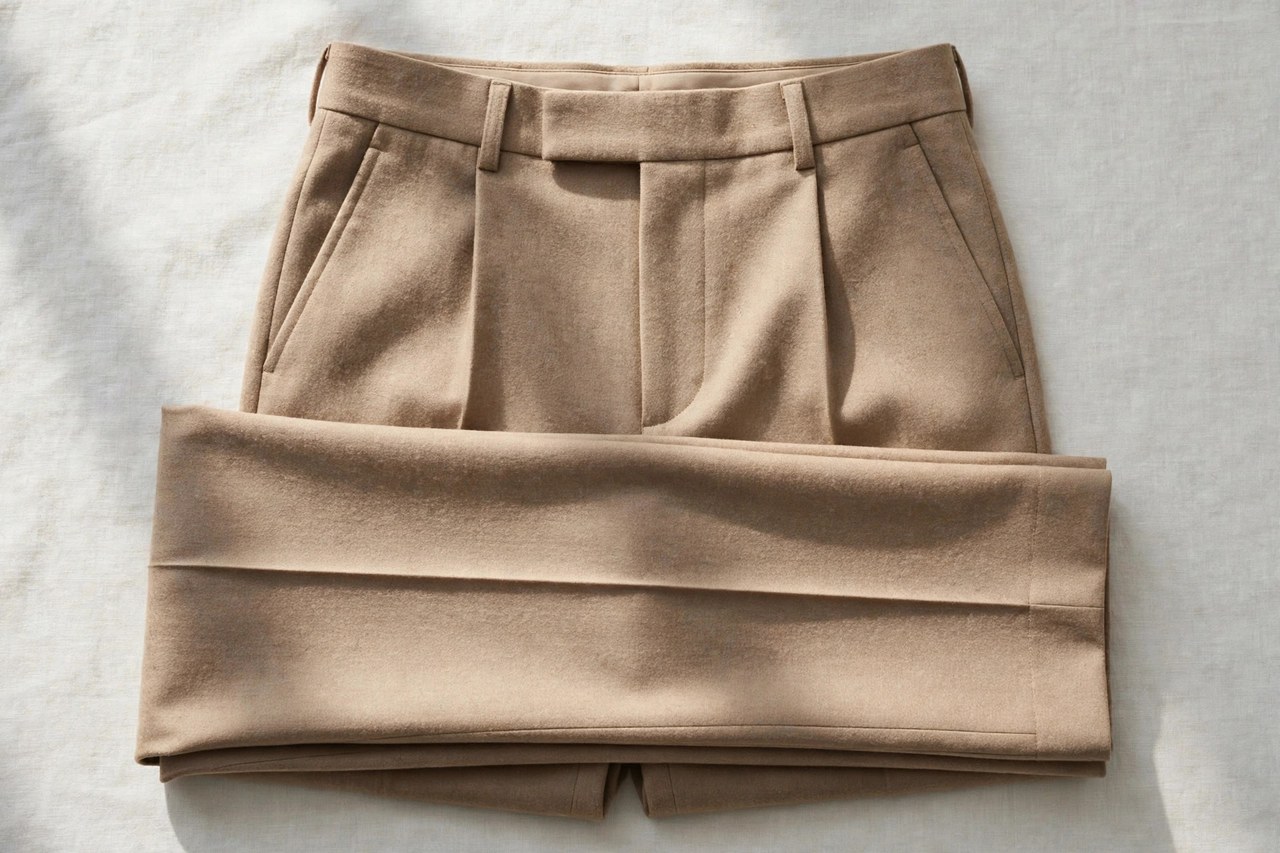
Suit pants are the trouser component of a suit: tailored pants made from suiting fabric — most classically wool or a wool blend — cut to be worn with a matching jacket, and finished to a dress standard rather than a casual one. Flat fronts or pleats, a proper waistband, belt loops or side adjusters, lined or half-lined legs and a pressed crease distinguish them from chinos, jeans and fashion trousers. They are the most formal trousers in most wardrobes, and among the hardest-working.
This guide treats the trouser on its own, where the companion suits page covers the full matched ensemble. The questions here are a trouser buyer's: how suit pants are constructed and why the details matter, which leg shapes and rises are current and flattering, how hems should break over different shoes, how to buy suit pants as separates without orphaning them, and how to keep suiting cloth looking pressed and new through a working life.
Construction: What Makes a Trouser a Suit Pant
Suit pants begin with the cloth: suiting wool in plain or twill weave, wool-polyester and wool-stretch blends, and seasonal cotton or linen suiting, all smoother and finer than casual trouser fabrics. Construction follows: a structured waistband that sits without a belt, a fly with hook or button closure, slant or side-seam pockets cut not to gap, and back pockets finished as welt or button-through styles. Many quality suit pants are lined to the knee in front, which helps the cloth slide over the leg, hold its crease and resist wear at the thigh.
Details separate the tailored from the merely trouser-like: a gripper strip keeps a tucked shirt in place, an extended tab closure lies flat under a jacket, and unfinished bottoms on better suit pants expect a tailor to set your exact length. Judge a pair inside out: clean seam finishes predict a trouser that presses well for years.
Leg Shapes, Rises and the Crease
Current suit pants span slim straight, tapered, wide-leg and relaxed straight cuts, with cropped and ankle lengths as deliberate styles rather than short trousers. The classic straight leg with a center crease remains the most formal and the most forgiving across shoe types. Pleats have returned as a considered choice: a single forward pleat adds room through the hip and a traditional line, while flat fronts give the cleaner, more modern front most suits now use. Neither is more correct; they fit different hips and different jackets.
Rise decides where the trouser meets the top you tuck into it: high rises pair with cropped and tucked styling and lengthen the leg line, mid rises are the versatile standard, and low rises have largely left tailored clothing. Whatever the shape, the crease is the suit pant's signature — a sharp, centered crease pressed from waist to hem reads as tailoring, and its absence reads as a trouser that has given up. Choose the leg shape against your shoes and jacket lengths, not against a photograph, because proportion is a system.
Hemming and Fit: The Tailor's Territory
Suit pants are the garment where tailoring pays most visibly. Waist fit comes first — the band should sit securely, with a tailor able to take in or let out an inch or so via the center back seam and the waistband's built-in allowance, a construction detail worth checking before purchase. Seat and thigh should be smooth without pulling, with enough ease to sit and climb stairs; a trouser that fits standing in the shop and binds seated at a desk has failed its actual job.
Hem length is set by the shoe and the leg width together. A slim or tapered leg usually finishes at the ankle bone or with a slight break; a wide leg wants a full break or a deliberate crop, nothing in between; cuffs, where offered, suit pleated and classic cuts and add weight that helps a light cloth hang straight. Bring the shoes you will wear most to the fitting, and have both legs pinned while standing naturally — posture in the fitting room is posture in the office, and a half-inch here is the difference between tailored and merely long.
Buying as Separates, Wearing and Care
Because suits are increasingly sold as separates, suit pants can be bought to match an existing jacket — but cloth matching is unforgiving: dye lots differ, and a near-black is worse than an honest contrast. Buy match pants with the jacket in hand, in daylight, or build separates wardrobes on deliberate non-matching: charcoal pants under a navy blazer, a checked jacket over plain trousers. As standalone tailored trousers, suit pants pair with knit tops, silk shirts, fine sweaters and loafers or pumps far beyond the suit they came from.
Care keeps the crease and the cloth: hang suit pants by the hem from a clamp hanger so the leg's weight pulls wrinkles out overnight, rest them a day between wearings, brush after wear, and dry clean sparingly — pressing, more often than cleaning, is what a working suit pant actually needs. Wool suit pants worn in rotation and pressed as needed hold their finish for years. Retire a pair when the seat shines, the crease will no longer take a press, or the cloth thins at the inner thigh; a fresh pair restores every top it partners.
Related Women's Guides
More to Explore on Apparel Search
Women’s Clothes Guide by Letter: A · B · C · D · E · F · G · H · I · J · K · L · M · N · O · P · Q · R · T · U · V · W · X · Y · Z
Looking for Women's Clothing Stores?
This guide helps you choose women's suit pants. To browse where to buy, visit our women's clothing store directory, where you can find retailers that carry them.