Women's Pants Guide
Pants — trousers, in British usage — are the two-legged foundation of the modern wardrobe, running from jeans and chinos to tailored dress pants and athletic styles.
Shop Women's Pants Now
Shop Women's Pants on Amazon Shop Women's Pants on eBayThe Amazon and eBay links on this page are affiliate links. If you make a purchase through them, Apparel Search may earn a commission.
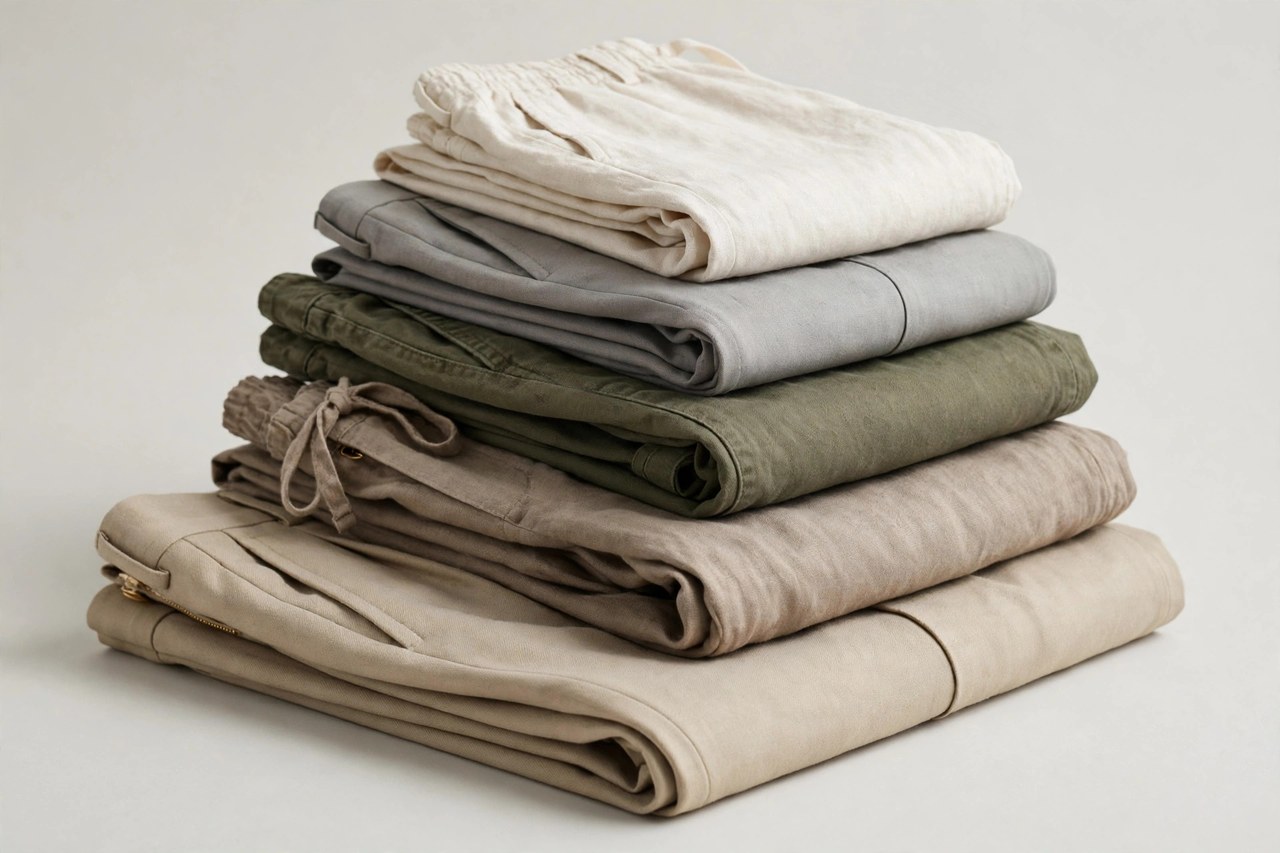
Pants are an outer garment covering the body from the waist to the ankles, with a separate covering for each leg. That second clause is the definition that matters: unlike a skirt, which surrounds both legs together, pants divide at the seat and cover the left and right legs separately, which is what gives them their freedom of movement. In American English the word is pants; in British English the same garment is called trousers, and the British word pants refers to underwear — a difference worth knowing when shopping international brands or reading vintage patterns.
For women, pants became everyday dress only in the twentieth century, moving from workwear and sportswear into offices and evening wear over a few decades. Today the category is enormous. This umbrella guide organizes it by use — casual, business, formal and athletic — then covers the fit vocabulary of rises, inseams and leg shapes, the main fabrics, and how to buy a pair that actually fits both waist and hip.
The Four Categories: Casual, Business, Formal, Athletic
Casual pants include jeans, chinos, cords, cargo pants and casual twills: durable fabrics, relaxed fits, and styling that pairs with tees, sweaters and sneakers. Business pants are the tailored trousers of office dress — flat-front or pleated, in wool blends, crepe or polished cotton, cut straight, tapered or wide, and finished with proper waistbands, belt loops and hems. The same pair often has to sit through meetings, travel and a full working day, so wrinkle resistance and a smooth lining matter more here than anywhere else.
Formal pants take trousers into evening: tuxedo pants with satin stripes, wide-leg satin or crepe trousers worn with dressy tops, and tailored jumpsuit-style cuts. Athletic pants cover joggers, training and yoga pants, track pants and outdoor styles in technical fabrics, built for movement, moisture management and easy care. Most wardrobes need at least one good pair in the first two categories; the formal and athletic pairs follow from your calendar and your exercise habits.
Fit Vocabulary: Rise, Inseam and Leg Shape
Rise is the distance from the crotch seam to the waistband. Low-rise pants sit below the natural waist, mid-rise at or just below it, and high-rise at or above it. Rise decides both comfort when sitting and how tops tuck. Inseam is the inner leg length from crotch to hem; it must match your shoe height — a trouser hemmed for flats will pool over heels and vice versa, so many women own the same style hemmed two ways. Leg shape runs from skinny and straight through tapered, bootcut and flare to wide-leg and palazzo, the widest form.
The classic women's fit problem is the waist-to-hip difference: a pair that fits the hips often gaps at the back waist. Curvy-fit or contoured-waistband styles, cut with a higher back rise and a shaped waistband, solve most of that gap without tailoring. Other fit checkpoints: the front should lie smooth without pulling at the pockets, you should be able to sit and climb stairs comfortably, and pleats, if present, should lie closed when standing — pleats that splay open are a sign to size up.
Fabrics and Construction
Fabric follows category. Denim and cotton twill anchor casual pants; wool and wool blends, polyester crepe and rayon blends anchor business trousers because they drape, resist wrinkles and hold a crease; satin, silk and heavy crepe make formal pants; and nylon or polyester with elastane makes athletic pants. A small amount of stretch — one or two percent elastane — now appears in almost every category and improves comfort without changing the look, provided the base fabric is substantial enough to recover its shape.
Construction details signal quality. Look for a waistband with internal structure or a hook-and-bar closure that takes strain off the zipper, pockets deep enough to use, finished interior seams, and a hem allowance that lets a tailor adjust length. Lined business trousers hang smoother and last longer but cost more to clean. On casual pants, check that plaids and stripes match at the side seams and that belt loops are bar-tacked; on athletic pants, check for flat seams and a gusset, which together prevent chafing in movement.
Choosing, Alterations and Care
Start a pants wardrobe with the pair your life uses most: for most women, a dark tailored trouser and a well-fitting jean do more work than any five novelty pairs. Buy for your largest measurement and tailor the rest — hemming and waist adjustments are inexpensive and routine, while letting out a too-small hip is usually impossible. Keep a note of your inseam for flats and for heels; it makes online ordering far more reliable than dress size alone.
Care follows fabric: cotton casual pants wash at home and improve with softness; wool business trousers need rest days between wears, a brush and airing, and occasional dry cleaning rather than frequent washing; athletic pants want cool water and no fabric softener, which clogs moisture-wicking fibers. Hang tailored pants by the hem from clamp hangers to let wrinkles fall out, and store jeans folded. A good pair of pants is a multi-year garment, and the categories above let you buy each one for a defined job rather than by guesswork.
Related Women's Guides
Photos

More to Explore on Apparel Search
- Women's Madras Pants
- Skinny Pants
- Drawstring Pant
- Women's Corduroy Pants
- Women's Khaki Pants
- Leather Pants
- Knit Pants
- Women's Jeans
- Women's Short Pants
- Women's Cotton Pants
- types of pants for women
- ripped jeans
- Women's slacks
- business pants
- Women's suit pants
- designer pants
- sweatpants
- jogging pants
- aerobic pants
- business casual pants
- Women's trousers
- black pants
- blue pants
- brown pants
- green pants
- orange pants
- pink pants
- purple pants
- red pants
- tan pants
- white pants
- yellow pants
- camouflage pants
- shorts are also pants
- dress pants
- Fashion Designer Directory
Looking for Women's Clothing Stores?
This guide helps you choose women's pants. To browse where to buy, visit our women's clothing store directory, where you can find retailers that carry them.