Women's Jogging Pants Guide
Pants made for the slow, steady mile: sweatpants, cuffed joggers and fitness pants — fabrics, cuffs and fits for exercise and everything after it.
Shop Women's Jogging Pants Now
Shop Women's Jogging Pants on Amazon Shop Women's Jogging Pants on eBayThe Amazon and eBay links on this page are affiliate links. If you make a purchase through them, Apparel Search may earn a commission.
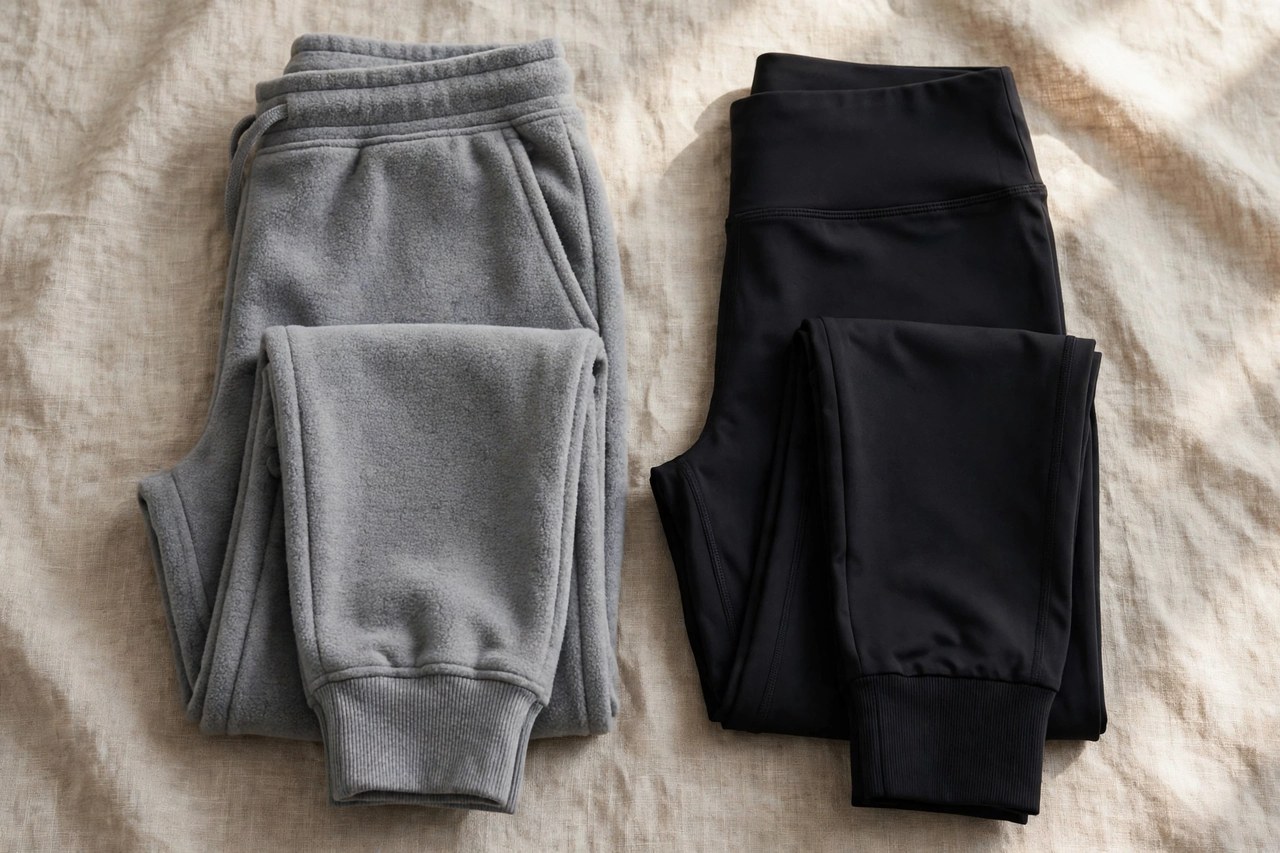
Jogging is a form of running at a slow or leisurely pace. It puts less stress on the body than faster running but more than walking, and it is good for maintaining a steady speed for longer periods of time. Jogging pants are the trousers built for that steady mile — soft, warm, unrestricted at the knee, and secured at the waist and ankle so nothing needs adjusting mid-run.
Women have a wide assortment of outfits to wear when jogging. You will need a good pair of running shoes, but a proper pair of pants matters more than beginners expect: cold muscles, chafing seams and a waistband that migrates can end a run faster than tired legs. And although it is not truly critical, it is a good idea to look good doing it.
Three Branches: Sweatpants, Joggers, Fitness Pants
Sweatpants are the originals: loose fleece trousers with an elastic or drawstring waist and an open or elasticated hem, made for warmth before and after effort as much as during it. Joggers are their tailored descendants — the same soft construction, tapered through the leg and finished with a ribbed cuff at the ankle, so the trouser stays clear of the heel and shows the sneaker. The cuff is the jogger's defining detail, and the reason the style crossed so easily into everyday fashion.
Fitness pants are the technical branch: smooth stretch knits, often in the yoga-pant lineage, that trade fleece warmth for moisture management and a closer fit. They are versatile — a great go-to garment well beyond exercise — and they overlap with athletic pants and running tights. Every on-trend wardrobe needs a pair of joggers somewhere on this spectrum; sweat pants are good for lounging, jogging, or making your way around town.
Fabrics and Details That Matter
Classic jogging pants are cotton or cotton-polyester fleece: brushed inside, warm, forgiving, and heavy when wet. Technical versions in polyester or nylon knits wick sweat and dry mid-run, which matters in rain and in winter, when a sweat-soaked cotton fleece turns cold the moment you stop. Choose by climate: fleece for dry cold and short outings, technical knits for distance and weather.
The details decide whether a pair runs well. A drawstring inside the elastic waist is not decoration — it is the difference between a secure waist and a hiking-up trouser. Flat or offset seams prevent chafe; a gusseted crotch frees the stride; zip pockets keep a key and phone from becoming a rhythm section. Ankle zips on looser styles let pants come off over shoes at the track.
Fit and Care
Fit for the stride, not the mirror. Jogging pants should let you lift a knee to hip height and sit without the waistband moving, with enough room at the thigh that the fabric never binds at pace. Length works differently by branch: joggers should meet the ankle bone at the cuff; sweatpants can stack slightly; fitness pants follow the legging rules in our athletic pants guide.
Care is forgiving — these are hard-wearing clothes. Wash fleece inside out to keep the brushed face soft, tie the drawstring so it cannot escape its channel, and tumble dry low: high heat is what ages the elastic that the whole garment depends on. Wash technical knits without fabric softener, which clogs the wicking finish.
Season changes the choice more than style does. In summer, the jogging pant's job shrinks to warm-ups, early mornings and the run itself in the coolest hour — many joggers swap to running shorts and keep the pants for before and after. In winter the fleece pair earns its place, sometimes over a base-layer tight, with the cuffed jogger hem sealing over the sock so no ring of cold air reaches the ankle. A two-pair rotation — one fleece, one technical — covers the whole year for most runners.
Related Women's Guides
Photos

More to Explore on Apparel Search
Looking for Women's Clothing Stores?
This guide helps you choose women's jogging pants. To browse where to buy, visit our women's clothing store directory, where you can find retailers that carry them.