Women's Running Shoes Guide
Women's running shoes are engineered footwear — cushioning, drop, fit and pronation support matched to your stride matter more than color.
Shop Women's Running Shoes Now
Shop Women's Running Shoes on Amazon Shop Women's Running Shoes on eBayThe Amazon and eBay links on this page are affiliate links. If you make a purchase through them, Apparel Search may earn a commission.
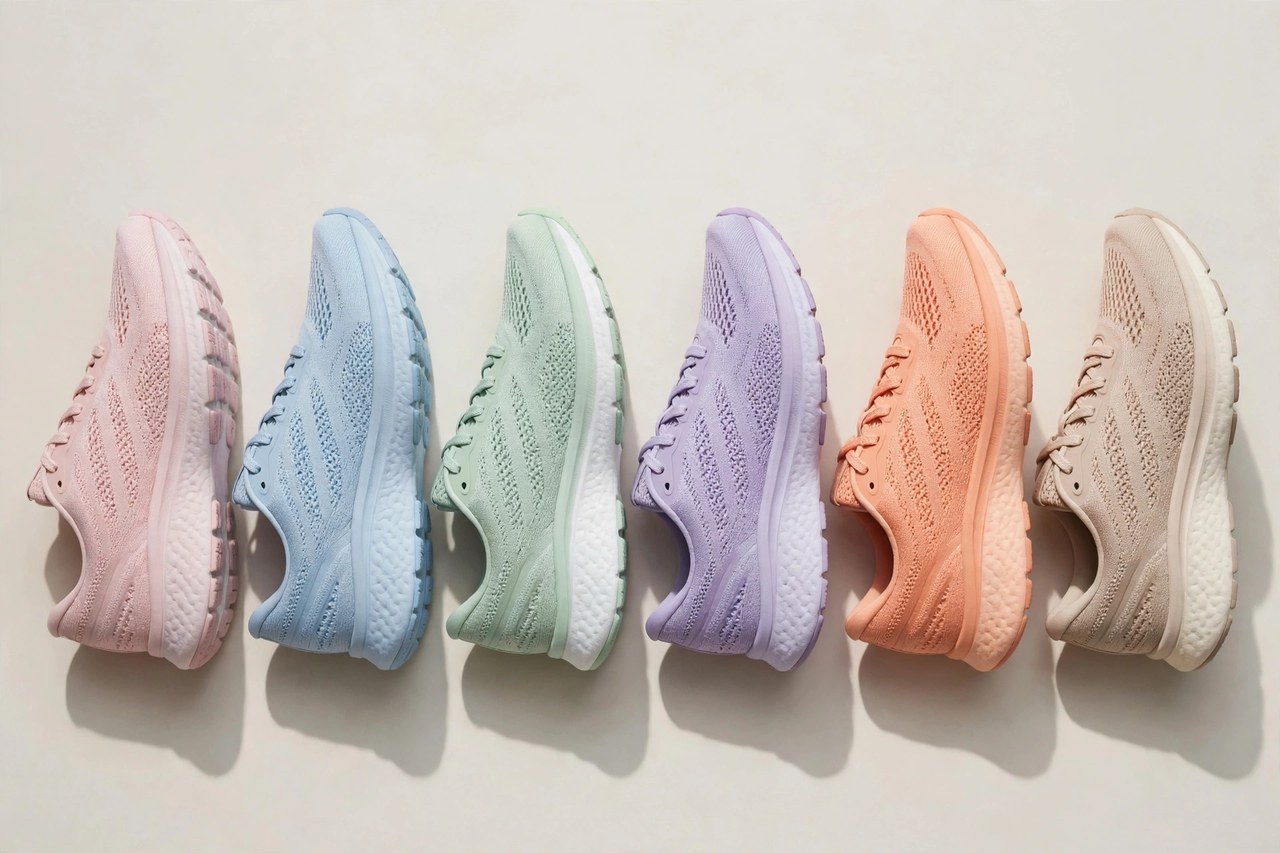
Running shoes are the most engineered footwear in this guide: purpose-built shoes whose foams, geometry and uppers are designed around the repeated impact of running, which loads the body with several times its weight at every stride. Women's running shoes are not simply smaller men's shoes in different colors — they are built, in any serious range, around women's typical proportions and gait, and choosing them well has more to do with fit, cushioning and support type than with any other shoe purchase you make.
This guide explains the vocabulary of the category — neutral versus stability, cushioning levels, heel-to-toe drop, road versus trail — and the fitting rules that prevent the blisters, black toenails and aches that come from the wrong pair. Whether you run daily or are buying for a first couch-to-5K, the right process is the same: understand your stride, try shoes properly, and replace them on mileage rather than on how tired they look.
Neutral, Stability and Pronation
The central sorting idea is pronation — how the foot rolls inward as it lands and pushes off. Runners whose feet roll moderately and evenly generally suit neutral shoes, which provide cushioning without corrective structure. Runners whose feet roll noticeably inward, called overpronation, often do better in stability shoes, which add firmer foam or guide features on the inner side to moderate the roll. Severe cases lead to motion-control models, the most structured and least common end of the range.
Take pronation labels with calm, modern skepticism. Recent shoe design uses gentler guidance — wider bases, sidewall geometry and blended foams — rather than the rigid posts of older stability shoes, and comfort in a proper fitting predicts success better than any category label. A specialist running store's gait check, even a simple look at your old shoes' wear pattern and your footprint, is useful evidence. But the final test is a run or brisk walk in the shoe feeling stable and unremarkable, which is exactly what good support feels like: nothing to notice.
Cushioning, Drop and Women's Fit
Cushioning runs from firm, responsive daily trainers through plush max-cushion shoes that absorb long miles, to light, stiff racing shoes, some with carbon plates, built for speed rather than durability. Most runners need the middle: a well-cushioned trainer that can handle nearly every run. Heel-to-toe drop, the height difference between heel and forefoot, commonly ranges from zero to about twelve millimeters; higher drops favor heel strikers and ease calf load, lower drops feel more natural and demand more from calves and Achilles tendons. Change drop gradually.
Women's-specific design responds to real differences: on average a narrower heel relative to the forefoot, different typical arch and calf characteristics, and lighter average body weight, which means a foam tuned for a heavier runner can feel harsh. Good women's models adjust the last shape and sometimes the foam density accordingly, rather than merely shrinking a unisex shoe. Whatever the model, fit the heel snugly and the toes freely: heel slip wastes energy and raises blisters, while toes need room to splay and swell over distance.
Sizing, Road vs Trail and Trying Shoes
Running shoes are sized by rule, not vanity: most runners wear them half to a full size larger than their dress shoes, leaving roughly a thumbnail of space before the longest toe, because feet swell and slide forward over miles. Black toenails and end-of-toe blisters are the signature of skipping this rule. Shop late in the day or after a run, in your running socks, and use the runner's loop — the extra top eyelet — to lock the heel so the extra front room does not become whole-foot sliding.
Match the outsole to your surface. Road shoes have smooth, durable rubber for pavement and are the default. Trail shoes add lugged outsoles for grip, tougher uppers, and often rock protection for roots and stones; they feel clumsy on roads, just as road shoes skate on mud. Many runners keep one of each if their routes mix. On the try-on, jog in the store or on its treadmill if offered, and distrust any shoe that needs breaking in to stop hurting: running shoes should feel right immediately.
When to Replace, and Basic Care
Running shoes wear out from the inside. The midsole foam that protects you compresses permanently long before the outsole or upper looks finished, typically somewhere around 300 to 500 miles depending on the model, the runner and the surface. Track mileage in whatever app or notebook you keep, and treat new aches in shins, knees or feet in an old pair as a replacement signal. Rotating two pairs, alternating days, extends each pair's life and lets foams recover between runs.
Care is restraint: never machine wash or tumble dry running shoes, since heat and agitation destroy foams and adhesives. If they are soaked, stuff them with paper and dry them at room temperature away from radiators. Loosen laces fully when removing them rather than crushing the heel counter with the other foot — a habit that quietly ruins fit. Retire worn pairs to walking and gardening, where their remaining cushion is plenty, and let the fresh pair do the running.
Related Women's Guides
More to Explore on Apparel Search
- Women's Shoes
- Women's Footwear
- Running Shorts
- Sneakers
- Fashion
- Clothing Retail Stores
- Fashion News
- Fashion Designers
- Popular Brands
- Apparel
- Women's Clothing Stores
- Women's Clothing Wholesalers
- Women's Fashion
- Women's Shoe Stores
- Women's Footwear Guide
- Women's Shoes
- Footwear Definitions
- Cross Country Running Shoes
- Cushioning Running Shoes
- Jogging Sneakers
- Stability Running Shoes
- Supportive Running Shoes
- Trail Running Shoes
- Women's Athletic Shoes
Looking for Women's Clothing Stores?
This guide helps you choose women's running shoes. To browse where to buy, visit our women's clothing store directory, where you can find retailers that carry them.