Women's Trail Running Shoes Guide
Trail running shoes are running shoes adapted for off-road ground: lugged outsoles, reinforced uppers, rock plates and lower, more stable profiles than road trainers.
Shop Women's Trail Running Shoes Now
Shop Women's Trail Running Shoes on Amazon Shop Women's Trail Running Shoes on eBayThe Amazon and eBay links on this page are affiliate links. If you make a purchase through them, Apparel Search may earn a commission.
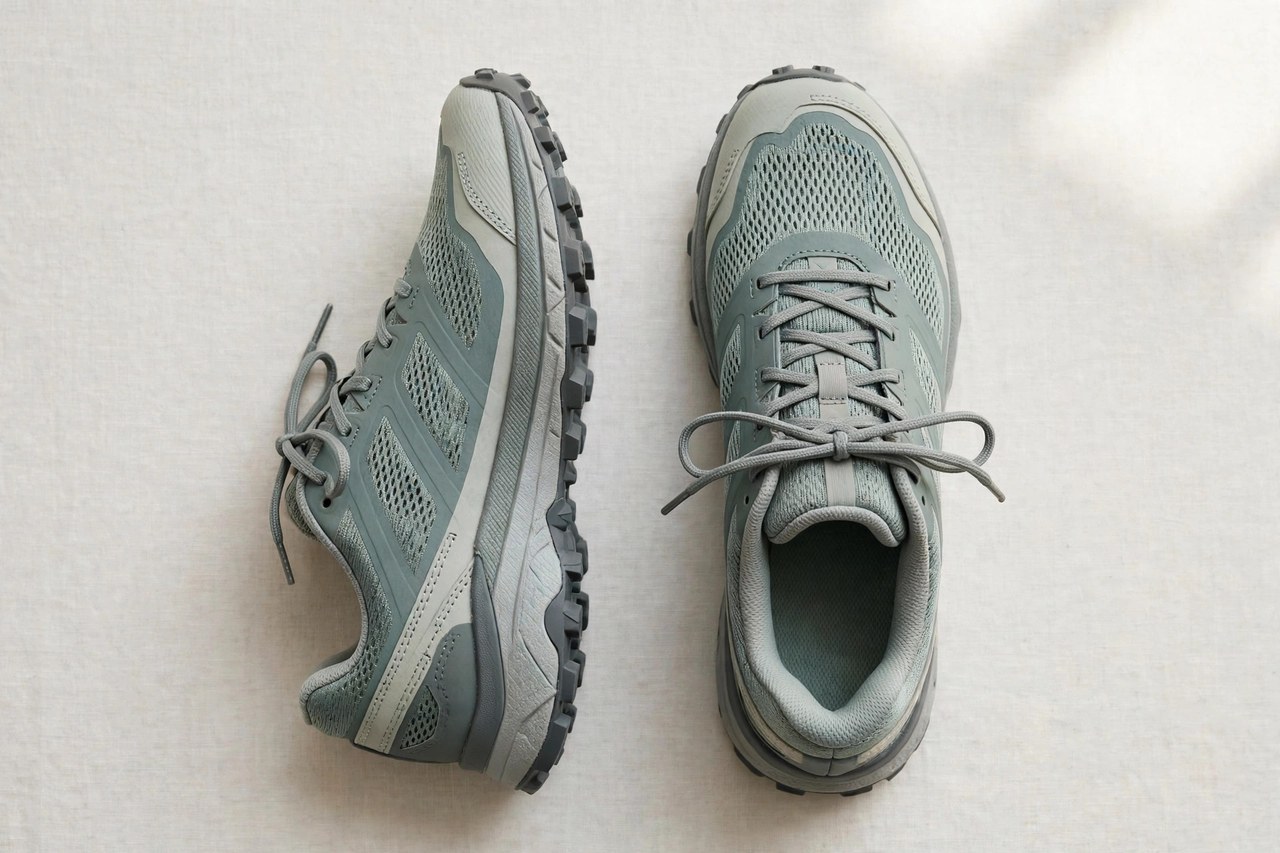
Trail running shoes are running shoes adapted for off-road ground: lugged outsoles, reinforced uppers, rock plates and lower, more stable profiles than road trainers. This guide covers lug depth by terrain, protection versus ground feel, waterproof and non-waterproof versions, and the fit differences — a secured heel and room for feet to swell on long runs — that trail use demands.
This guide covers trail running shoes in the order a careful buyer needs it: what the product is made from, how it is constructed, how it should fit, how to choose it for real use, and how to care for it so it lasts. The focus is on measurable details, named materials and checks you can perform in a shop or on a parcel's arrival, rather than general fashion language.
Materials and Construction
The materials of trail running shoes divide into uppers, linings and soles, and each can be judged separately. Leather uppers mould to the foot and can be resoled in better constructions; suede and nubuck trade weather resistance for softness; textiles and mesh ventilate and weigh little; synthetics span from poor imitations to engineered performance fabrics. Soles are leather for formal wear, rubber for grip and weather, and foams of graded density where cushioning is the job.
Construction decides lifespan. Stitched and welted soles can be replaced, cemented soles cannot; reinforcement at stress points — strap anchorages, toe and heel counters, eyelet rows — is where a well-made shoe spends its money. Lugs are the trail shoe's tread: deep, widely spaced lugs grip mud and shed it, while shallow close lugs suit hard dry trails and wear out fast on pavement. Flex the shoe in the shop: it should bend at the ball of the foot where the foot bends, never in the middle of the arch, and the heel counter should resist a firm squeeze.
Fit and Sizing
Shoe fit is measured in length, width and volume, and only the first is printed on the box. Fit trail running shoes late in the day, when feet are at their largest, wearing the socks or hosiery they will be worn with, and judge by the thumb's width of space beyond the longest toe, a heel that does not lift with each step, and no pressure across the widest part of the foot that a day's wear would turn into pain.
Sizes are not standardised between brands or even between a brand's own lasts, so the wear test outranks the number: walk on a hard floor, not only carpet, and test the movements the shoe is for — stairs, a lunge, a turn. Leather gives a little with wear; synthetic uppers give almost none, so a synthetic shoe must fit in the shop, while a leather one may be bought snug but never tight. Between sizes in a performance shoe, the larger is usually right, because feet swell with heat and distance.
Choosing the Right Pair
Choose trail running shoes by the surface and distance they will actually meet. Cushioning, grip pattern, water resistance and weight are specifications to match to use, not upgrades in the abstract: a shoe perfect for one job — a polished floor, a muddy path, a ten-hour shift — can be wrong for another despite a higher price, and the honest comparison is always against a defined use.
Rotate footwear and judge price per wear. In practice, rank these checks in the order your own use demands — frequency of wear first, then weather, washing facilities and budget — because that order differs by wardrobe, and it is the real reason two careful buyers can correctly choose differently from the same rail. Feet and shoes both last longer when no pair is worn two days running, because the cushioning foams and linings need a day to recover and dry. Keep the receipt and walk indoors first with any pair bought online: sole marks end most returns, and fit problems declare themselves within twenty minutes of real walking.
Care and Storage
Care extends the life of trail running shoes more than any other clothing category, because shoes carry the whole body through the worst conditions in the wardrobe. Brush or wipe them after wear, let them dry naturally away from radiators — heat cracks leather and kills adhesives — and use shoe trees or stuffing in leather pairs to hold shape and absorb moisture. Condition leather, protect suede, and re-proof weather footwear as its finish wears.
Watch the heels and soles: a worn heel tip changes gait and, left alone, damages the heel itself, while resoleable shoes should be resoled before the sole wears through to the welt or midsole. Store shoes clean and dry, out of sunlight, with space between pairs so finishes cannot scuff each other, and retire performance shoes by their cushioning, not their looks — a running or court shoe whose foam has died still looks fine while it stops protecting.
Related Women's Guides
Photos


More to Explore on Apparel Search
- Women's Shoes
- Women's Footwear
- Women's Footwear Guide
- Women's Shoes
- Footwear Definitions
- Cross Country Running Shoes
- Cushioning Running Shoes
- Jogging Sneakers
- Stability Running Shoes
- Supportive Running Shoes
- Women's Athletic Shoes
- Women's Boots
- Women's Casual Shoes
- Women's Dress Shoes
- Women's Sandals
- Women's Trend Shoes
Looking for Women's Clothing Stores?
This guide helps you choose women's trail running shoes. To browse where to buy, visit our women's clothing store directory, where you can find retailers that carry them.