Women's Cushioning Running Shoes Guide
Road miles with the impact taken out — plush foams, tall stacks, and neutral cushioning explained without the jargon fog.
Shop Women's Cushioning Running Shoes Now
Shop Women's Cushioning Running Shoes on Amazon Shop Women's Cushioning Running Shoes on eBayThe Amazon and eBay links on this page are affiliate links. If you make a purchase through them, Apparel Search may earn a commission.
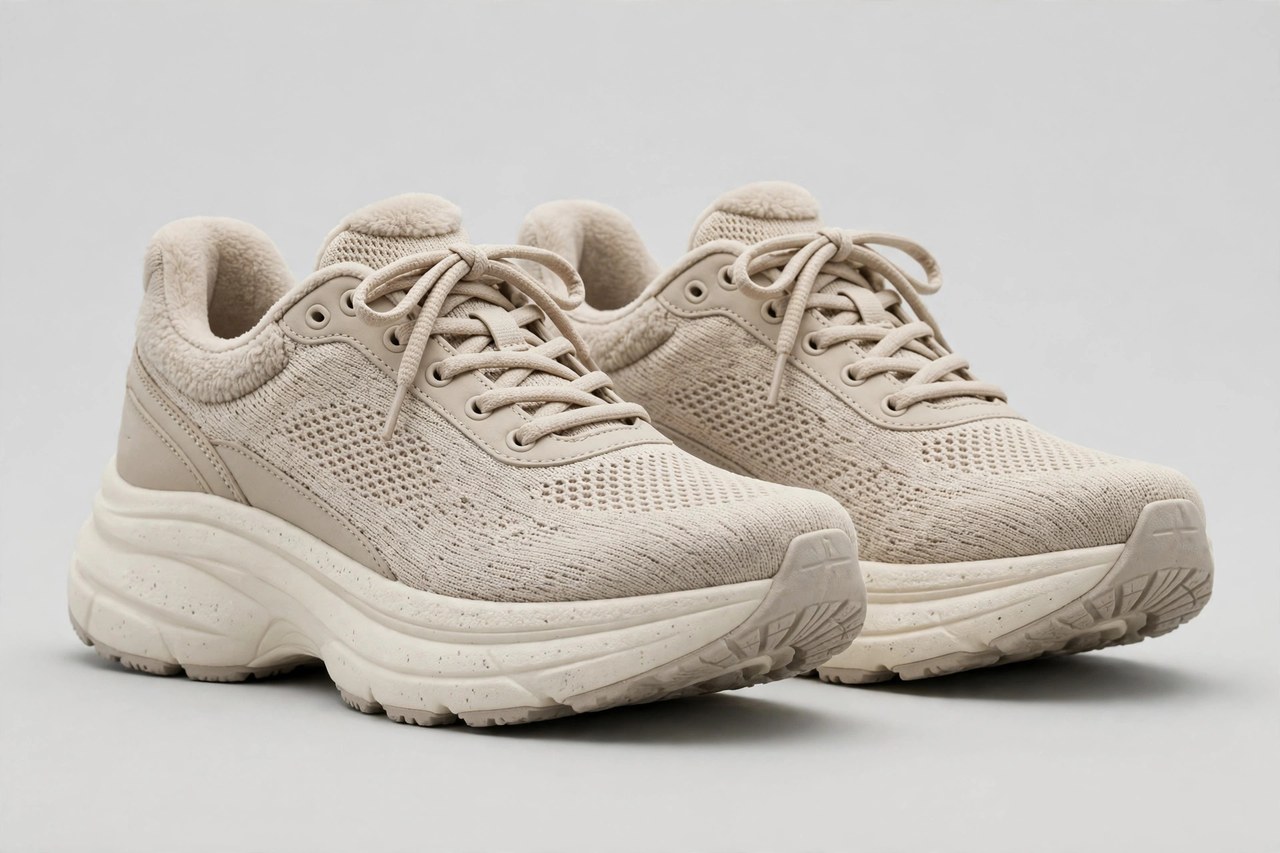
Cushioning running shoes exist to manage one thing: the repeated impact of road running, stride after stride, mile after mile. Where a cross country spike strips everything away for grip and speed on grass, a cushioned road shoe does the opposite — it puts a thick, engineered layer of foam between your foot and the pavement, tuned to absorb shock and return a smooth, rolling ride. The core category is the neutral cushioned trainer, built for runners whose feet roll inward only mildly as they land. Within it sits the maximal cushioning movement: shoes with dramatically taller foam stacks that look almost exaggerated but deliver a noticeably softer step, popular for long runs, recovery days, heavier runners, and anyone whose joints complain on concrete. This guide explains stack height, heel drop, and foams in plain language, then matches them to gait and fit so the softness you buy is the softness you actually feel.
Neutral, Maximal, and Stability: Placing Cushioning
Start with the three-way map of road shoes. Neutral cushioning shoes provide foam and a smooth ride with no devices to control how your foot rolls; they suit neutral gaits and mild pronation, and they are the default recommendation for most beginners. Maximal cushioning shoes are neutral shoes turned up: significantly more foam under both heel and forefoot, often with a curved rocker sole that rolls you forward so the tall stack does not feel clumsy. Stability shoes add support features — firmer foam sections, guide rails, or shaped geometry — for runners whose ankles roll inward noticeably and who feel it in their knees. This guide's category is the first two.
Stack Height, Heel Drop, and the Rocker
Stack height is simply how much material sits between your foot and the ground, measured at the heel and forefoot. Traditional trainers stack moderately; maximal shoes stack considerably higher, which is why they look like platforms. More stack means more foam to compress and protect, but also more height to balance on, which better maximal designs solve with a wide base and a rocker. Heel drop, or heel-to-toe offset, is the difference between heel and forefoot stack, typically ranging from zero to around twelve millimetres. A higher drop unloads the calves and Achilles and loads the knees a little more; a lower drop does the reverse and demands stronger calves. Most cushioned trainers sit in the middle, around eight to ten millimetres, which suits the widest range of runners. The rocker — a curved sole profile, especially at the toe — helps the shoe roll through the stride, reducing how much your forefoot and toes must bend. In a maximal shoe the rocker is not a gimmick; it is what makes a tall shoe run like a normal one.
Foams and What Soft Actually Means
Midsole foam decides a cushioned shoe's personality. Traditional EVA foam is light, affordable, and gradually packs down with mileage. Newer nitrogen-infused and supercritical foams, and pebax-based compounds first proven in racing shoes, are lighter, springier, and far more resistant to packing out, and they have moved steadily into daily cushioned trainers. Softness itself needs care in judging: a foam can feel soft when you press it with a thumb yet firm up under body weight, or feel unremarkable in the shop and wonderfully protective at mile ten, when your legs are tired and your form gets heavy — which is exactly when cushioning earns its price. Some maximal shoes pair a soft core with a firmer carrier foam or a plate-like insert to keep the tall stack stable; the result is plush without feeling like running in sand.
Gait, Fit, and Sizing for Road Miles
A simple way to think about gait is to watch your worn shoes: even wear across the heel and forefoot suggests a neutral pattern that cushioning shoes serve well. You do not need a laboratory analysis to buy a first pair, but a good running shop's treadmill check can confirm it in minutes. Fit for running differs from street fit. Leave about a thumbnail of space in front of your longest toe, because feet swell and slide forward slightly over distance, and black toenails are the classic souvenir of shoes bought too short. The toe box should let your toes splay as you land, while the midfoot and heel stay secure so the foot does not slosh inside all that foam. Try cushioned shoes late in the day, in running socks, and jog in them if the shop allows — walking reveals almost nothing about a running shoe. If you run mostly on concrete sidewalks rather than asphalt, lean toward the softer, higher-stack end of the category; harder surfaces justify more shoe.
Rotation, Lifespan, and Care
Cushioned foam is a consumable. Most trainers deliver their best protection for roughly three hundred to five hundred miles, after which the foam compresses and stops recovering fully between runs, even if the outsole and upper still look respectable. Track your mileage, and learn the retirement signals: new aches in knees or shins in an old pair, a visibly creased and flattened midsole, or a shoe that feels flat and harsh compared with a fresh pair in the shop. Care is minimal but specific: never machine-wash or tumble-dry running shoes, since heat destroys foam and glue; instead, loosen the laces, pull out the insoles, and air-dry away from radiators after wet runs, stuffing with newspaper if soaked. Keep cushioned trainers for running rather than wearing them out on errands, and their protective miles will be there when your training needs them.
Related Women's Guides
Photos

More to Explore on Apparel Search
- Footwear Definitions
- Jogging Sneakers
- Shoes
- Stability Running Shoes
- Supportive Running Shoes
- Trail Running Shoes
- Women's Athletic Shoes
- Women's Boots
- Women's Casual Shoes
- Women's Dress Shoes
- Women's Footwear
- Women's Footwear Guide
- women's running shoes
- Women's Sandals
- Women's Shoe Stores
- Women's Shoes
- Women's Shoes
- Women's Trend Shoes
Looking for Women's Clothing Stores?
This guide helps you choose women's cushioning running shoes by style, material and fit. To browse where to buy, visit our women's clothing store directory, where you can find retailers that carry them.