Women's Cross Country Running Shoes Guide
Racing over grass, mud, and hills — featherweight spikes and waffle racers built for courses, not roads.
Shop Women's Cross Country Running Shoes Now
Shop Women's Cross Country Running Shoes on Amazon Shop Women's Cross Country Running Shoes on eBayThe Amazon and eBay links on this page are affiliate links. If you make a purchase through them, Apparel Search may earn a commission.
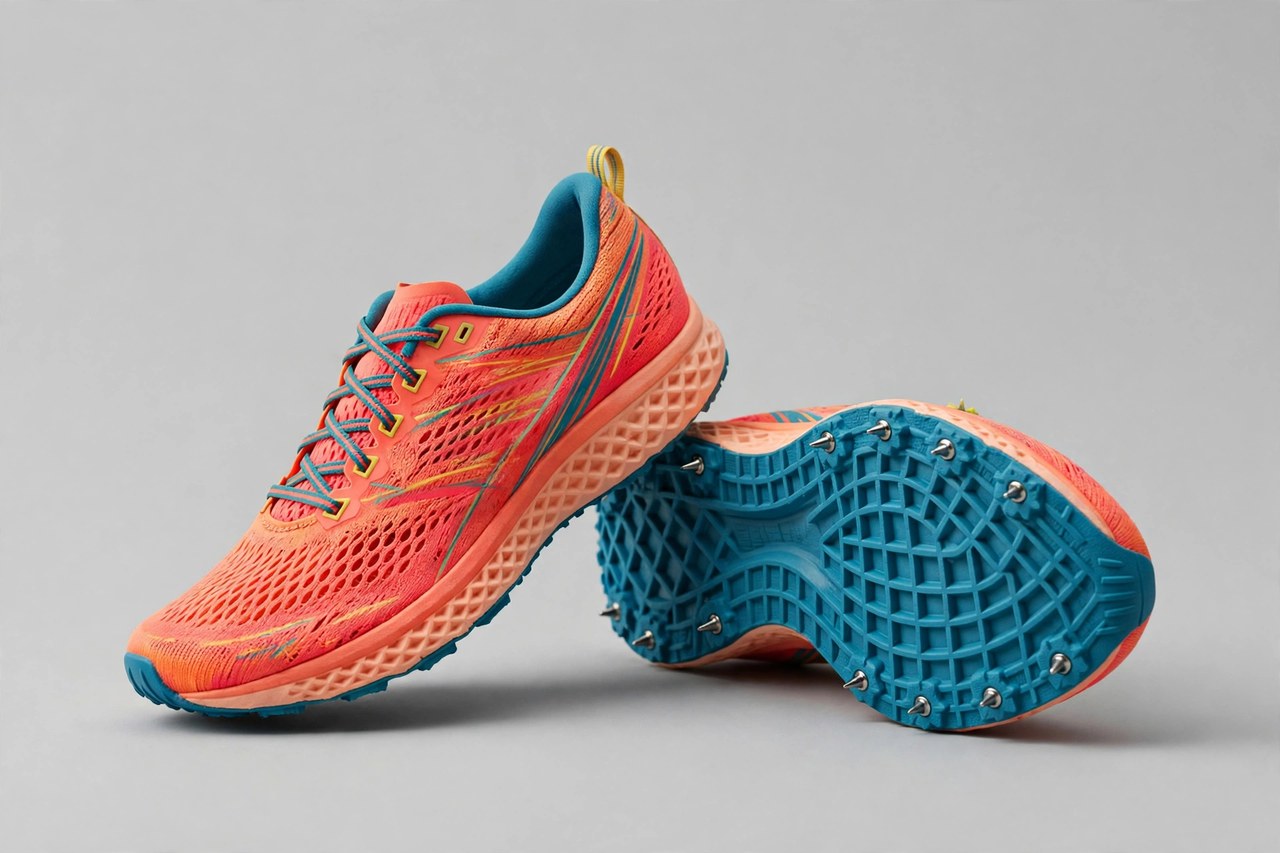
Cross country running shoes are racing tools for a surface no road shoe is built for: grass fields, dirt trails, woodland paths, and mud, raced at full effort over hills and cambers. They are dramatically lighter than training shoes, with minimal cushioning, aggressive grip, and uppers designed to shed water and stay on your heel when a course tries to pull them off. The category divides into two families. Spikes carry metal points screwed into a forefoot plate for maximum grip in soft ground. Waffle racers, sometimes called spikeless cross country shoes, use a studded rubber outsole instead, and are the required choice on courses with pavement sections or in leagues that restrict spikes. Choosing between them, and then choosing spike length, comes down to your courses, your league rules, and how you race. This guide works through those decisions in course order: surface first, shoe second.
Spikes Versus Waffle Racers
A cross country spike is the lightest shoe in running. The upper is little more than a shaped skin of mesh and synthetic overlays, the midsole is a thin wedge of firm foam, and the business end is a nylon or composite spike plate holding three to six removable metal spikes under the forefoot, with a rubber studded heel. The result grips soft ground superbly and disappears on the foot over a 5K race. A waffle racer replaces the metal with dozens of small rubber lugs — the waffle pattern that gave the style its name. Waffles grip dry grass, dirt, and gravel well, survive stretches of pavement that would destroy spikes and your stride alike, and are permitted everywhere. Many high school runners start in waffles, add spikes for championship mud, or race spikes all season where courses are pure grass and dirt. Check league and course rules before buying: some venues ban metal spikes entirely to protect mixed surfaces.
Spike Lengths and Course Surfaces
Spikes are sold in lengths, usually measured in fractions of an inch or millimetres, and picking the length is picking your grip. Short spikes, around a quarter inch, suit firm, dry grass and hard-packed dirt, where longer spikes cannot penetrate and would feel like running on stilts. Medium spikes, roughly three-eighths of an inch, are the versatile default for typical autumn courses that mix soft grass with firmer paths. Long spikes, up to five-eighths of an inch, belong to deep mud and waterlogged fields, where they reach down through the slime to firmer ground. Pyramid spikes are the common all-round shape; needle spikes bite firm ground, and longer Christmas-tree or tartan pins serve specific surfaces. Most cross country plates use removable spikes with a standard thread, tightened with a spike wrench — carry the wrench and a few spares on race day, because a lost spike quietly unbalances the shoe.
Construction: Light Uppers and Low Profiles
Everything about a cross country shoe serves racing weight. Uppers use open mesh for drainage — a shoe that holds water after a stream crossing or a muddy dip gains weight with every stride — reinforced with synthetic overlays at the toe and heel to survive rubbing and hold the foot on off-camber turns. Heel counters are minimal but real, because the classic cross country injury to pride is a shoe sucked off in a mud section; a secure heel and firm lacing matter more here than in road racing. The midsole sits low to the ground with a modest heel-to-toe drop, keeping your center of gravity stable on uneven terrain, and the foam is firm rather than plush: soft, tall cushioning wobbles on side slopes and drains energy on climbs. Fit through the midfoot is deliberately close, almost like a track spike, so the shoe moves as part of the foot when the course twists. If it feels like a stripped-down trainer, it is built wrong; it should feel like a glove with teeth.
Racing Fit, Socks, and Race-Day Checks
Cross country racers fit snugly, closer than your training shoes. Aim for a thumb's width or less at the toe, a locked heel, and a midfoot that cannot twist inside the shoe. Try them on with racing socks, which are thinner than training socks, and lace them with a runner's loop through the top eyelet to secure the heel in mud. On race day, tighten every spike with a wrench the night before, then re-check them, because spikes loosen as plates flex. Walk a section of the course in your trainers to judge softness and choose spike length before you commit. After a muddy race, stuff the shoes with newspaper, swap it when saturated, and let them dry away from direct heat, which hardens the foam and cracks the overlays.
Training Versus Racing, and When to Replace
Cross country racing shoes are not training shoes, and treating them as such wastes money and cushioning you do not have to spare. Do your mileage in road trainers or trail shoes, and reserve spikes or waffles for workouts on grass, strides, and races, so the uppers, plates, and grip stay sharp for the days that count. A pair typically lasts a season or two of racing use; the signs of retirement are a torn upper at the flex point, a cracked spike plate, lugs worn smooth on a waffle, or a midsole that has gone hard and dead. Finally, remember the human side of fit: younger runners' feet grow between seasons, so last autumn's perfect spike may be this autumn's blister, and checking fit before the first meet is a coach's-parent's job worth doing early.
Related Women's Guides
Photos

More to Explore on Apparel Search
- Footwear Definitions
- Jogging Sneakers
- Running Shoes
- Shoes
- Stability Running Shoes
- Supportive Running Shoes
- Trail Running Shoes
- Women's Athletic Shoes
- Women's Boots
- Women's Casual Shoes
- Women's Dress Shoes
- Women's Footwear
- Women's Footwear Guide
- Women's Sandals
- Women's Shoe Stores
- Women's Shoes
- Women's Shoes
- Women's Trend Shoes
Looking for Women's Clothing Stores?
This guide helps you choose women's cross country running shoes by style, material and fit. To browse where to buy, visit our women's clothing store directory, where you can find retailers that carry them.