Women's Cleated Shoes Guide
Studs, spikes, and turf shoes — cleats turn power into grip, but only when the cleat pattern matches the ground you play on.
Shop Women's Cleated Shoes Now
Shop Women's Cleated Shoes on Amazon Shop Women's Cleated Shoes on eBayThe Amazon and eBay links on this page are affiliate links. If you make a purchase through them, Apparel Search may earn a commission.
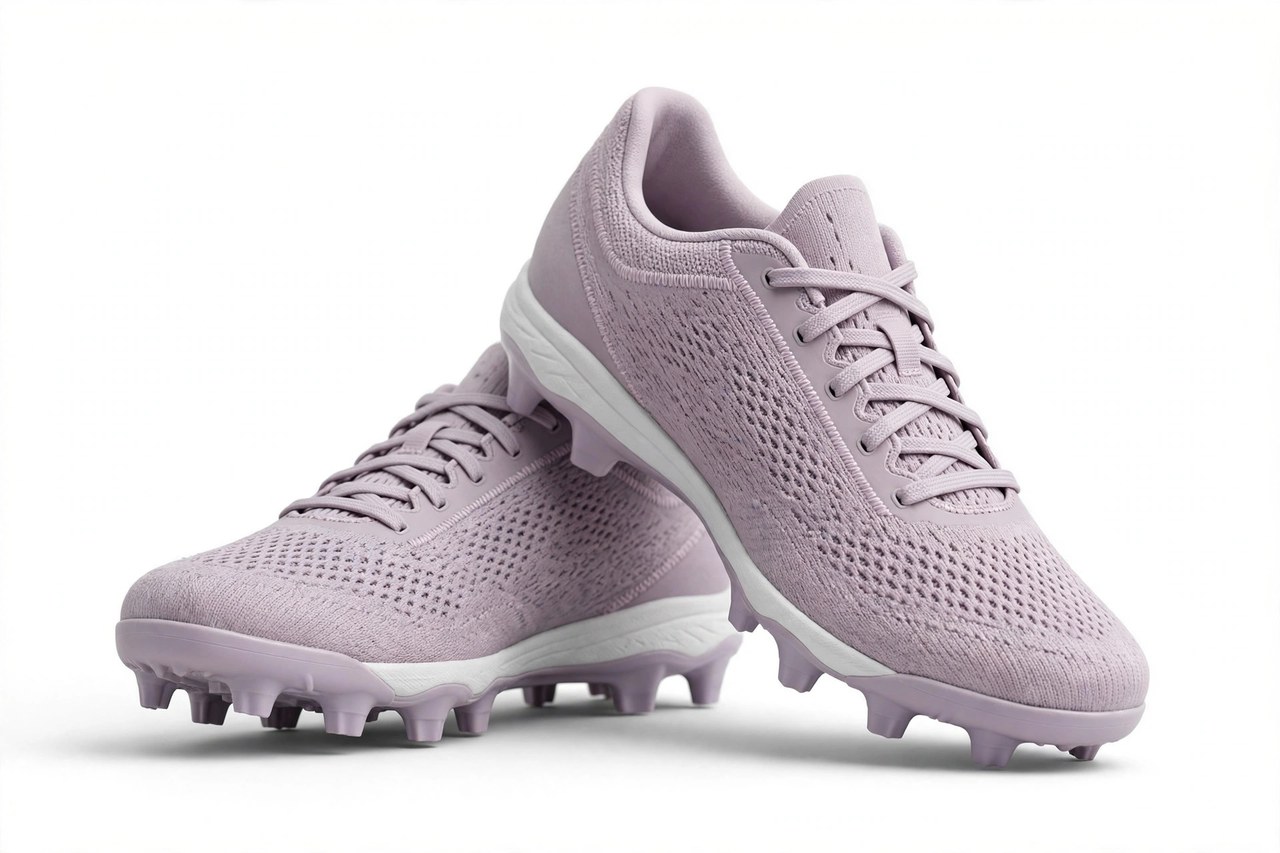
Cleated shoes are sports footwear whose soles carry protruding studs, blades, or spikes that bite into the playing surface for traction. For women, the main fields are soccer and softball, with lacrosse, field hockey, ultimate, and flag football close behind. The cleats do three jobs: they prevent slipping when you accelerate, cut, and stop; they transfer power from leg to ground without energy-wasting slide; and on soft earth they keep you upright where flat soles would aquaplane on mud. The trade-off is that cleats belong on their surface and nowhere else — they damage hard floors, slip dangerously on concrete, and are often banned indoors. Because traction needs differ between firm summer grass, wet winter mud, and artificial turf, cleated shoes are sold by ground type as much as by sport. Matching stud pattern to surface is the single most important buying decision, ahead of brand, color, or the boots your favorite player wears.
Stud Types: Molded, Metal, and Turf
Molded cleats are fixed studs of rubber or hard plastic, usually rounded or bladed, built into the sole. They are the all-rounders: legal in almost every league, durable, and suitable for firm natural grass and many artificial surfaces. Detachable metal studs screw in and out, letting players lengthen studs for soft, wet ground and shorten them as the pitch dries; they grip mud best but are restricted or banned in some leagues and youth competitions, and they are unsafe on hard or artificial surfaces. Turf shoes replace long studs with dozens of short rubber nubs, spreading pressure for artificial turf and hard, dry ground; they double as training shoes and are kinder to joints. A fourth option, artificial-ground (AG) plates, uses shorter, hollowed studs designed specifically for modern synthetic pitches.
Soccer Versus Softball Cleats
Although they look alike, soccer and softball cleats are built differently. Soccer cleats are low-cut, light, and close-fitting, with a cleat pattern concentrated under the forefoot and heel for sprinting and turning, and crucially no toe cleat at the very front, because the toe must strike and control a ball. Their uppers favor thin, grippy materials that let the player feel the ball. Softball cleats add that front toe cleat for the explosive first step out of the batter's box and off bases, often come in mid-cut styles that support the ankle during slides and lateral moves, and use tougher uppers built to survive dirt, dragging toes, and repeated sliding. Pitchers especially wear down the toe of the drag foot, so reinforced toe guards matter in softball. Lacrosse and field hockey cleats sit between the two, with patterns tuned for constant lateral cutting.
Fit for Women's Feet
Cleats fit closer than everyday shoes, because any internal sliding on a sudden cut becomes a blister or a rolled ankle. Soccer cleats in particular are traditionally narrow, so women with average-to-wide feet should actively look for women's-specific lasts or wide fittings rather than simply sizing down from men's models, which changes length without fixing shape. The correct fit is snug everywhere with toes just short of pressing the end; unlike leather casual shoes, most modern synthetic cleats stretch very little, so what you feel in the shop is what you keep. Leather soccer cleats are the exception, molding noticeably over the first few wears. Try cleats on with your match socks and any ankle braces or orthotics you play in, and test the movements: sprint steps, side cuts, and a lunge. Heel lock matters enormously; some models add internal grippy linings or lacing systems that wrap the midfoot.
Choosing by Position and Playing Style
Within a sport, position refines the choice. In soccer, defenders and goalkeepers often prefer slightly sturdier cleats with reliable grip and protection, midfielders choose balanced all-ground models for constant running, and wingers and forwards chase the lightest speed boots with aggressive forefoot traction for straight-line acceleration. In softball, infielders value quick first steps and lateral grip, outfielders cover long grass distances and may prefer longer studs on natural fields, catchers need durability and toe protection, and pitchers should prioritize that reinforced drag toe. Consider your injury history honestly: players returning from ankle problems often move to mid-cut softball styles or supportive soccer models, and those with knee concerns frequently do better on turf shoes for training, reducing stud-lock in the ground. Playing surface still outranks position — the perfect winger's boot in a soft-ground pattern is the wrong boot on a hard August pitch — so choose ground first, sport second, position third, and appearance last of all.
Care, Safety, and Making Cleats Last
Cleats live hard and should be cleaned after every outing: knock soles together, brush off mud and turf pellets, and wipe uppers before dirt dries into seams. Never leave wet cleats sealed in a kit bag, which breeds odor and rots stitching; air them at room temperature, stuffed with newspaper if soaked, and keep them away from radiators that crack synthetic uppers. Check studs regularly: worn, uneven molded studs reduce grip and strain joints, and detachable studs must be kept tight, evenly matched, and replaced before the metal wears to a sharp edge. Replace cleats whose sole plate cracks or flexes at the midfoot, since a broken plate is an injury waiting for a hard cut. For safety, wear cleats only on their intended surface, walk carefully on concrete and changing-room floors, and confirm your league's rules on metal studs before match day.
Related Women's Guides
Photos


More to Explore on Apparel Search
- cleats
- Fitness Fashion
- Footwear Definitions
- Ladies Baseball Cleats
- Ladies Soccer Cleats
- Ladies Softball Cleats
- Ladies Track Cleats
- shoe styles
- Shoes
- Turf Shoes
- Women's Athletic Apparel
- Women's Athletic Shoes
- Women's Boots
- Women's Casual Shoes
- Women's Dress Shoes
- Women's Footwear
- Women's Footwear Guide
- Women's Sandals
- Women's Shoe Stores
- Women's Shoes
- Women's Shoes
- Women's Trend Shoes
Looking for Women's Clothing Stores?
This guide helps you choose women's cleated shoes by style, material and fit. To browse where to buy, visit our women's clothing store directory, where you can find retailers that carry them.