Women's Baseball Cleats Guide
Metal spikes, molded studs and everything between — how to choose cleats that grip the diamond and protect your ankles.
Shop Women's Baseball Cleats Now
Shop Women's Baseball Cleats on Amazon Shop Women's Baseball Cleats on eBayThe Amazon and eBay links on this page are affiliate links. If you make a purchase through them, Apparel Search may earn a commission.
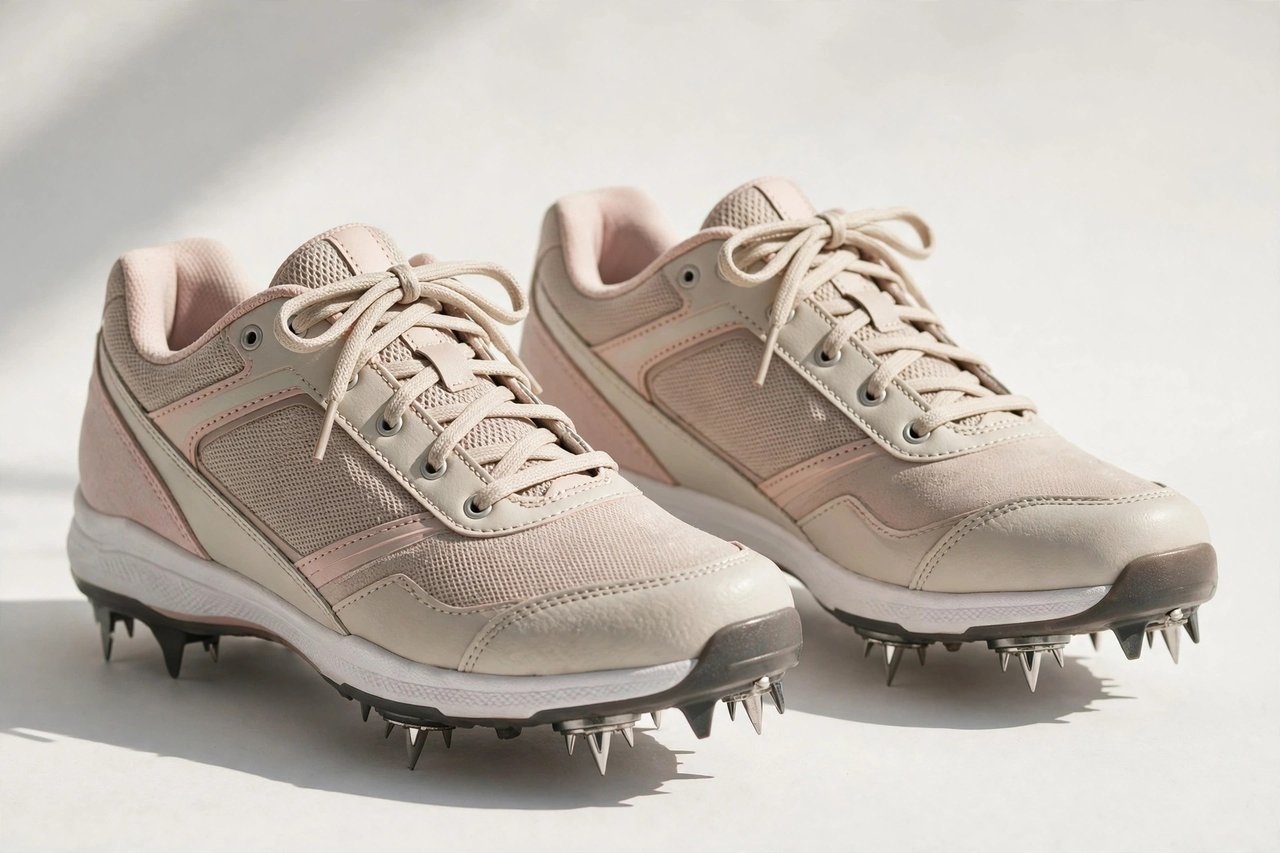
Cleats are the one piece of diamond equipment that touches the ground on every play, and for women playing baseball or fastpitch softball they do far more than keep you upright. The right pair digs in when you drive off the rubber, bites when you round second at full speed, and releases cleanly when you slide. The wrong pair leaves you slipping on a wet outfield, blistered by the third inning, or — worst of all — turned an ankle on a bad cut. Because women's feet are generally narrower through the heel and lower in volume than men's, a cleat built on a women's last usually fits noticeably better than a small men's size, with less heel slip and cleaner lockdown through the midfoot.
Metal Spikes vs Molded Cleats
Metal cleats use replaceable steel spikes, usually seven to nine per shoe, that penetrate dirt and grass for the sharpest traction available. They are the choice of competitive fastpitch and baseball players who need explosive first steps and confident stops on natural surfaces. Molded cleats carry fixed rubber or plastic studs molded into the sole; they grip well on dry fields, cost less, last longer, and are far gentler on artificial turf and on the walkways between the parking lot and the dugout. A third option, the interchangeable cleat, lets you swap metal and molded studs with a wrench, so one shoe covers a whole season of changing fields. Pitchers and catchers often prefer a reinforced toe, since the drag foot and the crouch wear those areas hardest.
Surface should drive the decision. On soft natural dirt and grass, metal wins. On hard, dry infields, synthetic turf, or the mixed fields common in recreational leagues, molded studs protect your joints and the field itself, and many facilities ban metal outright to preserve their turf.
League Rules You Need to Know
Cleat rules vary more than players expect, so check your league before you buy. Most high school and travel fastpitch programs allow metal spikes, while many youth leagues and some recreational softball leagues require molded cleats only, both for safety in slides and to limit field damage. Artificial turf complexes frequently prohibit metal spikes at the gate. College and competitive adult baseball generally permit metal, but some tournaments restrict spike length or require rounded, non-pointed studs. If you play in two leagues with different rules, an interchangeable sole or a second molded pair is cheaper than a fine, a forfeit argument, or being sent to change shoes five minutes before first pitch.
Ankle Support and Position Needs
Cleats come in low, mid, and high cuts. Low cuts are lightest and freest, favored by speedy outfielders and base stealers who live on quick cuts. Mid cuts add a padded collar that supports the ankle without locking it, the most popular all-around choice. High cuts wrap the ankle fully and suit players with a history of sprains or anyone who wants maximum stability planting and throwing. Infielders benefit from stud patterns that shed dirt quickly, since a clogged sole slips on the basepaths. Outfielders covering long grass want longer, more aggressive traction. Pitchers should look for a protective pitching toe or plan on a toe guard, because the repeated drag of the stride foot shreds an unprotected upper within weeks.
Getting the Fit Right
Try cleats on late in the day, wearing your game socks, when your feet are slightly swollen the way they will be in the seventh inning. You want a thumb's width or less in front of the longest toe — room to stop hard without jamming your toes into the front of the shoe — and a heel that stays seated when you rise onto your toes. Women's models typically run narrower, so if your forefoot feels pinched while the heel swims, that is a last mismatch, not a sizing problem. Break new cleats in over two or three practices before a game; metal spikes on a fresh sole feel different underfoot, and stiff uppers need innings to soften. Players between sizes often size up and add a thicker sock or an insole rather than cramming into the smaller pair.
Care That Extends Cleat Life
Knock the dirt out after every game, loosen the laces so the shoe can dry at room temperature, and never leave cleats baking in a trunk or sealed in a gear bag overnight — heat and trapped moisture break down foams and breed odor fast. Stuff them with newspaper if they get soaked. Check metal spikes every few weeks: worn, rounded spikes grip poorly and can be replaced individually with a cleat wrench for a few dollars. Molded studs cannot be replaced, so once they wear smooth the shoe is done for field use. Rotate between practice and game pairs if you play often, and keep metal cleats off concrete whenever possible, since pavement dulls spikes faster than dirt ever will.
Related Women's Guides
More to Explore
- cleats for women/a>.
- different types of shoes
- Fashion News
- Footwear Definitions
- Popular Brands
- Shoes
- Women's Athletic Shoes
- Women's Boots
- Women's Casual Shoes
- Women's Dress Shoes
- Women's Footwear
- Women's Footwear Guide
- Women's Sandals
- Women's Shoe Stores
- Women's Shoes
- Women's Shoes Guide
- Women's Soccer Cleats
- Women's Softball Cleats
- Women's Track Cleats
- Women's Trend Shoes
Looking for Women's Clothing Stores?
This guide helps you choose women's baseball cleats by style and fabric. To browse where to buy, visit our women's clothing store directory, where you can find retailers that carry them.