Women's Softball Cleats Guide
Softball cleats are built for dirt and grass — traction for base running, support for lateral cuts, and a toe built to survive the drag of a pitch or a slide.
Shop Women's Softball Cleats Now
Shop Women's Softball Cleats on Amazon Shop Women's Softball Cleats on eBayThe Amazon and eBay links on this page are affiliate links. If you make a purchase through them, Apparel Search may earn a commission.
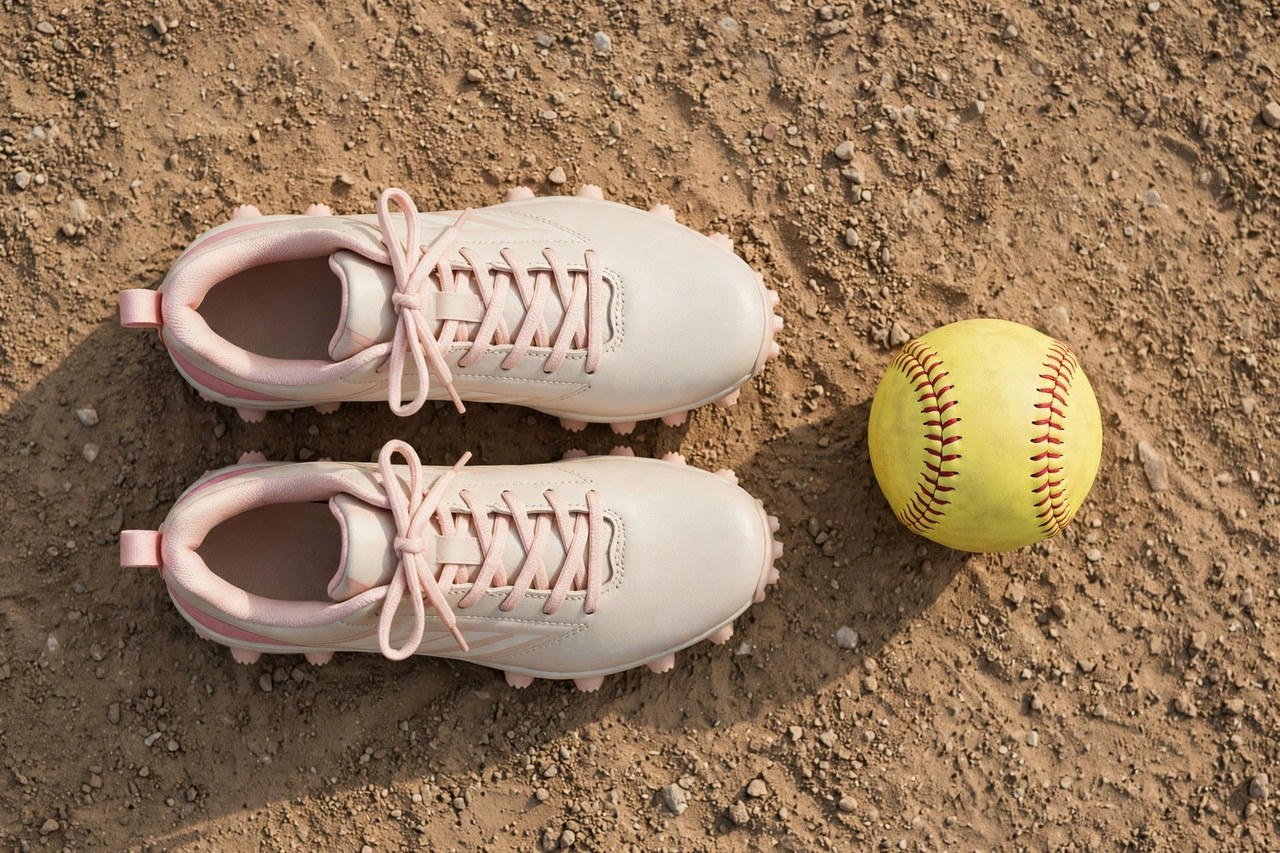
A softball cleat is a shoe engineered for one playing surface family — dirt infields and grass outfields — and for one movement pattern: explosive straight-line base running mixed with sharp lateral cuts in the field. It looks like a low athletic shoe from above, but everything that matters is underneath and at the toe, where studs grip loose ground and reinforced leather or synthetic survives dragging, sliding and pivoting.
This guide covers softball cleats as their own footwear category, distinct from soccer cleats, which are built for grass only and continuous running. Here the choices are the stud material and pattern, the reinforced pitching toe, ankle height, and the league rules that decide which cleats you are even allowed to wear — because in softball, the rulebook is part of the product description.
Metal, Molded and Turf: The Three Sole Families
Metal cleats use removable or fixed steel spikes that bite hardest into dirt and grass, giving the best traction for advanced and collegiate play. They are also the most restricted: many youth, school and recreational leagues ban metal spikes outright for safety, and they are miserable on concrete between fields. Molded cleats use rubber or hard plastic studs formed into the sole — legal almost everywhere, durable, and comfortable for a full tournament day, with slightly less bite on hard, dry dirt.
Turf shoes replace studs with a dense pattern of small rubber nubs, made for artificial turf, batting practice and hard infields where full cleats skate or dig painfully. Many players own molded cleats for games and turf shoes for practice. Choose by your league's written rules and your usual surface, in that order: the best-gripping shoe in the world is useless if the umpire sends you back to the dugout to change it.
Cleat Patterns, the Pitching Toe and Ankle Support
Look at the stud layout as a map of the sport. Softball cleats place studs around the perimeter of the sole for lateral stability when fielding, with a pronounced stud under the ball of the foot for the pivot in a throw or a swing. A defining softball feature is the reinforced toe, often an extra layer of leather or a rubber cap: fastpitch pitchers drag their toe on every delivery, and catchers and infielders scuff toes constantly, so an ordinary shoe toe wears through in weeks.
Ankle height is the other structural choice. Low-cut cleats are lightest and fastest, favored by outfielders and base stealers. Mid-cut cleats add padding and a feeling of support around the ankle for infielders who plant and cut all game. Neither prevents injury by itself; fit and field conditions matter more. Prioritize a locked-down heel and a forefoot wide enough for cleat socks, because a cleat that fits before the game but swells tight by the seventh inning changes how you run.
Fit, Sizing and Break-In
Softball cleats should fit closer than everyday shoes — a secure heel, a snug midfoot and just enough toe room to avoid blackened nails on hard stops. Try them on with your game socks, which are thicker than you think, and late in the day when feet are at full size. Women's-specific models are built on a narrower heel and a different instep than men's or youth cleats in the same length, which matters more in a shoe you sprint in than in almost any other footwear.
Break cleats in before a tournament, never during one. Wear them for practices and warm-ups first so the upper softens around your foot and the studs' pressure points reveal themselves while you still own alternatives. Between sizes, remember that dirt play stretches leather slightly and does nothing for synthetics. Keep a backup pair once a season starts: a lost or blown-out cleat on game day is a problem no amount of shopping the night before reliably solves.
Care and When to Replace Them
Cleats die from storage more than from play. Knock dirt off after every game, loosen the laces, pull the insoles out and let everything air dry away from direct heat — never leave them sealed in a gear bag, where moisture rots stitching and breeds smell. Stuff them with newspaper after wet games. Clean metal spikes of caked dirt so they keep their bite, and check that replaceable spikes are tight before tournaments.
Replace cleats when the studs are worn to nubs, when the toe reinforcement has worn through, or when the upper has stretched enough that your foot slides inside on cuts — traction and lockdown are safety features, not luxuries. Players whose season has ended can look to other cleat sports such as soccer; within the season, though, the rule is simpler: the shoe that grips the dirt and holds your foot is the shoe that lets everything else in your game happen.
Related Women's Guides
More to Explore on Apparel Search
- Women's Shoes
- Women's Footwear
- Fashion
- Clothing Retail Stores
- Fashion News
- Fashion Designers
- Popular Brands
- Apparel
- Women's Clothing Stores
- Women's Clothing Wholesalers
- Women's Fashion
- Women's Shoe Stores
- Women's Footwear Guide
- Women's Shoes
- Footwear Definitions
- Shoe Search
- Fashion Videos
- Fashion Calendar
- Celebrity Fashion
- Fashion Designer Directory
- Women's Athletic Shoes
- Women's Boots
- Women's Casual Shoes
- Women's Dress Shoes
- Women's Sandals
- Women's Trend Shoes
- Women's Baseball Cleats
- Women's Track Cleats
Women’s Clothes Guide by Letter: Women's Apparel Directory N · Women's Clothes Directory O · Women's Clothing Directory P · Women's Apparel Directory Q · Women's Fashion Directory R · Women's Clothes Directory T
Looking for Women's Clothing Stores?
This guide helps you choose women's softball cleats. To browse where to buy, visit our women's clothing store directory, where you can find retailers that carry them.