Women's Softball Uniforms Guide
A softball uniform is a working kit — jersey, pants built for sliding, socks and belt in team colors — where every piece is chosen to survive the dirt.
Shop Women's Softball Uniforms Now
Shop Women's Softball Uniforms on Amazon Shop Women's Softball Uniforms on eBayThe Amazon and eBay links on this page are affiliate links. If you make a purchase through them, Apparel Search may earn a commission.
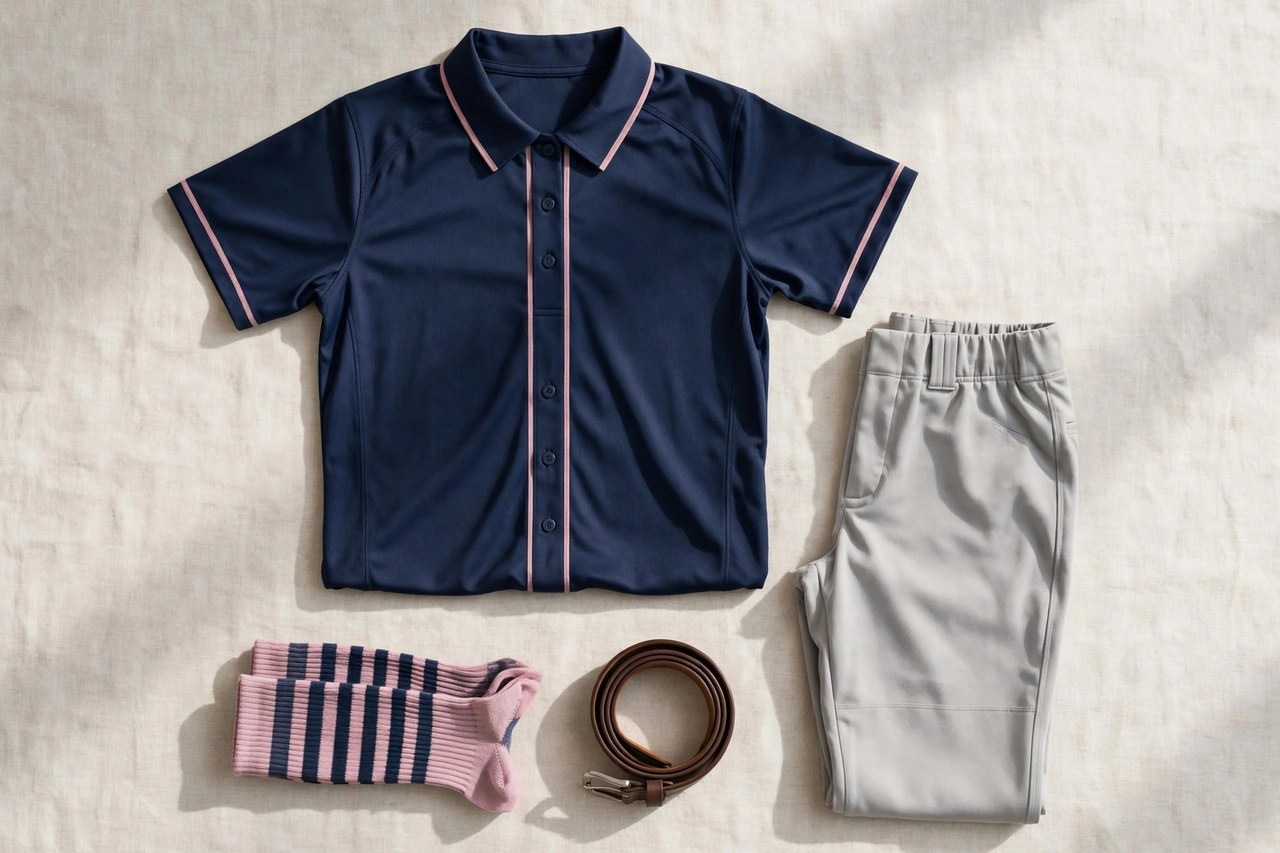
A softball uniform is the complete matched kit a player wears in a game: a numbered jersey, softball pants or knickers, socks, usually a belt, and a cap or visor, all in the team's colors. Unlike a fan jersey, a uniform is equipment. It has to stretch through a swing, survive repeated slides into base, wash clean of infield dirt week after week, and identify the player clearly to scorers, umpires and spectators.
This guide breaks the kit into its working pieces — jersey construction and lettering, the distinctive sliding-proof pants, the layers worn underneath, and the socks and headwear that finish it — and closes with the practical side of team ordering and care, because uniforms are usually bought by the dozen, personalized, and expected to last several seasons of hard use.
The Jersey: Cut, Fabric and Numbers
Softball jerseys come in three main cuts. Full-button jerseys copy the classic baseball look and ventilate well in heat. Two-button and V-neck pullover jerseys are lighter, cheaper and the most common choice for school and travel teams. Racerback and sleeveless jerseys appear in hot-climate fastpitch, worn over a fitted underlayer. Sleeve length and neckline are partly tradition and partly league dress code, so confirm what your league allows before a team order is placed.
Fabric is almost always a moisture-wicking polyester knit, often with mesh panels, because cotton stays heavy and dirty-looking through a doubleheader. Player names and numbers are applied by sublimation — dyed into the fabric, so they never crack or peel and add no weight — or by heat-applied tackle twill and vinyl on stock jerseys. Sublimation also lets teams use gradient colors and patterns that stitching cannot. Numbers must be large and contrasting; readability from the stands is a rule in most leagues, not a style preference.
Softball Pants: Built for the Slide
Softball pants are the uniform piece with no true equivalent elsewhere in the wardrobe. They are made from heavy, abrasion-resistant knit polyester with reinforced knees and a reinforced seat, because sliding is a planned part of the sport and the pants are the layer meant to take the damage. Styles run from full-length pants to knickers that end below the knee and show the team sock — the traditional fastpitch look — to shorter practice styles.
Fit matters to function. Pants should be snug through the thigh so fabric does not catch on a base or shift during a slide, with an elastic or drawstring waist worn with the team belt. Many players add sliding shorts underneath — fitted padded shorts that protect the hips and thighs on dives and slides and hold everything in place under the pants. If your uniform pants fade or thin at the knee after a season, that is the reinforcement doing its job and a sign to rotate a second pair.
Socks, Belts, Caps and the Finishing Pieces
Softball socks are part of the uniform, not an accessory: knee-length or over-the-calf socks in the team color, worn with knickers to complete the classic stripe of color below the knee. Stirrup socks over a white sanitary sock are the traditional alternative still seen on some teams. Socks for play should be cushioned athletic socks with arch support, long enough that they never slip into the cleat mid-game.
A belt in a team color threads the pants and finishes the waistline; elastic uniform belts are standard. Headwear splits by preference and position: caps for a classic look and sun protection, visors for ventilation and for players who wear high ponytails, and batting helmets with face guards as required during play. Undershirts in a team color, long-sleeved for cold early-season games, complete the system and keep jersey sleeves from being the only layer on a windy April evening.
Team Ordering, Sizing and Care
Uniforms are bought as a team, which changes the shopping rules. Order a full size run plus a few extra stock jerseys and pants for mid-season roster additions, since reordering one sublimated jersey later is slow and expensive. Collect player measurements rather than guesses, and remember that women's cuts differ from youth and men's cuts in the same kit — a proper women's uniform line patterns the jersey and pants for a woman's frame instead of simply shrinking a men's set.
Care decides how many seasons a kit survives. Wash uniforms promptly after games — infield dirt sets as a stain — in cold water, inside out, and hang dry to protect numbers and lettering from dryer heat. Treat sliding stains by soaking before washing rather than scrubbing the knit. Store the kit together, numbers inventoried, so next season's hand-downs and replacements are a quick count rather than a mystery box in the equipment room.
Related Women's Guides
More to Explore on Apparel Search
Women’s Clothes Guide by Letter: A · B · C · D · E · F · G · H · I · J · K · L · M · N · O · P · Q · R · T · U · V · W · X · Y · Z
Looking for Women's Clothing Stores?
This guide helps you choose women's softball uniforms. To browse where to buy, visit our women's clothing store directory, where you can find retailers that carry them.