Women's Sports Jerseys Guide
A sports jersey is the numbered, named top of a team — worn by players in a version built for play, and by fans in versions built for wearing.
Shop Women's Sports Jerseys Now
Shop Women's Sports Jerseys on Amazon Shop Women's Sports Jerseys on eBayThe Amazon and eBay links on this page are affiliate links. If you make a purchase through them, Apparel Search may earn a commission.
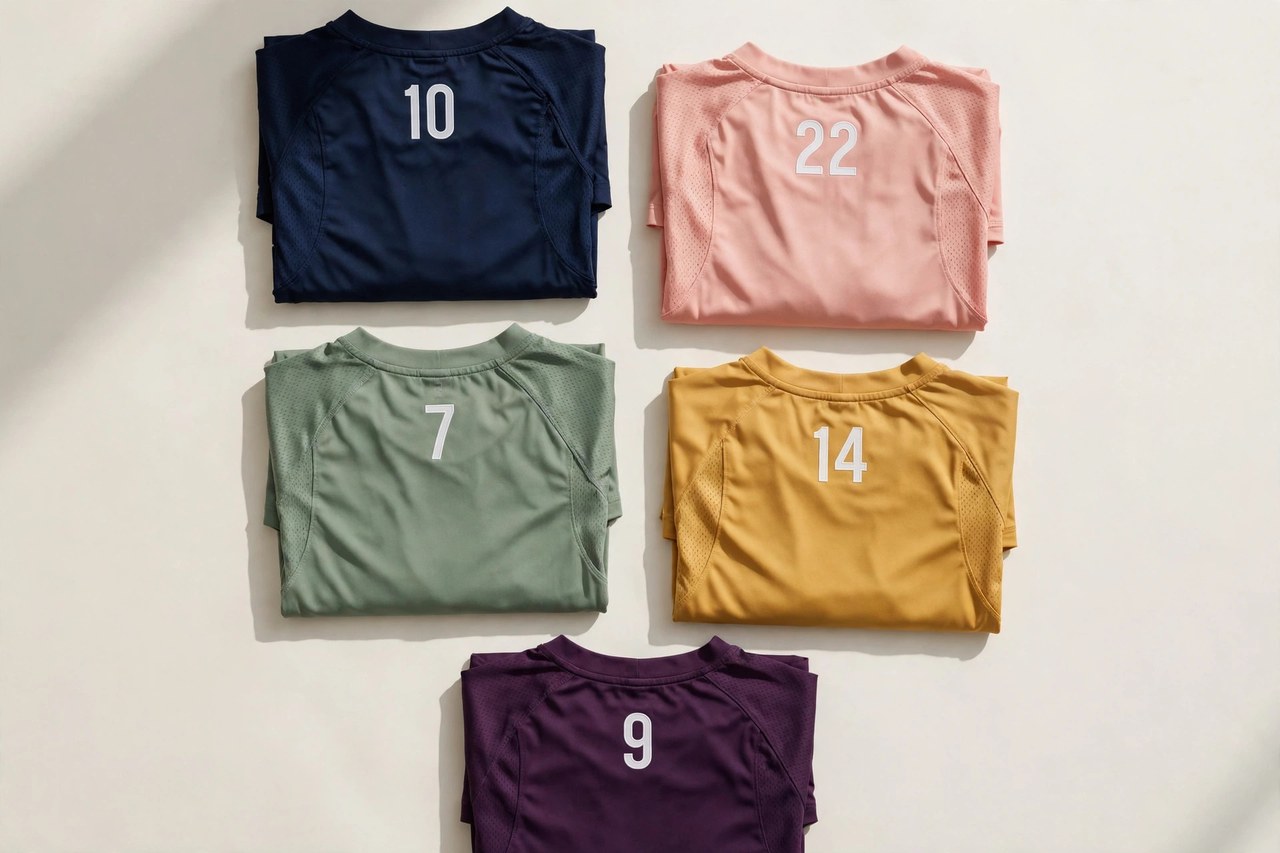
A sports jersey is the official top of a team uniform: a usually short-sleeved or sleeveless shirt carrying the team's colors and crest, a player's number and often the player's name. The word travels across sports — basketball jerseys are sleeveless tanks, hockey jerseys are long-sleeved sweaters, soccer and football jerseys are their own silhouettes — but the idea is constant: the jersey is identity in garment form, legible from the far side of an arena.
This guide is about the jersey as a purchasable garment, which means the tiers. The jersey a player wears on the field and the jersey a fan buys in the shop are related but different objects, sold at very different prices, and the industry has specific names for the grades between them. Knowing the grades, the lettering methods and how women's jersey cuts differ turns a confusing wall of numbered shirts into a clear set of choices.
The Tiers: Replica, Swingman and Authentic
Replica jerseys are the accessible tier: screen-printed names and numbers, lighter fabric, a looser, more forgiving cut, and the lowest price. They are made for wearing to games and they do it well. Authentic jerseys sit at the top: the same construction as the on-field garment, with stitched tackle-twill lettering, performance fabrics, a tailored athletic cut and details like jock tags; they cost several times the replica price and reward collectors and devoted fans.
Between them, basketball popularized the swingman tier — embroidered or heat-pressed lettering on better fabric than a replica, at a middle price — and most sports now offer an equivalent middle grade. Choose by use. A jersey for weekly wear to games lives happily at replica or swingman level; the authentic tier is for the fan who cares about the garment as an object, or who wants the player's actual fit. There is no wrong tier, only a mismatched budget.
Fabrics, Lettering and Construction Clues
Player jerseys are engineered textiles: mesh and double-knit polyester for breathability and durability, moisture management for exertion, and in modern leagues, fabrics partly made from recycled ocean plastic. Fan tiers simplify progressively from there. The fastest quality check is the lettering. Stitched tackle twill — layered fabric letters sewn to the jersey — is the authentic standard and lasts the life of the garment. Heat-pressed letters are lighter and neat when new. Screen printing is the replica method and cracks first, which tells you exactly how to wash each tier.
Construction details mark the grades: reinforced elbows in hockey sweaters, side vents and a dropped hem in basketball, sponsor marks and league patches placed as on the field. Fit follows the tier too — authentics are cut for an athlete's frame and run trim, replicas are cut for the stands and run generous. Two jerseys with the same name and number can be honestly different garments, and now you can read which is which from across the shop.
Women's Cuts and Sizing
Women's jerseys come in two philosophies. Women's-cut jerseys are patterned for a woman's frame — shaped waist, adjusted shoulder and sleeve, sometimes a fashion neckline — and are the comfortable choice for most fans. Unisex or men's jerseys in a smaller size give the boxy, oversized look many fans deliberately prefer for layering over hoodies at cold games. Neither is more authentic; players' jerseys and fans' jerseys have never been required to match cuts, only colors and numbers.
Size by the tier's intent. Replica and fan cuts can be bought at your usual size; authentic cuts should be tried or measured carefully, since an athletic cut that fits the shoulders may be trimmer through the body than expected. Consider the wearing plan: a jersey worn over winter layers at an outdoor stadium needs a size of headroom that the same jersey for summer baseball does not. Player choice is the personal part — a favorite player, a blank jersey, or a customized name and number, each a different statement about the kind of fan you are.
Care and Keeping a Jersey
Jerseys are printed and lettered garments, so the laundry rules protect the numbers. Wash inside out, in cold water, on gentle, and hang dry — dryer heat cracks print, peels heat-press and shrinks twill backings at different rates than the jersey body. Never iron lettering. Zip and button any closures so they do not snag mesh, and wash a white jersey promptly after a game day; stadium food is forever if it sets.
Store jerseys folded or on wide hangers — thin hangers stretch the shoulders of a mesh garment over a season in the closet. Collectors keep special jerseys flat, out of light. A jersey's career often outlives the player's time on the team, becoming a piece of personal history: the shirt from a championship season is kept, not replaced. Care for it as the souvenir it will become, and the garment will hold both its numbers and its meaning.
Related Women's Guides
More to Explore on Apparel Search
Women’s Clothes Guide by Letter: A · B · C · D · E · F · G · H · I · J · K · L · M · N · O · P · Q · R · T · U · V · W · X · Y · Z
Looking for Women's Clothing Stores?
This guide helps you choose women's sports jerseys. To browse where to buy, visit our women's clothing store directory, where you can find retailers that carry them.