Apparel Search»Football Kits
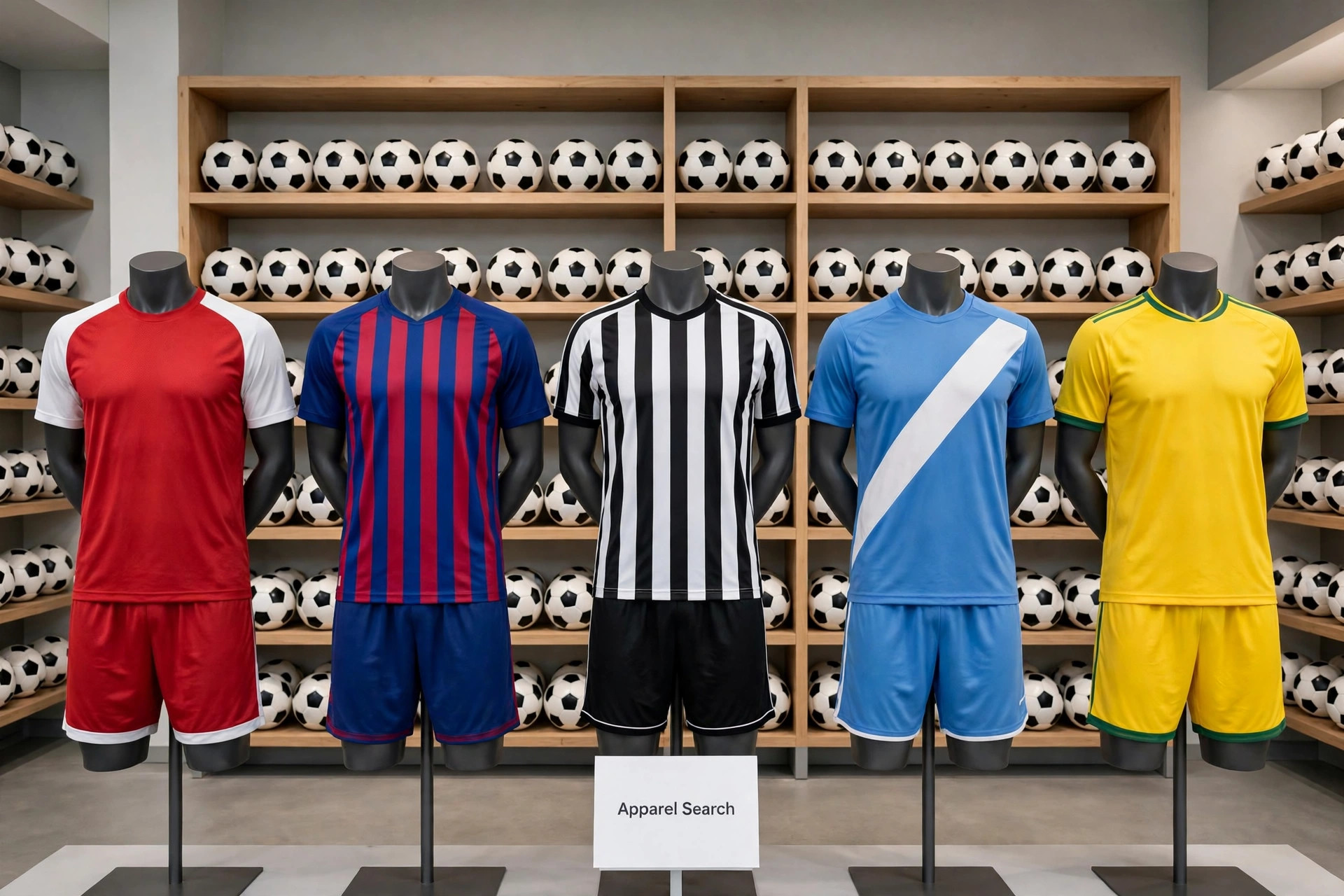
Illustrative image created for this guide by Apparel Search designers — the kit designs are shown without club crests, sponsor logos or manufacturer marks, so details may differ from the official shirts.
Football Kits
In most of the world it is called a kit: the shirt, shorts and socks a football team wears, designed as one coordinated outfit and renewed, these days, every single season. In the United States the same garments are usually called a uniform or a jersey, but with a global audience of supporters following clubs from Madrid to Manchester, this section uses the word the game itself uses. A modern football kit is part sporting equipment, part national or civic flag, and part fashion product — the best-selling garment in the sport, and the one supporters actually wear.
Search Apparel Search
What Is a Football Kit?
A kit is the complete match outfit: a shirt (also called a jersey), shorts, and socks, designed together so a team reads as one unit on the pitch. Around that core sits a small wardrobe — training wear, warm-up jackets, travel clothing — but the kit itself is those three garments, and the shirt is the piece that carries the identity: the colours, the crest, the manufacturer's mark and, in the modern game, the sponsor.
Kits are produced in two broad versions. The authentic (or match) shirt is the one players wear: feather-light fabric, an athletic cut, heat-bonded or woven badges and ventilation mapped to the body. The replica (or fan) shirt is built for everyday wear: a regular fit, sturdier construction, embroidered or printed details and a friendlier price. Our football shirt buying guide explains the differences in full, because knowing which one you are buying matters more than almost anything else about a football shirt.
Home, Away, Third — and the Goalkeeper
Every club and national team now launches a set of kits each season. The home kit carries the traditional colours and changes least: Real Madrid are always in white, Liverpool always in red. The away kit exists first to solve colour clashes, and because it is freer of tradition it is where designers experiment — historic away colours, like Arsenal's yellow or Manchester City's red-and-black stripes, can become as loved as the home shirt. The third kit is the fashion piece of the set, often the boldest colour or pattern of the year, and the one aimed squarely at collectors and the streetwear audience.
Goalkeepers wear a separate, deliberately contrasting kit — bright greens, yellows and oranges — so they can be picked out instantly in a crowded penalty area. It is the one shirt in the set that is designed to clash with everything.
The Makers and the Money
A handful of sportswear companies design and manufacture nearly all of the world's famous kits. Adidas, Nike and Puma dress most of Europe's giants between them, and the contracts at the very top of the game are among the largest commercial deals in sport — the biggest are reported at well over £100 million a year, in exchange for the right to design the kit and sell it worldwide. Below that top tier, makers such as Macron, Castore, Kappa, Hummel and Umbro keep the market interesting, often giving smaller clubs more individual designs than the giants receive. Our guide to football kit design and manufacturers explains how the system works, from the two-year design cycle to the rules that govern sponsor placement.
Kit Culture: Design, Collecting and the Shirt as Fashion
Football shirts have escaped the stadium. Retro kits are a staple of casual fashion, vintage shirts from the 1980s and 1990s trade for serious money, and each summer's kit launches are covered like fashion collections — because that is what they have become. Supporters judge a new shirt the way fashion editors judge a runway show: against the club's history, its rivals, and last year's effort. Our soccer jersey streetwear guide covers the shirt's second life as a fashion staple, and our World Cup 2026 kits feature reviews the biggest kit show on earth — the tournament just played across the United States, Canada and Mexico.
The Club Kit Guides
Each guide below takes one club and treats its kit the way this site treats any significant garment: the identity and colours, the home, away and third traditions, the manufacturer's history, the iconic shirts of past decades, and what to look for when buying. Start with the giants of Spain and England, or follow your own colours.
The National Team Kit Guides
National kits carry a different weight: a whole country's colours, worn at a World Cup. These guides cover the most storied shirts in the international game — all of them central to the story of the 2026 World Cup.
Shopping for a Football Shirt?
Replica shirts, retro reissues and training wear for most of the clubs and national teams in this section are sold through Amazon. The Apparel Search Amazon guide keeps the shopping links in one place.
Shop on Amazon via the Apparel Search GuideThis link opens the Apparel Search shopping guide for Amazon, where the product links are kept in one place.
Common Questions
What is the difference between a football kit and a uniform?
Nothing in substance — 'kit' is the word used in Britain and most of the football world for the shirt, shorts and socks a team wears; 'uniform' is the more common American term. This section uses 'kit' because its subject is the international game.
How often do football teams change their kits?
Almost every major club and national team now releases new home, away and third kits every season. The home design usually evolves gently to protect tradition, while away and third kits can change completely from one year to the next.
Are authentic football shirts worth the extra money?
Authentic (match) shirts use lighter fabrics, slimmer athletic cuts and bonded details, and typically cost substantially more than replica versions. They are worth it if you want exactly what the players wear; for everyday comfort and durability, most supporters are better served by the replica. Our buying guide compares the two in detail.