Apparel Search»Football Kits»Brazil National Team
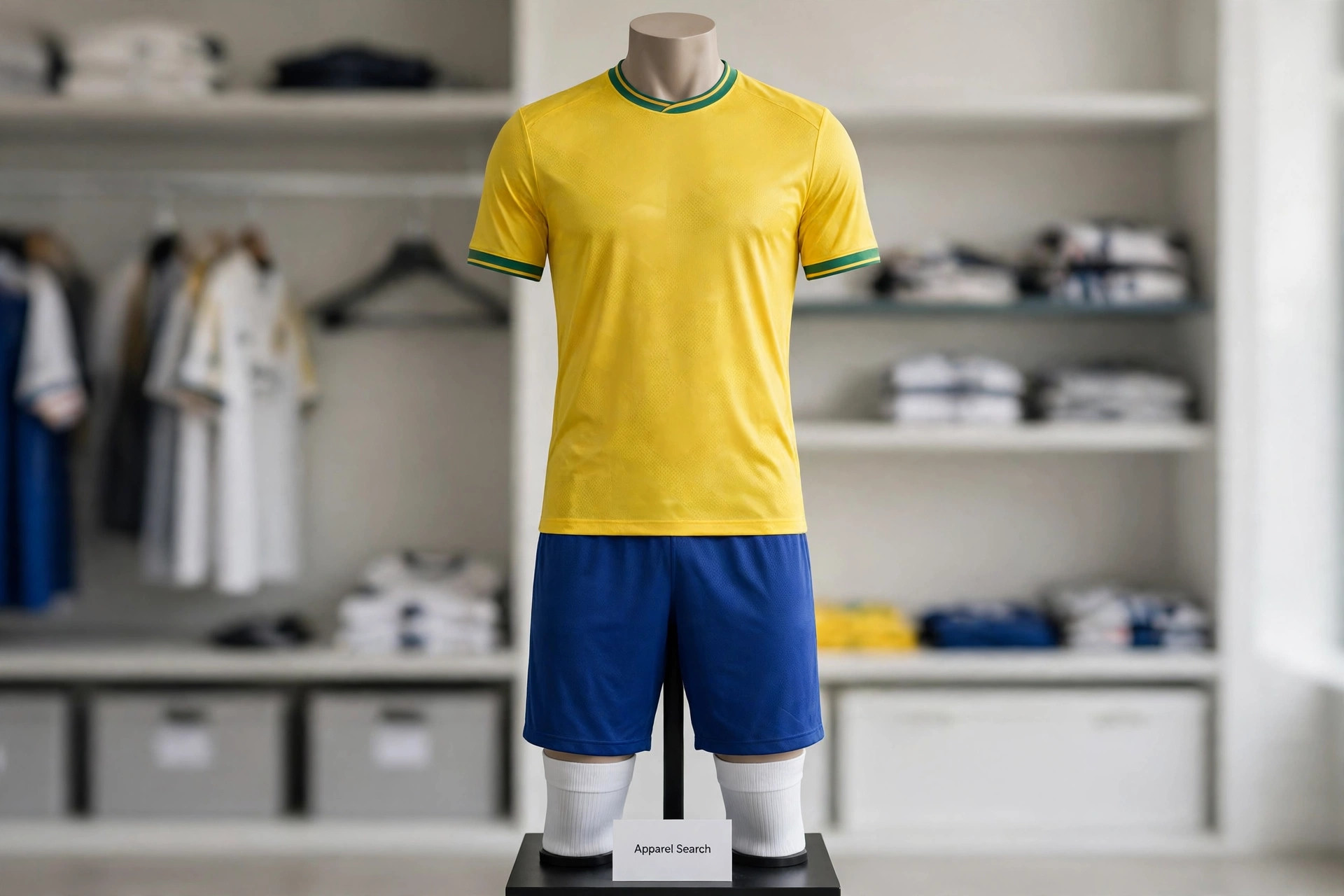
Illustrative image created for this guide by Apparel Search designers, closely following the national team's current home kit — team badge, sponsor logos and manufacturer marks have been removed, so small details may differ from the official shirt.
Brazil National Team Football Kit
The yellow shirt of Brazil — the canarinho, the little canary — is the most famous national team garment on earth, and it was born from trauma: Brazil abandoned white after losing the 1950 World Cup final at home, and a nationwide newspaper competition produced the yellow, green and blue that Pelé, Garrincha, Ronaldo and Neymar made immortal. Five stars sit above the crest, more than any other nation. This guide covers the colours, the makers and the shirts of the five titles — and Brazil's 2026 World Cup kit, reviewed in our tournament kits feature.
Yellow from Defeat: The 1954 Reinvention
Brazil originally played in white. The 1950 World Cup, hosted at home, ended in the Maracanazo — a final-match defeat to Uruguay that became a national trauma, with the white shirt blamed as a symbol of a team without identity. When FIFA required Brazil to adopt new colours, the newspaper Correio da Manhã ran a public competition: the winning design, by 19-year-old Aldyr Schlee from Pelotas, combined a yellow shirt with green trim, blue shorts and white socks — the colours of the flag, in a combination no other nation wore. It debuted in 1954 and has never been seriously challenged since.
The shirt's emotional weight in Brazil is unmatched anywhere: it is worn by presidents and street vendors, celebrated as art and — in recent years — contested as a political symbol, which only confirms what it is: the country's second flag.
Blue: The Away Shirt of 1958
Brazil's away colour is blue, and it owns the finest away-shirt story in football. In the 1958 World Cup final, Brazil faced hosts Sweden — who also wore yellow. With no time to make new shirts, Brazil's staff bought blue shirts locally in Stockholm and sewed on the badges; Brazil won their first World Cup in the improvised blue. The colour has been the change shirt ever since, usually in deep royal blue with yellow or white detailing.
The Makers: Umbro's Titles, Nike's Era
The shirts of the first four titles were made by Brazilian and international makers of the day, with Umbro the name attached to the modern classics — Umbro dressed the 1994 winners in the United States. Nike became Brazil's maker in 1997, in what was then the largest national-team deal ever signed, and has dressed the team since — including the 2002 fifth title in Japan and Korea. The Nike era has experimented at the edges (animal-print graphics, tonal patterns) while keeping the sacred formula — yellow, green trim, blue shorts — intact.
Iconic Brazil Kits and 2026
The 1970 shirt is the standard against which all national shirts are judged: plain yellow, green trim, worn by the team most often called the greatest ever. The 1994 Umbro shirt (with its subtle crest-pattern jacquard) and the 2002 Nike shirt complete the winners' set, alongside the blue of 1958 and the yellow of 1962. Brazil's 2026 shirts, and where they ranked among the tournament's 105-plus kits, are covered in our World Cup 2026 kits feature.
Buying a Brazil Shirt
Brazil shirts come in Nike authentic and replica versions, and the replica is a global streetwear staple — it may be the most worn national shirt by people with no connection to the team, which is precisely its fashion power. Five-star crests date a shirt: a genuine four-star shirt is pre-2002, a useful check in the vintage market. The yellow home shirt is the evergreen buy; the blue away is the connoisseur's.
Shop Brazil Shirts
Brazil national team shirts — current World Cup designs, replica and authentic versions, and retro reissues — are sold on Amazon by the manufacturer and established retailers. National shirts sell in tournament cycles, so sizes go fastest in World Cup season; check the version and size chart on the product page before ordering.
Shop Brazil national team jerseys on AmazonAs an Amazon Associate, Apparel Search earns from qualifying purchases made through this link. Prices and availability are set by Amazon and its sellers.
Common Questions
Why do Brazil wear yellow?
Brazil played in white until the trauma of losing the 1950 World Cup final at home. A newspaper competition produced a new design — yellow shirt with green trim, blue shorts — using the flag's colours. It debuted in 1954 and became the most famous shirt in football.
How many stars are on Brazil's shirt?
Five — one for each World Cup victory (1958, 1962, 1970, 1994 and 2002), more than any other nation. The stars sit above the CBF crest.
Who makes Brazil's kit?
Nike, since 1997, in a partnership that was the largest national-team deal of its time. Umbro made the shirt of the 1994 World Cup win.
Related Reading
Search Apparel Search