Apparel Search»Football Kits»Football Shirt Buying Guide
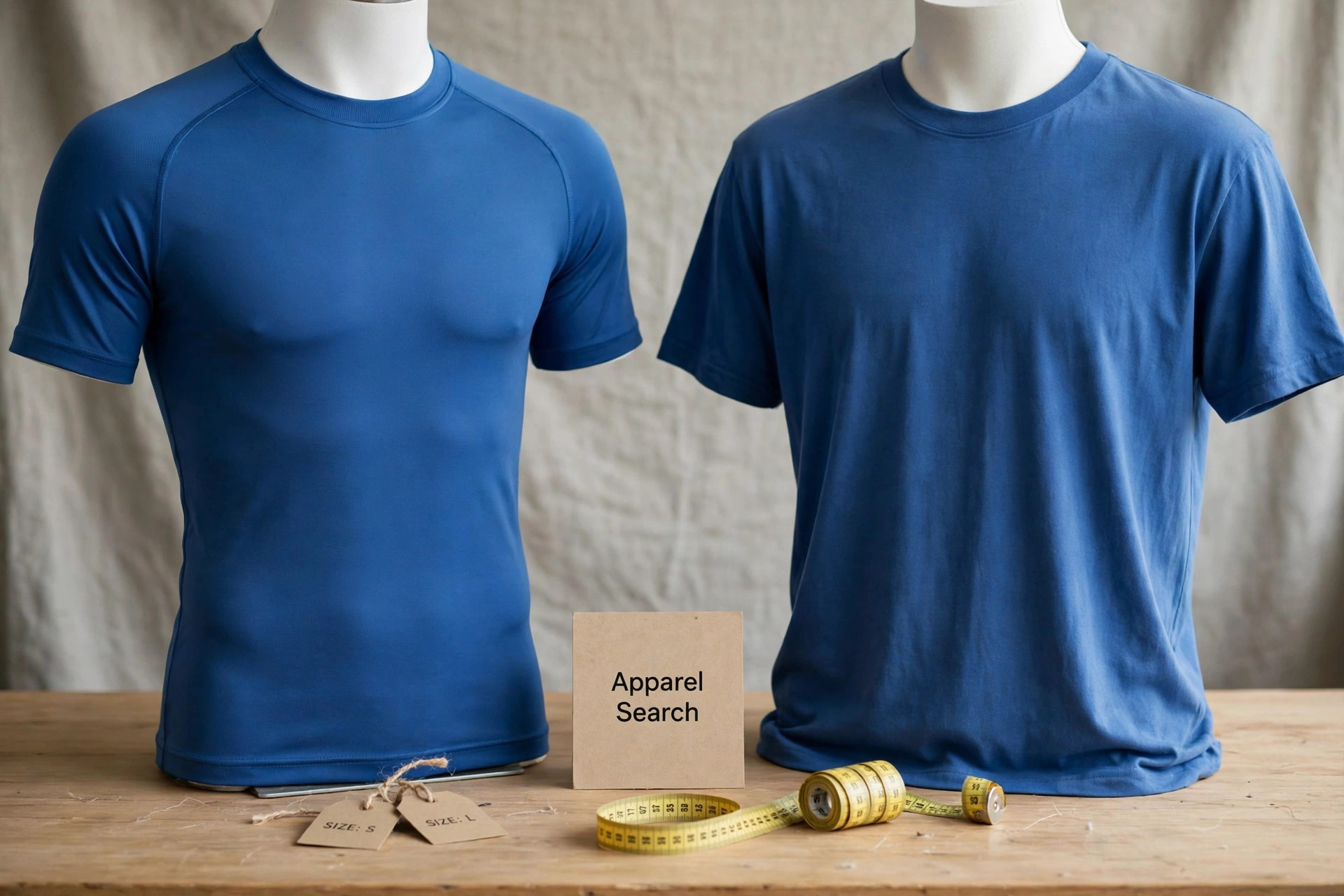
Illustrative image created for this guide — generic shirts in athletic and regular cuts; no club's official kit is shown.
Football Shirt Buying Guide
Buying a football shirt should be simple — pick your team, pick your size — but the modern market offers two different products under the same design, prices that range from modest to startling, and a flood of unofficial copies. This guide walks through the choices in order: which version to buy, which size, what the fabric labels actually mean, whether to add a name and number, and how to look after the shirt so the print survives longer than the season.
Step One: Authentic or Replica?
This is the decision everything else hangs on. The authentic shirt (sold as 'match', 'authentic' or 'player version') is the garment the team wears: ultralight fabric, a close athletic cut, badges and crests applied as heat-bonded or woven patches rather than embroidery, and ventilation engineered into the back and sides. The replica shirt ('stadium' or 'fan version') uses the same design in a sturdier, regular-fit construction with embroidered or printed details, at roughly half to two-thirds of the authentic price.
Neither is the 'real' shirt in a sense that should worry you — both are official products. Choose authentic if you want the exact match garment and prefer a slim fit. Choose replica if the shirt will be worn weekly, washed often, layered over other clothes, or worn to actually play five-a-side in. Most supporters, honestly assessed, are replica customers.
Decide where the shirt will live
Stadium and sofa wear, weekly washing and layering all favour the replica. The authentic rewards collectors and anyone who wants the true match specification.
Compare the badges
On an authentic shirt the crest is usually a lightweight woven or bonded patch; on a replica it is typically embroidered. It is the fastest way to tell the two apart in a shop.
Check the hem and fabric weight
Authentic shirts feel almost like technical running tops — very light, slightly sheer, with laser-cut or mesh ventilation zones. Replicas feel like a substantial sports T-shirt.
Step Two: Get the Sizing Right
Football shirts are sized like ordinary clothing (S–XXL and beyond) but cut very differently between versions. Authentic shirts are cut slim and long for athletes; many buyers go one size up from their usual, and two if they prefer a relaxed fit. Replica shirts follow ordinary casual sizing much more closely. Women's versions are cut separately rather than simply smaller, and most major clubs and national teams now offer them for every kit; children's sizes are sold by age or height depending on the maker.
If you are between sizes, or buying as a gift without a fitting, the replica in the recipient's usual size is the safest purchase in football retail.
Step Three: Understand the Fabric
Nearly every modern shirt is polyester — chosen because it is light, strong, colour-fast and moves sweat away from the skin rather than absorbing it like cotton. Each maker brands its technology: Nike's Dri-FIT (and the lighter Dri-FIT ADV on authentic shirts), adidas AEROREADY (with HEAT.RDY on match versions) and Puma's dryCELL are the three you will meet most often. In practice they all do the same job; the authentic versions simply do it with lighter, more engineered cloth. A growing share of shirts — including most replicas from the big makers — are now made largely from recycled polyester, in Puma's case through its RE:FIBRE programme using recycled textile waste.
Step Four: Namesets and Printing
Adding a player's name and number — or your own — is done with heat-applied lettering, and where you buy it matters. League football uses official namesets: the Premier League, for example, applies one standard font across all clubs, while European competition uses each club's own cup font, which is why the same player's shirt can carry two different styles of lettering in one season. Official printing bought with the shirt is applied by the retailer and covered by their returns policy in most cases; once a shirt is personalised it usually cannot be returned unless faulty, so check the spelling and the size before you commit.
Step Five: Look After It
More football shirts are ruined by laundry than by wear. The enemies are heat and friction, and the victims are the sponsor prints, namesets and bonded badges. Follow the routine below and a shirt will outlast several seasons of washing.
Wash inside out, cold
Turn the shirt inside out, use a cold, gentle cycle, and wash with similar colours. This protects prints, badges and bonded seams.
Never tumble dry
Heat cracks heat-applied lettering and can lift bonded crests. Air-dry flat or on a hanger, away from direct radiators.
Do not iron the prints
If the shirt needs ironing, use a cool iron on the reverse side only, never over a sponsor, nameset or badge.
Store folded or on a wide hanger
Thin authentic fabrics can stretch on narrow hangers; folding is kinder for long-term storage.
A Word on Unofficial Copies
Unofficial copies are everywhere, and the honest guidance is simple: if a current-season shirt from a major club is offered at a small fraction of the official price by an unfamiliar seller, it is not official. Beyond the legal and quality questions — copies typically use heavier fabric, printed rather than embroidered or bonded crests, and lettering that peels within a few washes — an unofficial shirt also sends nothing to the club or the makers who produce the real thing. Buy from the club, the manufacturer, or established retailers (including established Amazon sellers of official product), and treat too-cheap as a warning, not a bargain.
Vintage shirts are the honourable exception to 'buy current': original shirts from past decades are a legitimate collecting market. There, condition, era-correct details and seller reputation are what you are paying for — and a shirt from a famous season in good condition can be worth far more than this year's replica.
Ready to Shop?
Official replica and authentic shirts for the clubs and national teams in this section are sold through Amazon by the makers and established retailers. The Apparel Search Amazon guide keeps the shopping links in one place.
Shop on Amazon via the Apparel Search GuideThis link opens the Apparel Search shopping guide for Amazon, where the product links are kept in one place.
Common Questions
Do authentic football shirts fit smaller than replicas?
Yes. Authentic shirts are cut slim for players, and most people find they run at least one size smaller than the replica of the same labelled size. If you are between sizes or prefer a relaxed fit, size up — or choose the replica, which follows ordinary casual sizing.
Can I return a football shirt with a name and number printed on it?
Usually not, unless it is faulty. Personalised shirts are made to order, so check the size, the spelling of the name and the number carefully before buying. Unpersonalised shirts follow the retailer's normal returns policy.
How should I wash a football shirt so the printing does not crack?
Inside out, on a cold gentle cycle, then air-dry — never tumble dry, and never iron directly over prints, namesets or badges. Heat is what cracks heat-applied lettering; keep the shirt away from it and the printing lasts for years.
Related Reading
Search Apparel Search