Apparel Search Uniform Guides
Team Uniform Ordering Guide
Buying one uniform is shopping. Buying thirty that match, fit and arrive before the first game is a project — this is the project plan.
A team uniform order fails in predictable places, and almost none of them are the garments. It fails when the size list is still open after the order is placed, when the artwork was never approved in its final form, when the league’s number rules surface after printing, and when the first game arrives before the cartons do. This guide is written for the person holding that project — the coach, league manager, club volunteer or school organizer ordering for a group — and it runs the job end to end: roster and sizes first, garments second, decoration third, then the timeline, the money and the reorder you will certainly need. The supplier side of the trade is in our directories: the athletic team uniform retailers directory for buying finished kit, the sports uniform factories directory for manufacture, and wholesale uniforms for program supply at volume.
Search Apparel Search
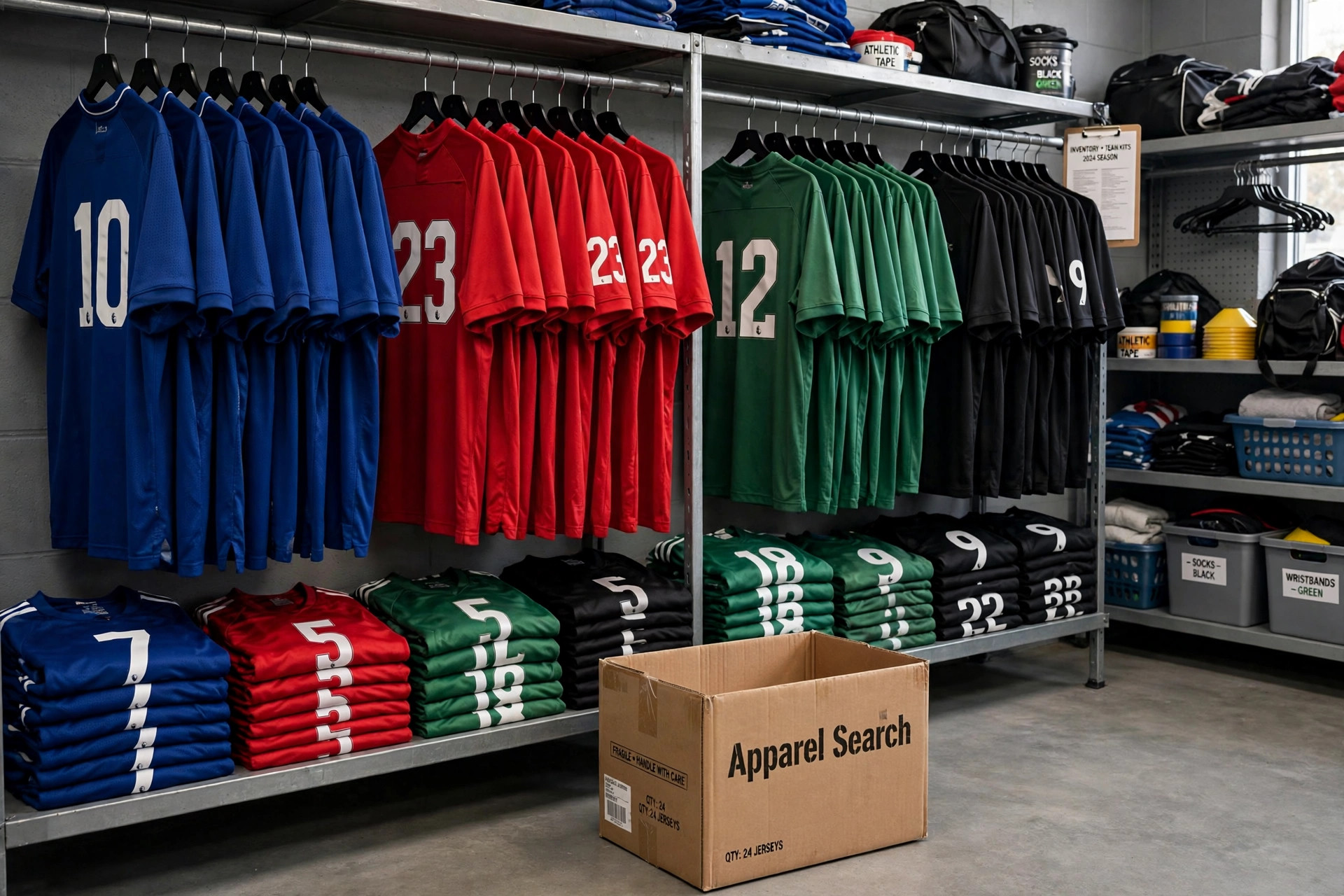
The Guides in This Section
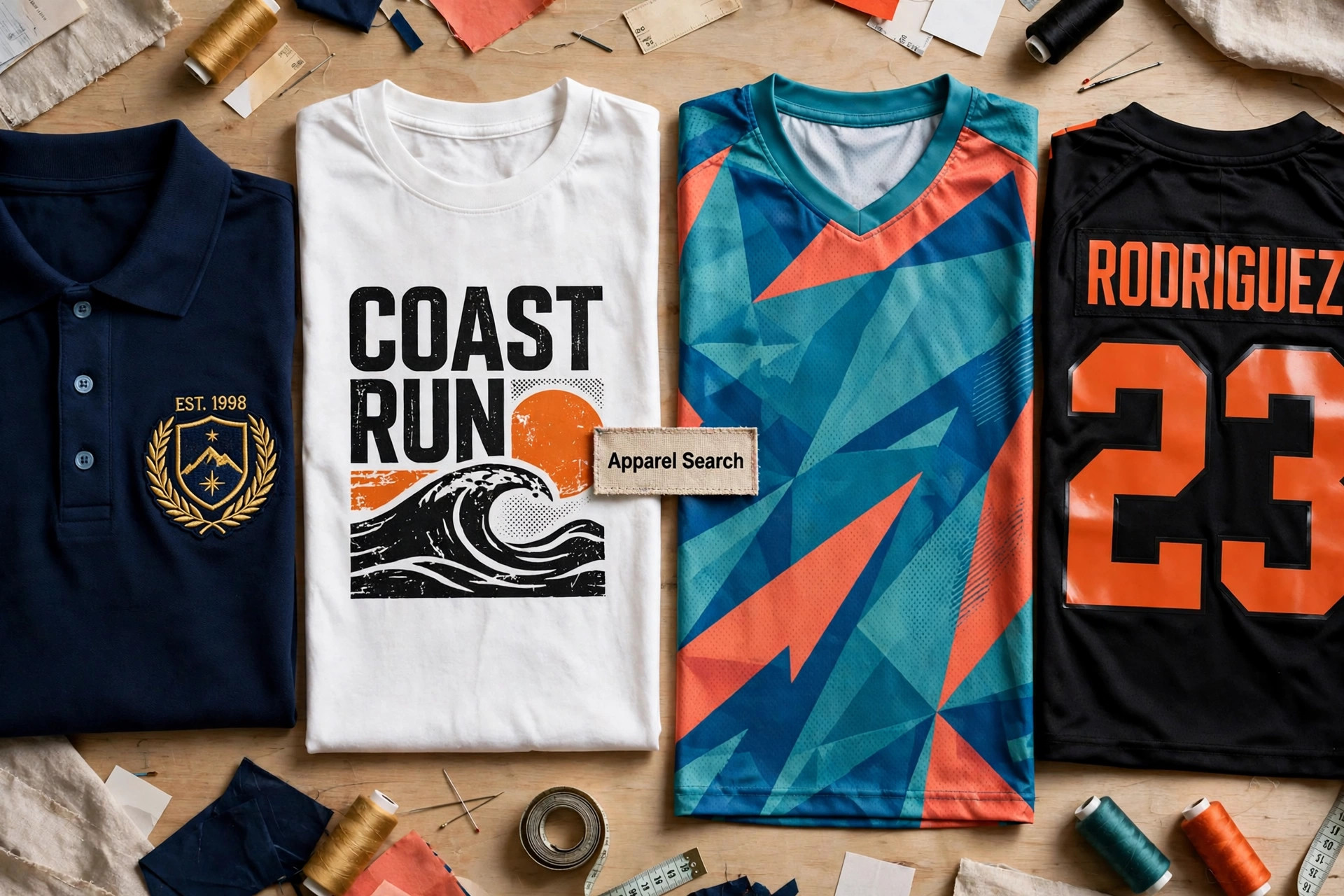 Team Uniform Decoration GuideScreen printing, embroidery, heat transfer and sublimation compared — plus names, numbers and logo placement, and which method survives which sport.
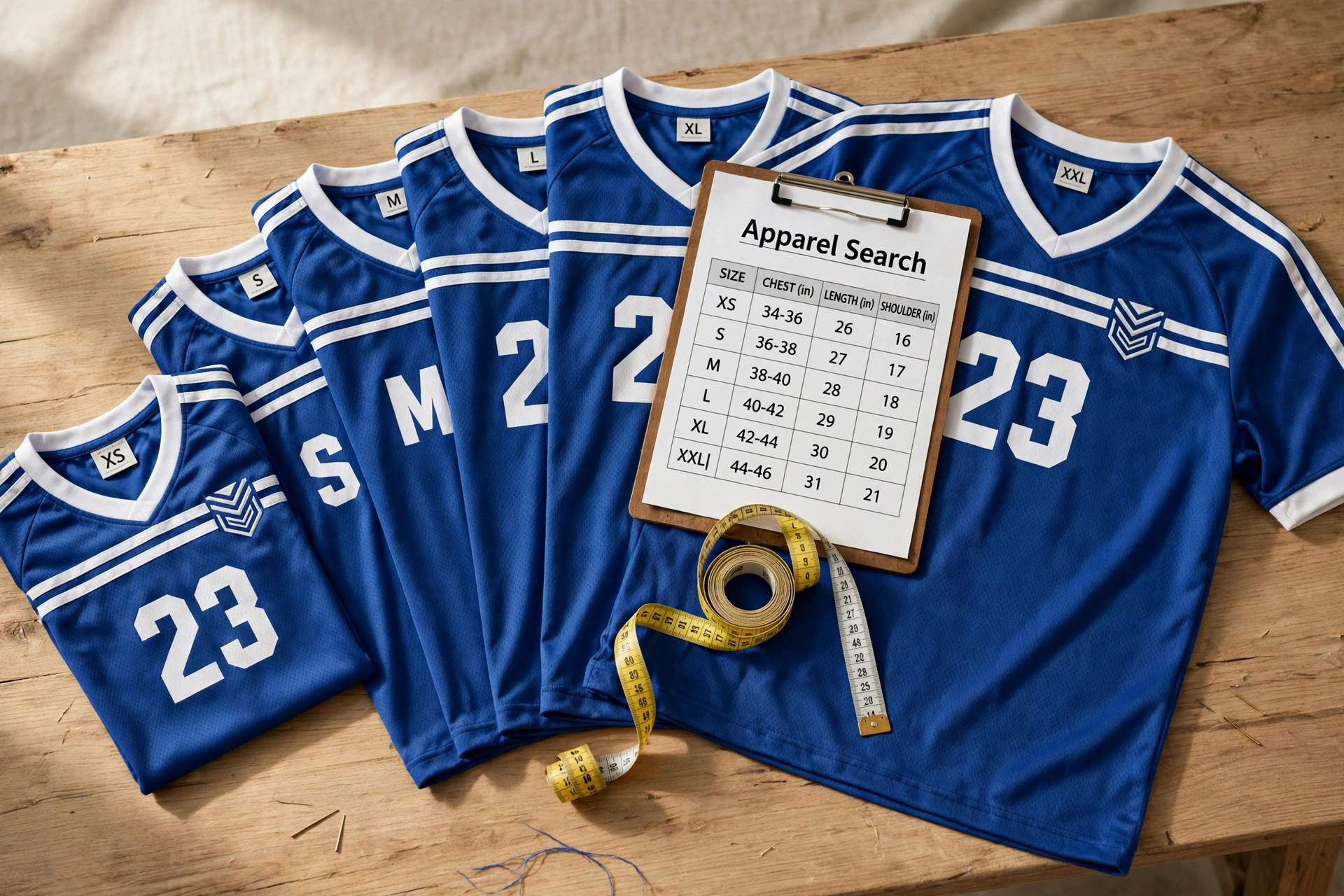 Team Sizing Kits & ReordersFitting a whole roster: sizing kits and sample runs, collecting sizes from a group, size-run ratios, spares for late joiners, and reorder consistency.
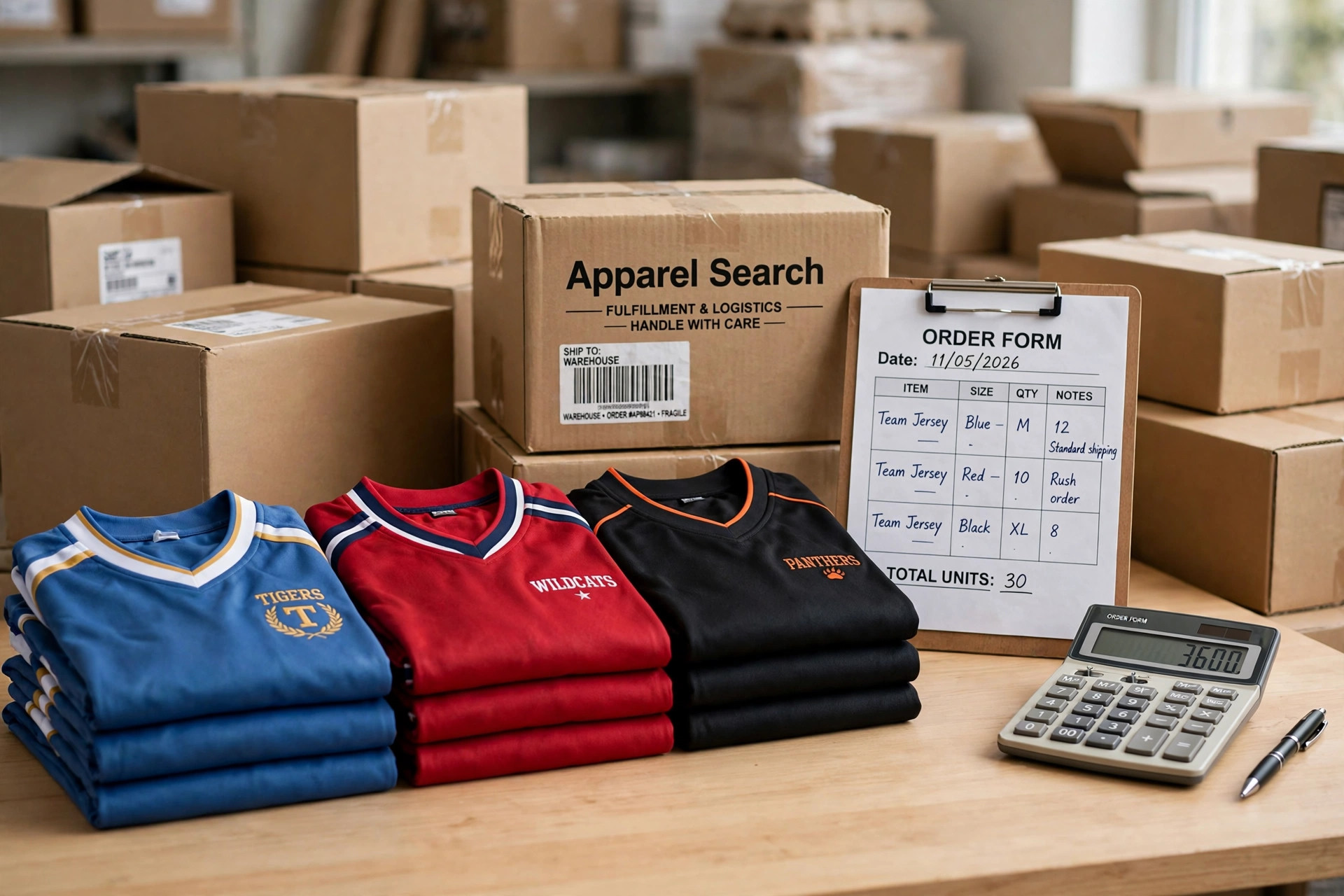 Team Uniform Costs & TimelinesWhat a group order really costs — blanks, decoration, setup fees and quantity breaks — and the lead times, deposits and rush-order realities behind it.
Start With the Roster, Not the Catalog
Every later decision hangs on one document: the roster, with a size and a number against every name. Build it before you look at a single garment. The roster settles how many uniforms exist, in what sizes, with which numbers — and it exposes the questions catalogs cannot answer: Does the league assign or restrict numbers? Are coaches and managers kitted too? Does the club need a contrasting away set, or a goalkeeper’s different shirt? Check the league or association rulebook at this stage, not at delivery: number sizes and placement, permitted colors and sponsor positions are commonly regulated, and a kit that breaks the rules is a reorder. Our sizing kits and reorders guide covers how to collect the size half of the roster reliably — that half is where group orders most often go wrong.
Choose the Garments
With the roster fixed, the garment choice narrows to two families. Stock garments — catalog jerseys, shorts and warm-ups from team dealers — are the default for most clubs: they arrive fast, decorate locally, and, crucially, can be reordered in ones and twos when a player joins in October. Custom-made uniforms, sewn to your design and usually sublimated, give a look no rival can copy but demand longer timelines and punish small reorders. Either way, specify the whole kit as one list — game jersey and shorts, socks, warm-ups, practice wear, coaches’ polos — because pieces bought later from different sources drift in shade and fabric. The garment guides for individual sports go deeper on construction: our softball uniforms guide and children’s sports uniforms guide each break a full kit into its working pieces.
Decide the Decoration Early
Decoration is not a finishing touch; it constrains everything upstream. Sublimation must be designed into the garment before it is sewn. Embroidery suits a crest on a stock polo but not a full-front design on a lightweight jersey. Screen printing is economical exactly when the design and the count stay fixed. Choosing the method early — before garments, in the case of sublimation — is what keeps the order on one timeline instead of three. Our decoration guide compares the four methods on cost structure, durability and best use, and covers the placement rules for crests, names and numbers.
Work Backwards From the First Game
- Fix the deadline. The first fixture, photo day or registration check — whichever comes first — is the date everything serves. Count back from it, not forward from today.
- Close the roster. Names, sizes and numbers final, with spares decided. No garment decision is safe before this step, and no timeline survives reopening it.
- Choose garments and decoration together, confirm the league’s rules against both, and approve the artwork in its exact final form — vector file, colors, sizes, placements.
- Place the order and the deposit with the full specification in writing: styles, colors, size run, decoration method and placement, delivery date. Verbal orders produce verbal results.
- Receive, check and distribute against the roster. Count and inspect on arrival, while the supplier can still fix errors — not in the locker room an hour before the game.
- File the specification. The order record — supplier, styles, colors, artwork, sizes — is what makes next season’s reorder a phone call instead of a research project.
The Money, in Brief
A group order’s price is a stack, not a number: the blank garment, the decoration per location, the one-time setup behind it, freight, and the spares you will be glad of. Deposits start production; balances usually fall due before the kit ships or is collected. All of it is worked through — quantity breaks, lead times by method, what a rush order can and cannot do — in our costs and timelines guide. The one rule worth stating here: collect the players’ money, or secure the club’s approval, before the deposit goes out. Organizers who front a team’s uniform money personally rarely volunteer twice.
The Organizer’s Real Job
Suppliers can print, sew and ship. What only the organizer can supply is finality: a closed roster, an approved design, a confirmed size list. Every week of delay in an order’s life is usually a week spent waiting for one of those three — which is why experienced managers chase decisions harder than they chase discounts.
Common Questions
How far ahead of the season should a team order uniforms?
Work backwards from the first game and give the order more room than feels necessary. Decorated stock uniforms commonly take a few weeks from approved artwork to delivery; fully custom or sublimated kits take considerably longer, and both estimates assume your sizes and artwork are final. The expensive orders are the rushed ones, so the roster, the size list and the artwork should all be settled before the order is placed, not while it is in production.
Who usually pays for team uniforms — the club or the players?
Both models are common. Clubs and schools often own the kit and issue it against a deposit, especially where uniforms must match across seasons; in adult leagues and many travel teams, players buy their own numbered set through the group order. Either way the ordering works the same — one organizer, one order, one specification — and collecting the money before the order is placed is what keeps the club from carrying the cost.
Do leagues control what a uniform can look like?
Very often, yes. Many leagues and school associations publish uniform rules — permitted colors, number sizes and placement, where names and sponsor marks may appear, and whether a contrasting away kit is required. Read your league's current rulebook before choosing garments or approving artwork; a beautiful kit that fails the rules is a reorder at your expense.
Should we buy stock uniforms or have them custom made?
Stock garments decorated locally are faster, cheaper per unit and far easier to reorder in ones and twos — the right default for most clubs. Fully custom manufacture earns its longer timeline when the design itself is the point: an all-over sublimated pattern, an unusual colorway, or a large program that will reorder the same kit for years. Our costs and timelines guide works through the trade-off in numbers.