Children's Sports Uniforms Guide
Children's sports uniforms are the matching kit a team wears to be recognised as a team: this type of athletic apparel is worn by kids playing sports, and most sports teams wear uniforms made in the team's distinctive colours. The classic examples are baseball uniforms, football uniforms, ice hockey uniforms and basketball uniforms — and the other half of the rule is this: in individual sports like tennis and golf, players may choose any clothing design allowed by the competition rules. This guide covers the team kit as a product: what a complete uniform includes, fabrics, numbers and care.
Shop Children's Sports Uniforms Now
Shop Children's Sports Uniforms on Amazon Shop Children's Sports Uniforms on eBayThe Amazon and eBay links on this page are affiliate links. If you make a purchase through them, Apparel Search may earn a commission.
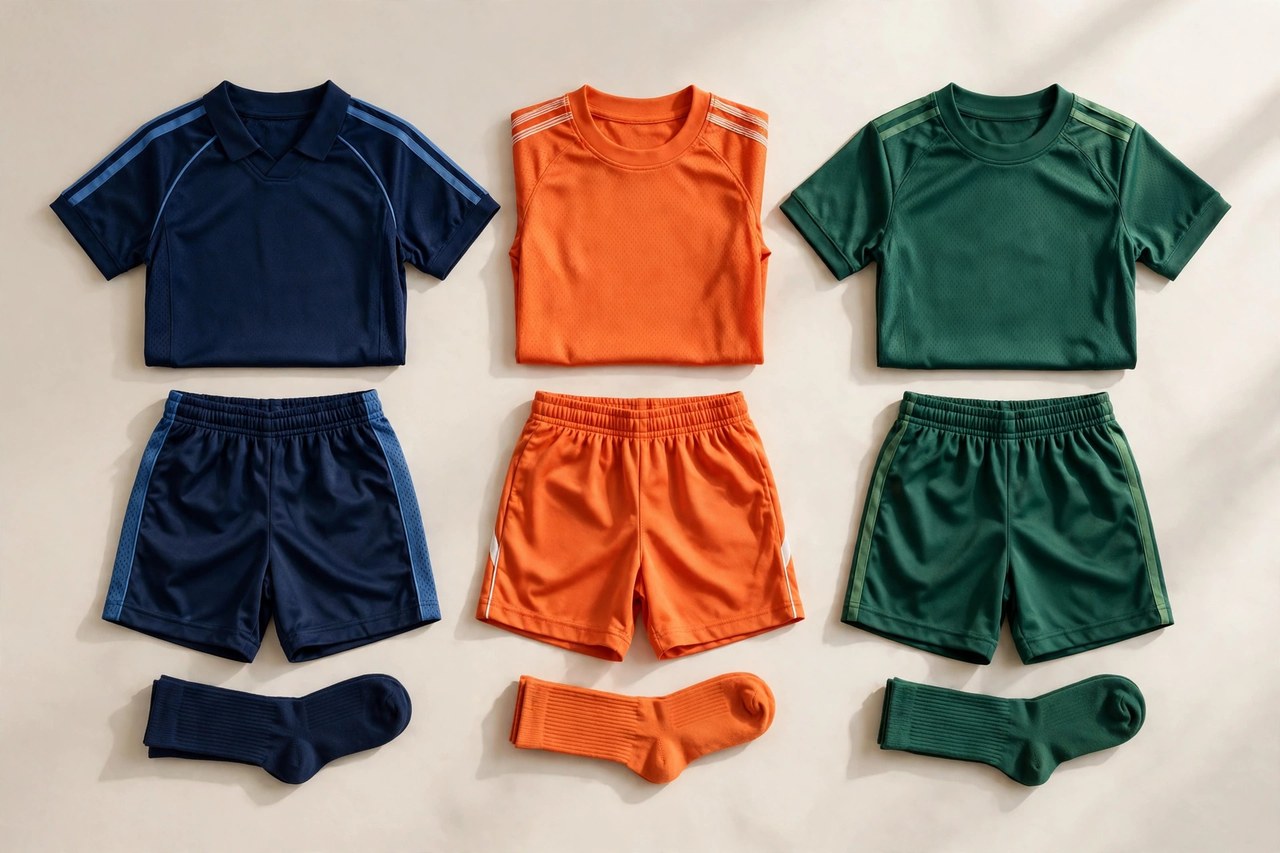
Children's sports uniforms are the matching kit a team wears to be recognised as a team: this type of athletic apparel is worn by kids playing sports, and most sports teams wear uniforms made in the team's distinctive colours. The classic examples are baseball uniforms, football uniforms, ice hockey uniforms and basketball uniforms — and the other half of the rule is this: in individual sports like tennis and golf, players may choose any clothing design allowed by the competition rules. This guide covers the team kit as a product: what a complete uniform includes, fabrics, numbers and care.
A uniform is usually not chosen freely: a league or club specifies colours, and often the supplier. The parent's real decisions are size, spares, and the extras around the kit — which is exactly where this guide concentrates, because a uniform that fits, washes and is complete on game morning is the whole job.
What a Complete Team Uniform Includes
The core is the jersey or top and the shorts or pants in team colours. Baseball adds the cap and often stirrup or baseball socks, with a belt on the pants. Football (soccer) adds the socks in team colour and requires shin guards underneath them — guards are equipment, but the sock that holds them is uniform. Basketball is jersey and shorts, usually sleeveless and reversible in practice leagues. Ice hockey builds a full system: jersey over pads, hockey socks over shin guards, in the team's colours.
Numbers identify players for referees, coaches and proud grandparents, and leagues have rules about them — size, placement, and no duplicates in a squad. Names appear in some leagues and not others. Order numbers through the club's process rather than improvising, because a wrong font or a clashing colour gets noticed at the first match. Check what the league provides versus what families supply: commonly the jersey is club-issued and returned, while shorts, socks and extras are family-bought in specified colours — a distinction that decides what you may size generously and what goes back in May.
Fabrics, Fit Through a Season and Spares
Modern youth uniforms are polyester or polyester mesh, and rightly: they do not hold sweat like cotton, colours survive a season of weekly washing, and prints and numbers are dyed or bonded in. Fit a uniform for movement and a season's growth: the jersey should allow a full overhead reach without exposing the midriff beyond league comfort, shorts should allow a full sprint stride and a slide where the sport has sliding, and nothing should need adjusting mid-play. Many parents size the family-bought pieces a touch generously for a growing player; club-issued jerseys are the size the club has, and a base layer underneath solves most fit complaints.
Spares win seasons. A second pair of team socks, a spare base-layer top in a permitted colour, and a practised routine for the night-before wash are worth more than any upgrade. Keep the whole kit in one bag or drawer section, washed and returned to the same place after every game; the uniform hunt at dawn is a rite of passage no family needs twice. Label everything that can be labelled — twenty identical jerseys in a changing room are twenty chances to bring home the wrong one.
The parent’s version above has an organizer’s counterpart: the coach or club manager collecting sizes for the whole squad at once. Our team sizing kits and reorders guide covers sizing kits, size-run ratios, spares for late joiners and the records that keep a kit consistent across seasons.
Care, Numbers and Returning the Kit
Wash uniforms inside out, cool, without fabric softener, which clogs the wicking finish and relaxes printed numbers. Hang them to dry rather than tumble-drying where labels advise it, because heat is what cracks bonded numbers and letters over a season. Treat grass and clay stains promptly — soak before the wash, not after a week in the bag — and air the kit bag itself, which otherwise becomes the smell the car is known by.
At season's end, wash and inspect club-issued pieces before returning them; returning a clean, sound jersey is part of the club's economics and the next child's season. Family-bought pieces in sound condition pass to siblings or club swap sales, where specified colours make them genuinely useful. A uniform carries a team's colours and a child's whole season in it, as the classic examples — baseball, football, hockey, basketball — each show in their own fabric. Bought to fit, kept complete and washed properly, it is the hardest-working outfit in the wardrobe.
Common Questions
What does a children's sports uniform include?
The team-colour jersey and shorts or pants, plus the sport's extras: baseball adds a cap and team socks, soccer adds team socks holding shin guards, basketball is jersey and shorts, hockey builds jersey and socks over pads. Leagues specify colours and numbers; check what the club issues versus what families buy.
How should a children's sports uniform fit?
For movement and a season's growth: full overhead reach in the jersey, full sprint stride — and a slide, where the sport slides — in the shorts, with nothing needing adjustment mid-play. Family-bought pieces can be sized a touch generously; a base layer under a club-issued jersey solves most fit complaints.
How do you wash a sports uniform without ruining the numbers?
Inside out, cool, without fabric softener, which clogs wicking finishes and relaxes prints. Hang to dry instead of tumble-drying where labels advise, since heat cracks bonded numbers over a season. Treat grass and clay promptly with a pre-wash soak.
More in Children's Clothes Guide S
The S letter hub and related S guides:
Looking for Children's Clothing Stores?
This guide helps you choose children's sports uniforms. To browse where to buy, visit our children's clothing store directory, where you can find retailers that carry them.