Children's Uniforms Guide
A children's uniform is clothing worn as a set by the members of a group: a uniform is a type of clothing worn by members of an organization while participating in that organization's activity - including sports uniforms, school uniforms, boy scout uniforms and girl scout uniforms. A school uniform is a uniform worn by students primarily for a school or otherwise educational institution, and they are common in primary and secondary schools in various countries.
Shop Children's Uniforms Now
Shop Children's Uniforms on Amazon Shop Children's Uniforms on eBayThe Amazon and eBay links on this page are affiliate links. If you make a purchase through them, Apparel Search may earn a commission.
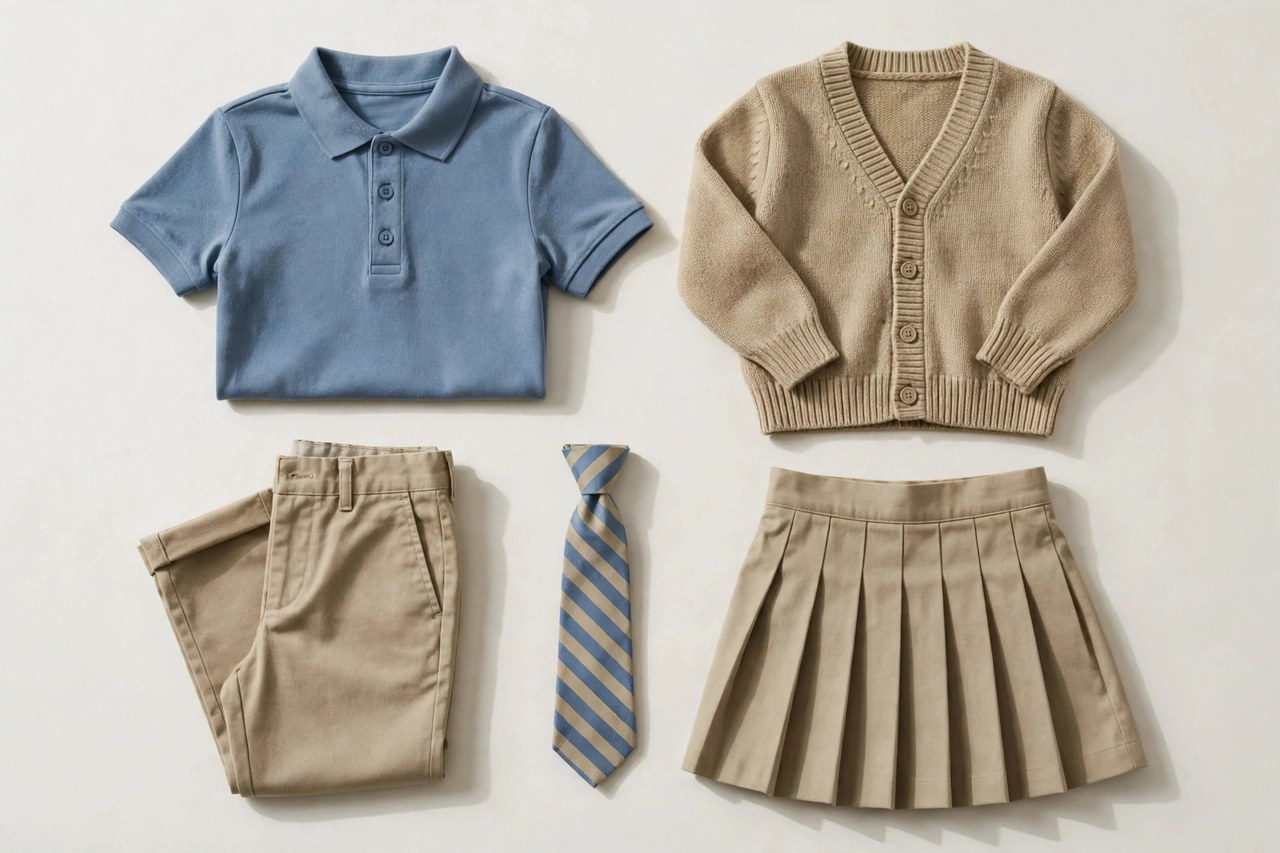
A children's uniform is clothing worn as a set by the members of a group: a uniform is a type of clothing worn by members of an organization while participating in that organization's activity - including sports uniforms, school uniforms, boy scout uniforms and girl scout uniforms. A school uniform is a uniform worn by students primarily for a school or otherwise educational institution, and they are common in primary and secondary schools in various countries.
Uniforms invert normal clothes buying. Everywhere else in this guide the advice is to choose by the child; here the school, team or troop chooses, and the parent's skill is in buying the specified items well - right fabrics, right fits, enough of them, at the point in the year when prices and stock are kindest. This guide covers the three uniform families and the logistics that make them work.
School Uniforms: The Specified Wardrobe
The standard school kit is built from a short list of interchangeable pieces: polo shirts or buttoned shirts, trousers, shorts, skirts or skorts, a jumper, cardigan or blazer, and in formal schools a tie. The specification - colours, crests, whether items must come from a named supplier or may be bought anywhere in the right colours - comes from the school, and it is the buying document: check it before every purchase, because specifications change and a near-enough colour is still the wrong colour. Where the school allows generic items, supermarket and chain uniform ranges offer the same specified colours at a fraction of the cost of the named supplier, and the saving across a full kit is large.
Quantities are a laundry calculation. Tops are worn once and washed: five is the working number for a school week, three the bare minimum with midweek washing. Bottoms survive two days each in most cases, so two or three pairs rotate comfortably. Buy for fit now with the growth reality priced in: adjustable waists, hems that can be let down and a tolerance for buying a mid-year replacement set in the next size beat one September set bought two sizes large, which fits nobody, looks wrong and still gets outgrown at the knees and elbows first.
Sports and Scout Uniforms
Sports uniforms identify the team and do an athletic job at the same time: moisture-wicking knits rather than cotton, colours fixed by the club, numbers and names applied by print or embroidery, and matching socks and shorts as part of the set. See the children's sports uniform guide in this directory, and the stores and factories that supply athletic uniforms, linked below. Buy the kit through the team's own channel where one exists - colour shades differ between makers and a mismatched shirt is visibly wrong on the pitch - and order early: team printing queues at the start of every season.
Scout uniforms - boy scout and girl scout uniforms - are membership clothing with their own logic: the shirt or tunic carries badges, awards and troop insignia earned over years, which makes the garment part uniform, part record. Buy the base garment to the association's specification, leave room in the fit for the seasons it should serve, and sew badges rather than ironing where the fabric allows, because a well-kept scout shirt is handed on or kept, not thrown away. Activity clothing worn under or instead of the formal uniform follows the outdoor rules of layering and weather the outerwear guides in this directory set out.
Fabric, Fit and Uniform Logistics
Uniform fabrics are chosen for the wash cycle they will actually get. Polycotton shirts and polos hold colour and shape through weekly hot washes where pure cotton fades and twists; reinforced knees on trousers, double-stitched seams and stain-resistant finishes are the features that decide whether a set reaches June. Teflon-style stain finishes genuinely help with paint, ink and lunch - test by the school's real hazards. Easy-care matters too: a uniform wardrobe that needs ironing piece by piece is a daily tax, so prefer knits and finishes that come off the line or out of a low dryer ready to wear.
Logistics finish the job. Label every piece, including the generic ones that look like thirty classmates' - lost property is the uniform system's biggest leak. Keep one complete clean set in reserve so a morning spill never becomes a crisis. Plan the year's spend: September for the main kit, January for the growth replacements, and the sales after term starts for next year's sizes in the specified colours, which do not change. And when a uniform is outgrown in good condition, it is a prime candidate for the school's own second-hand sale - which connects this page to the used clothes guide in this letter, where the same garments begin their second round.
Common Questions
What is a uniform?
A type of clothing worn by members of an organization while participating in that organization's activity - including sports uniforms, school uniforms, boy scout uniforms and girl scout uniforms. A school uniform is worn by students primarily for a school or educational institution and is common in primary and secondary schools in various countries.
How many school uniform pieces should a child have?
Work by the wash cycle: five tops for a school week (three is the minimum with midweek laundry), and two or three bottoms, since trousers, shorts and skirts usually serve two days each. Keep one complete clean set in reserve for spill mornings.
Must uniform items come from the school's named supplier?
Only where the school's specification says so - crested and blazer items often must; plain trousers, skirts and shirts in the specified colours often may be bought anywhere. The specification is the buying document, and generic versions of allowed items save a large share of the kit's cost.
More in Children's Clothes Guide U
The U letter hub and related U guides:
Looking for Children's Clothing Stores?
This guide helps you choose children's uniforms. To browse where to buy, visit our children's clothing store directory, where you can find retailers that carry them.