Children's Used Clothes Guide
Used children's clothes are garments on their second owner, with a vocabulary of their own. Used clothing can also be referenced as previously worn, pre-worn, slightly worn or old clothing - and children typically grow so darn fast that the cost of buying new clothing often becomes a burden. Sharing clothing from one child to the next is a very common practice, and many people refer to it as hand-me-downs: as the larger child outgrows their clothing, they hand it down to the typically younger child.
Shop Children's Used Clothes Now
Shop Children's Used Clothes on Amazon Shop Children's Used Clothes on eBayThe Amazon and eBay links on this page are affiliate links. If you make a purchase through them, Apparel Search may earn a commission.
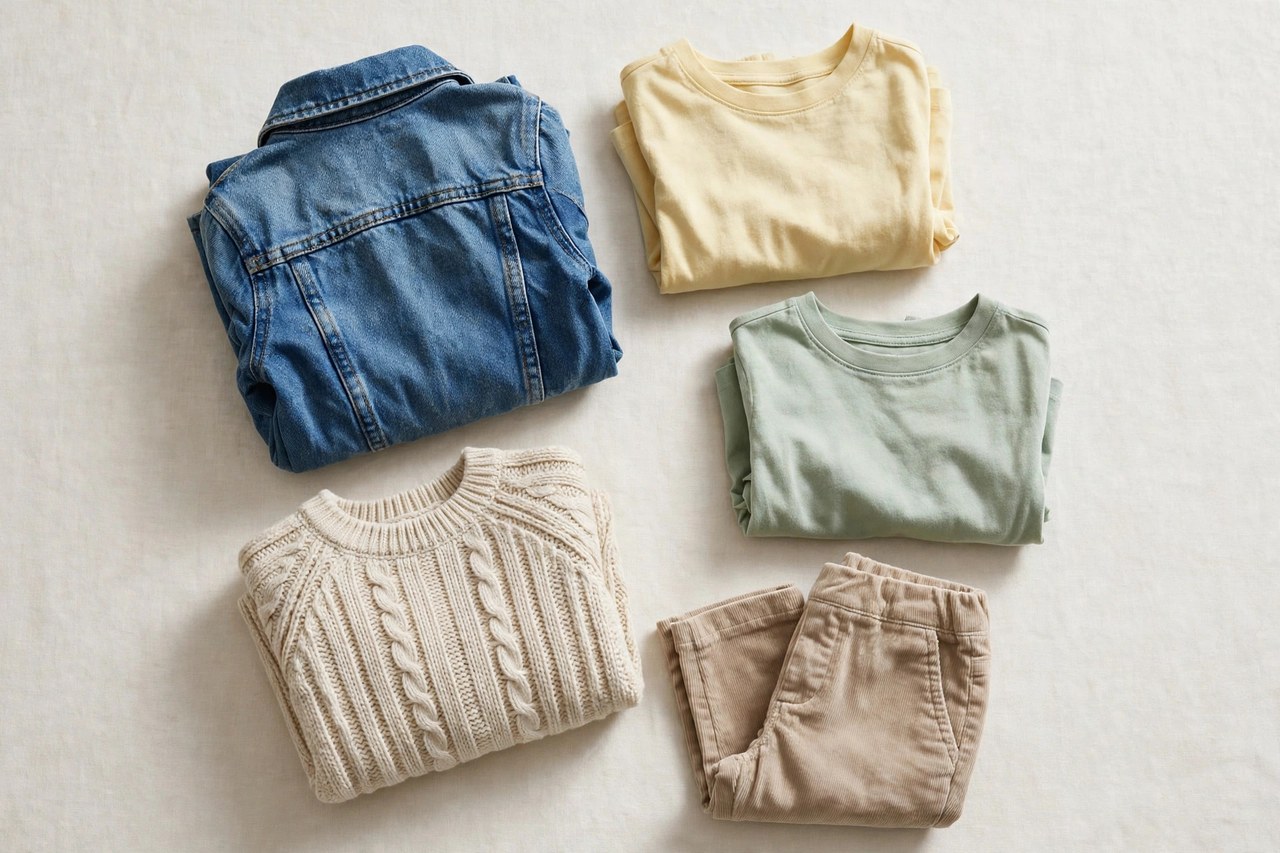
Used children's clothes are garments on their second owner, with a vocabulary of their own. Used clothing can also be referenced as previously worn, pre-worn, slightly worn or old clothing - and children typically grow so darn fast that the cost of buying new clothing often becomes a burden. Sharing clothing from one child to the next is a very common practice, and many people refer to it as hand-me-downs: as the larger child outgrows their clothing, they hand it down to the typically younger child.
Children's clothes are the best-used clothing category there is, for a simple structural reason: children outgrow garments long before they wear them out. A size worn for four months of a growth spurt may hold almost its full service life when it is passed on. This guide covers where used children's clothes come from, how to check condition, which categories are the bargains, and the environmental point - wearing previously worn clothing is helpful to the environment, because the less clothing that goes to waste the better.
Sources: Hand-Me-Downs, Consignment and Used Clothing Stores
The family channel is the oldest: hand-me-downs from siblings, cousins and friends, passed down as each child outgrows a size. It works best organised - clothes stored clean, by size, so the next child's box is ready when the growth spurt arrives, and sturdy categories like coats, jeans and knitwear handed on as a matter of routine. Shop the retail side of the same idea: used clothing stores and consignment shops, where parents can both buy outgrown sizes cheaply and sell or trade the sizes their own children have left behind, keeping clothes in circulation and money in the household.
Beyond those sit charity and thrift shops, school uniform exchanges, parent-group swaps and online resale listings. Each channel has its profile: consignment shops curate and price by condition, thrift shops reward patience with the lowest prices, swaps are fastest for baby and toddler sizes where supply is endless, and uniform exchanges are the single best source for the specified garments the uniforms guide in this letter covers - often barely worn, at a small fraction of the new price. The directory links - used children's clothing stores, used clothing stores generally, consignment shops and wholesale used clothing for the trade are listed below.
Checking Condition: What Survives and What Does Not
Shop used clothes by construction, not by appearance on the rail. Hold fabric to the light: thinning at knees, elbows, seat and underarms is wear that will not reverse. Check the stress points - button placket stitching, crotch seams, cuff edges, collar folds - and test every fastening: zips fully up and down, snaps closed and open, buttons present or accounted for, elastic still springy at waists and cuffs, because dead elastic is the most common hidden fault in used children's clothes and the least worth repairing. Smell matters too: mildew and smoke odours can survive several washes, and a garment that smells wrong in the shop usually keeps the secret badly.
Some categories are reliably excellent used. Outerwear - coats, jackets, rain gear and ski wear - is outgrown mid-life and built sturdy to begin with; occasion clothes worn twice; denim, which improves with wear; knitwear without pilling or moth holes (check knitwear and stored wool especially for moth damage). Basics like plain tees are so cheap new that used buying only pays in bundles. Footwear is the cautious category: shoes mould to the first wearer's feet, so used shoes suit occasional wear better than daily first-walkers. And the simplest rule covers everything: wash before wearing, hot where the fabric allows, whatever the source.
Value, the Environment and the Vintage Door
The economics are strongest exactly where new prices are hardest to justify: the fast sizes of the first three years, where a child may pass through six sizes in two years, and the specified wardrobe of school uniform, where second-hand simply discounts an identical garment. Selling on completes the loop - a wardrobe that is bought used and sold on when outgrown can cost a small fraction of the same wardrobe bought new, and the discipline it takes is only sorting, cleaning and listing promptly, while sizes are still in season.
The environmental case is straightforward: every previously worn garment worn again is one that does not go to waste, and the child's growth rate means the children's wardrobe is where reuse saves the most material for the least compromise. For older children, used buying also opens one more door - vintage clothing, where older garments become interesting in themselves rather than merely economical; the vintage clothing link below is for families whose children have reached the age of caring about exactly that.
Common Questions
What is used clothing called?
Previously worn, pre-worn, slightly worn or old clothing - and, when shared from one child to the next, hand-me-downs: as the larger child outgrows their clothing, they hand it down to the typically younger child. Children grow so fast that the cost of buying new often becomes a burden.
Which children's clothes are the best buys used?
Outerwear, occasion clothes, denim and school uniform pieces: all are outgrown long before they are worn out, and uniform from a school exchange can be a fraction of the new price. Check thinning at knees and elbows, dead elastic, working zips and snaps, and moth damage in knitwear before buying.
Why is used clothing good for the environment?
Because wearing previously worn clothing keeps garments in use instead of going to waste - and children's fast growth means their wardrobes hold the most unworn service life of any clothing category, so reuse saves the most there.
More in Children's Clothes Guide U
The U letter hub and related U guides:
Looking for Children's Clothing Stores?
This guide helps you choose children's used clothes. To browse where to buy, visit our children's clothing store directory, where you can find retailers that carry them.