Children's Undershirts Guide
A children's undershirt is the plain layer worn underneath other clothing, and this guide covers it strictly as a product: its styles, fabrics, fit and care. An undershirt is basically a t-shirt worn under other shirts - an article of underwear worn underneath a dress shirt, intended to protect it from body sweat and odours. It may also be worn to protect the body from stiff or otherwise uncomfortable fabric, and it can have short sleeves or be sleeveless, typically with a low, round neckline, and can be worn for athletic purposes.
Shop Children's Undershirts Now
Shop Children's Undershirts on Amazon Shop Children's Undershirts on eBayThe Amazon and eBay links on this page are affiliate links. If you make a purchase through them, Apparel Search may earn a commission.
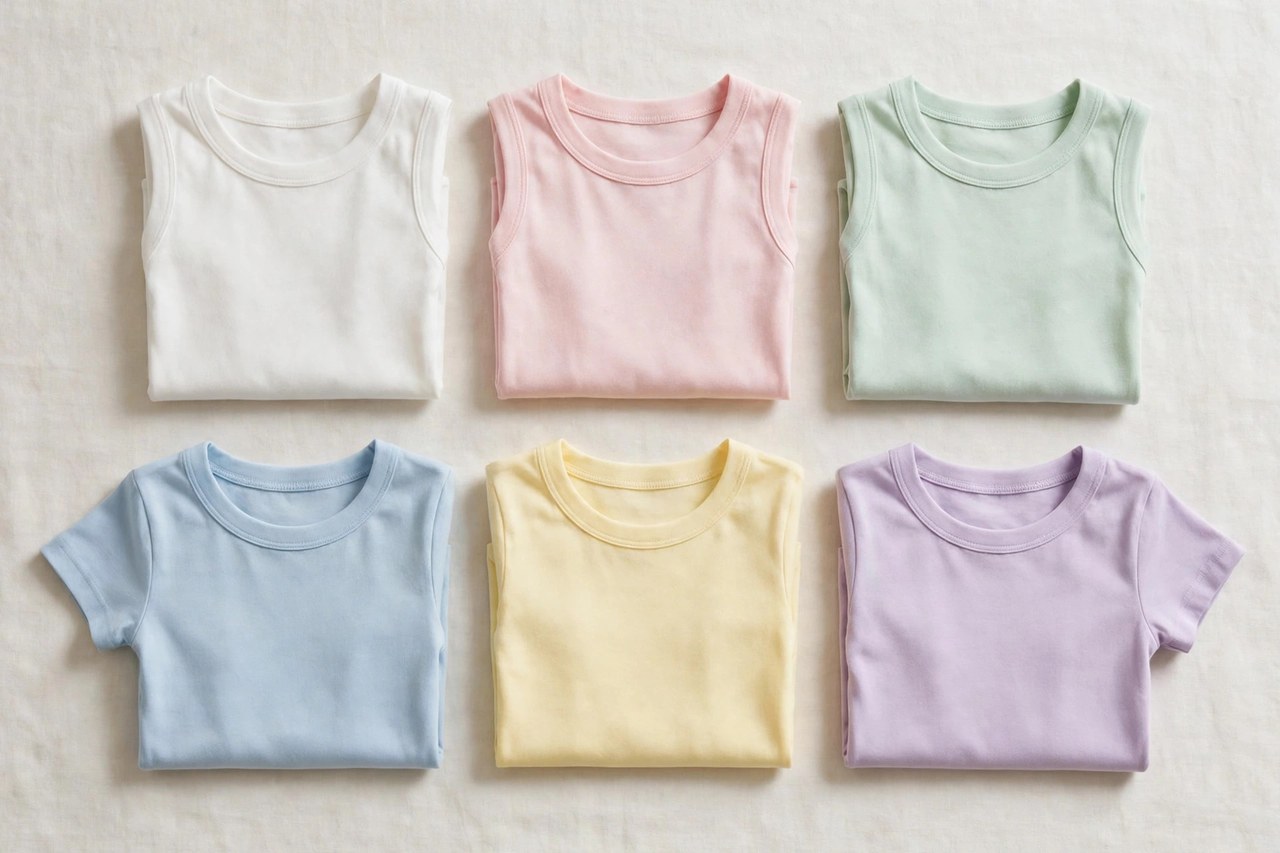
A children's undershirt is the plain layer worn underneath other clothing, and this guide covers it strictly as a product: its styles, fabrics, fit and care. An undershirt is basically a t-shirt worn under other shirts - an article of underwear worn underneath a dress shirt, intended to protect it from body sweat and odours. It may also be worn to protect the body from stiff or otherwise uncomfortable fabric, and it can have short sleeves or be sleeveless, typically with a low, round neckline, and can be worn for athletic purposes.
That double job - protecting the outer shirt from the child, and the child from the outer shirt - explains everything about how undershirts are made: smooth, light, close-fitting and invisible. A good undershirt is the garment nobody notices, and the buying tests below are all about keeping it that way through a school year of weekly washing.
Styles: Sleeveless, Short Sleeve and Neck Lines
The sleeveless undershirt - the tank or vest style - is the lightest form: shoulder straps or a shaped armhole, no sleeve bulk under a shirt, and the coolest option under school uniforms and dress clothes in warm weather. The short-sleeve undershirt adds coverage under the arms, which is where it does the most protective work for the outer garment, and it is the warmer choice in winter and the usual pick under scratchy knitwear, where the sleeve also guards the arm from an itchy sweater. The type typically has a low, round neckline, and that detail is functional: a low crew neck stays hidden under an open collar or a buttoned shirt, while V-neck undershirts exist for older children who wear shirts open at the neck.
Fit is the opposite of the t-shirt's fit. An undershirt should lie smooth and close without compression: long enough to stay tucked or to sit well past the waistband of trousers so it never rides up and bunches under the outer shirt, with armholes that sit against the body rather than gaping, because folds and bunching print through and defeat the garment's purpose. Buy the child's current size, not the next one up - an oversized undershirt is worse than useless as a smooth layer. For athletic wear the same garment in a moisture-wicking knit is the base layer under sports kits, its use for athletic purposes.
Fabrics, Seams and Comfort Details
Cotton is the standard fabric: soft, absorbent - absorption is the point, since catching sweat before it reaches the outer shirt is the undershirt's first job - and easy to wash hot, which underwear requires. Cotton with a little elastane holds its shape and its close fit through far more washes than pure cotton, which gradually bags at the neck and hem. Ribbed knits stretch to fit and recover; smooth jersey lies flatter under thin shirts. For children who run hot or play sport daily, synthetic wicking knits move moisture instead of holding it, at the cost of needing a cool wash and picking up odours sooner.
Comfort lives in the seams. Flat or bound seams do not ridge against the skin or show through the outer layer; a printed or external label avoids the classic scratchy neck tag - or choose tagless styles outright. Armhole and neck bindings should be soft and narrow. White is the traditional colour because it disappears under white and pale shirts; under dark shirts a dark undershirt serves the same invisible purpose, and skin-tone shades work under everything. Whatever the colour, keep a rotation of at least five so the layer is fresh daily through the school week.
Washing, Rotation and Replacing
Undershirts are washed harder than any other garment a child owns: hot or warm washes, after single wears. That regime, not wear, is what ends them - necks bag, fabric thins at the underarm, elastic in bindings gives out. Wash with similar colours, dry on moderate heat or line-dry to slow the cotton's shrink-and-thin cycle, and expect whites to grey gradually; a whitening wash restores them for a while, but a dingy undershirt under a white school shirt shows through, which is its own retirement signal.
Replace on condition, not on size alone: when the neckline no longer recovers, when the body has shortened enough to come untucked or ride up, or when the fabric has thinned to transparency, the layer has stopped doing its job. The undershirt sits inside the wider shirt family — see the types of t-shirts and types of shirts in the terms guide, to the children's t-shirt guide in this directory, and to children's clothing stores and wholesalers, because the undershirt, the tee and the shirt it protects are one system bought together.
Common Questions
What is an undershirt?
Basically a t-shirt worn under other shirts: an article of underwear worn underneath a dress shirt to protect it from body sweat and odours, which can also protect the body from stiff or uncomfortable fabric. It may have short sleeves or be sleeveless, typically with a low, round neckline, and can be worn for athletic purposes.
Should a children's undershirt fit close or loose?
Close and smooth, in the child's current size. Its job is to lie flat and invisible under other clothing, so it should sit against the body without compression, with a body long enough to stay tucked or sit well past the waistband. An oversized undershirt bunches and prints through - the opposite of its purpose.
How many undershirts does a child need?
At least five in rotation - one fresh layer per school day - because undershirts are worn once and washed, and washed hard, after every wear. Cotton with a little elastane keeps its close fit longest through that hot-wash cycle.
More in Children's Clothes Guide U
The U letter hub and related U guides:
Looking for Children's Clothing Stores?
This guide helps you choose children's undershirts. To browse where to buy, visit our children's clothing store directory, where you can find retailers that carry them.