Fashion Uniforms
Apparel Search fashion summary — a short guide to fashion uniforms.
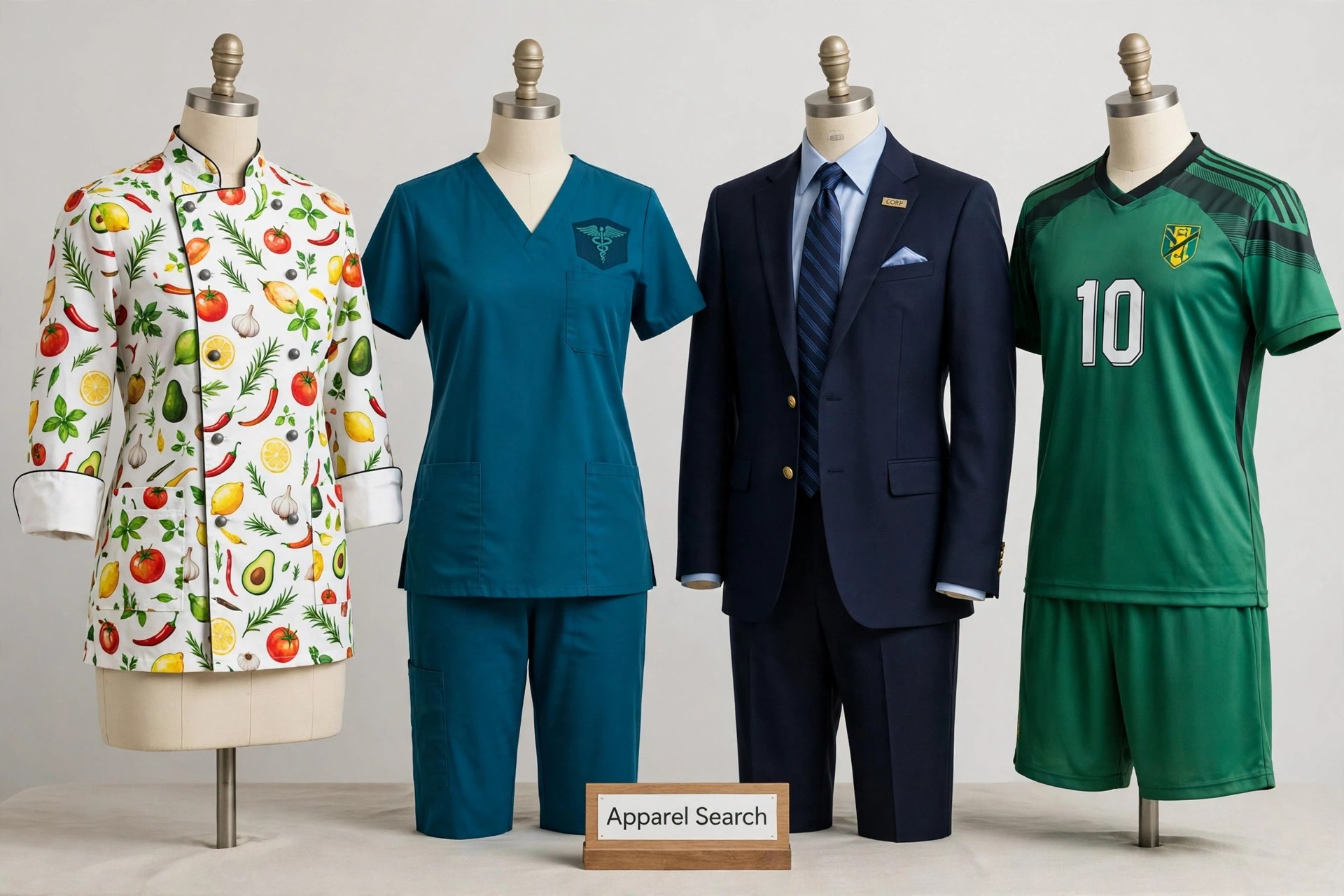
To be uniformed is to be the same — and some of us like to actually be different. A uniform is the distinctive clothing worn by members of the same group: workers, sports teams, schools, hospitals, prisons and the military. The apparel must be uniform in some way that makes it consistent, each member wearing something similar — with slight modifications allowed, as a soccer goalie wears a different colour from the rest of the team while remaining part of the team uniform.
Fashion Uniforms — Explore & Resources
When a Uniform Is a Fashion Uniform
Fashion uniforms are uniforms that are somewhat stylish or fashionable — a little more appealing than a traditional basic uniform. A chef uniform can be a solid white top and bottom; add style, and the garment can be printed with illustrations of food and various colours, becoming a fashion uniform rather than a dull one. The same design step — better cut, colour, branding and fabric — is what uniform companies sell to businesses that want recognition as well as consistency.
The suppliers named here show the market's range. Aramark Uniform Services is a leading supplier of work uniforms and outerwear; Cintas supplies products and services that enhance a company's image and keep facilities and employees clean, safe and looking their best; Lydia's Uniforms serves scrub and nursing uniform needs; and the company called Fashion Uniforms, founded in 2004, builds its brand on perception, style and recognition in corporate wear. Uniform stores, factories and wholesalers each have directories linked from this page.
Uniforms Across Working Life
In the business world there are many types of uniform. For some companies a simple graphic T-shirt can be a uniform: a local landscaping company may have workers wearing the same colour T-shirt with the corporate name printed or embroidered on it — casual, but appropriate for the business, and a uniform in fact. At the other pole, a tailored suit can function as a uniform: in the past most men working in a bank were required or expected to wear a navy or black business suit, and bankers are still expected to dress more formally than landscapers, even as times have changed.
One uniform is excluded from fashion entirely: the prison uniform, the most unstylish uniform on the planet, is always out of fashion. Everything else sits on the spectrum this page describes, from the goalie's different shirt to the chef's printed whites. The uniform definition page linked here gives the term's formal treatment.
Designing a Uniform People Like Wearing
The fashion uniform's real test is the wearer's morning. A uniform that fits badly, ages visibly or ignores the work's physical reality will be worn resentfully and maintained carelessly, and the organisation's image suffers in exactly the place the uniform was bought to improve. Successful uniform programs therefore involve wearers in trials, choose fabrics for the actual job — the kitchen's heat, the ward's washing cycle, the driver's hours seated — and treat replacement as a service rather than an event. The suppliers named on this page compete on precisely that ground: range, logistics and the garment's survival in industrial laundry are worth more than a striking launch photograph.
For one large family of uniform programs — team and club kit — the buying itself is a discipline: roster, specification, decoration method, deposit, deadline. Our team uniform costs and timelines guide breaks down what group orders cost and how long they honestly take, and the team uniform ordering guide runs the full process.
Common Questions
What is a uniform?
The distinctive clothing worn by members of the same group — workers, sports teams, schools, hospitals, prisons or the military — consistent across the group, with small role-based variations such as a goalie's different shirt.
What makes a uniform a fashion uniform?
Style added to consistency: better design, colour, print and branding, like a chef's whites printed with food illustrations, making the uniform appealing as well as recognisable.
Can a business suit be a uniform?
In effect, yes: where bankers and similar professionals are required or expected to wear a navy or black suit, the suit functions as the group's uniform even without a supplier's label.