Apparel Search Workwear Guides
Chef Clothing Guide
The professional kitchen wardrobe, piece by piece: the toque, neckerchief, double-breasted coat, aprons, pants and shoes — what each piece is for, who wears what in the kitchen, and where to find it all.
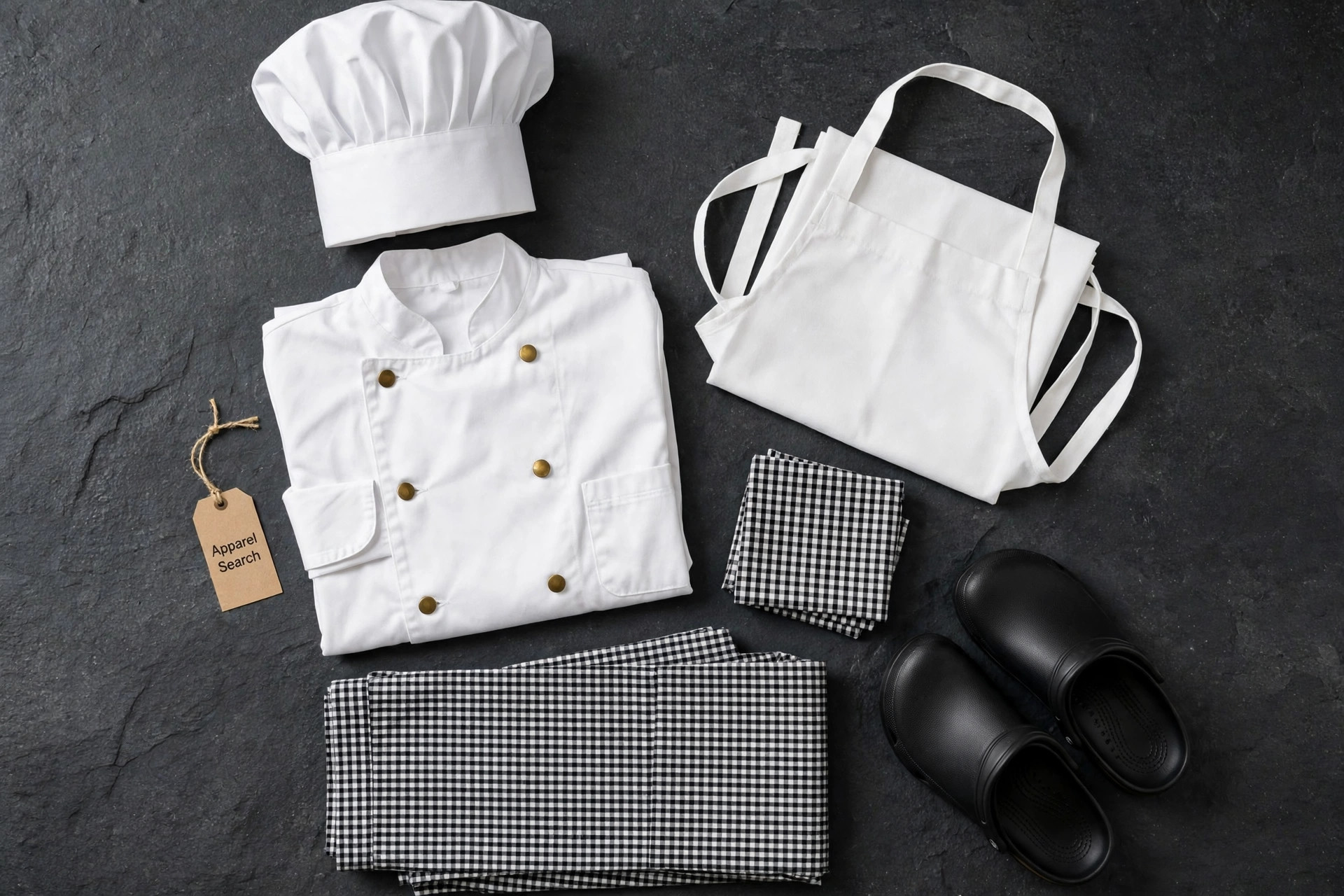
The chef uniform is one of the oldest purpose-built wardrobes in the working world, and it has survived because every piece of it does a job. The tall hat keeps hair in and sweat contained. The double-breasted coat can be re-buttoned to a clean side. The apron takes the splashes, the checkered pants disguise what gets past it, and the shoes are built for wet floors and long standing. Apparel Search has listed the trade for years — our chef clothing blog roundup follows the brands and makers, and our directories list the stores and factories. What the site has never had is a page that explains the clothing itself. This guide is that page, and the three guides below go deep: the uniform piece by piece, how it should fit and be laundered, and how to buy it.
Search Apparel Search
The Guides in This Section
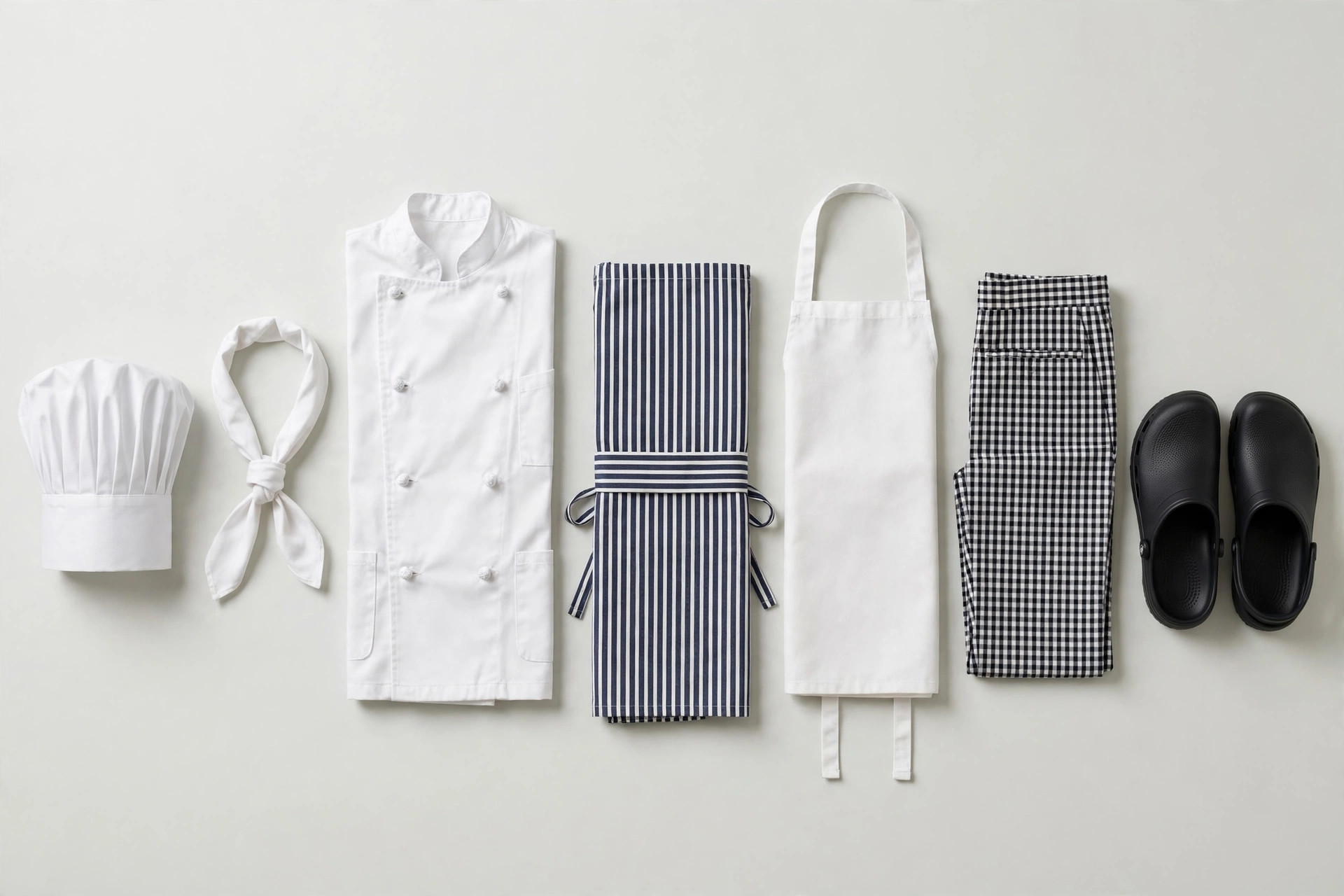 The Chef Uniform, ExplainedComponent by component: why the toque is tall, why the coat is double-breasted with cloth buttons, what the neckerchief and side towels do, and the checkerboard pants tradition.
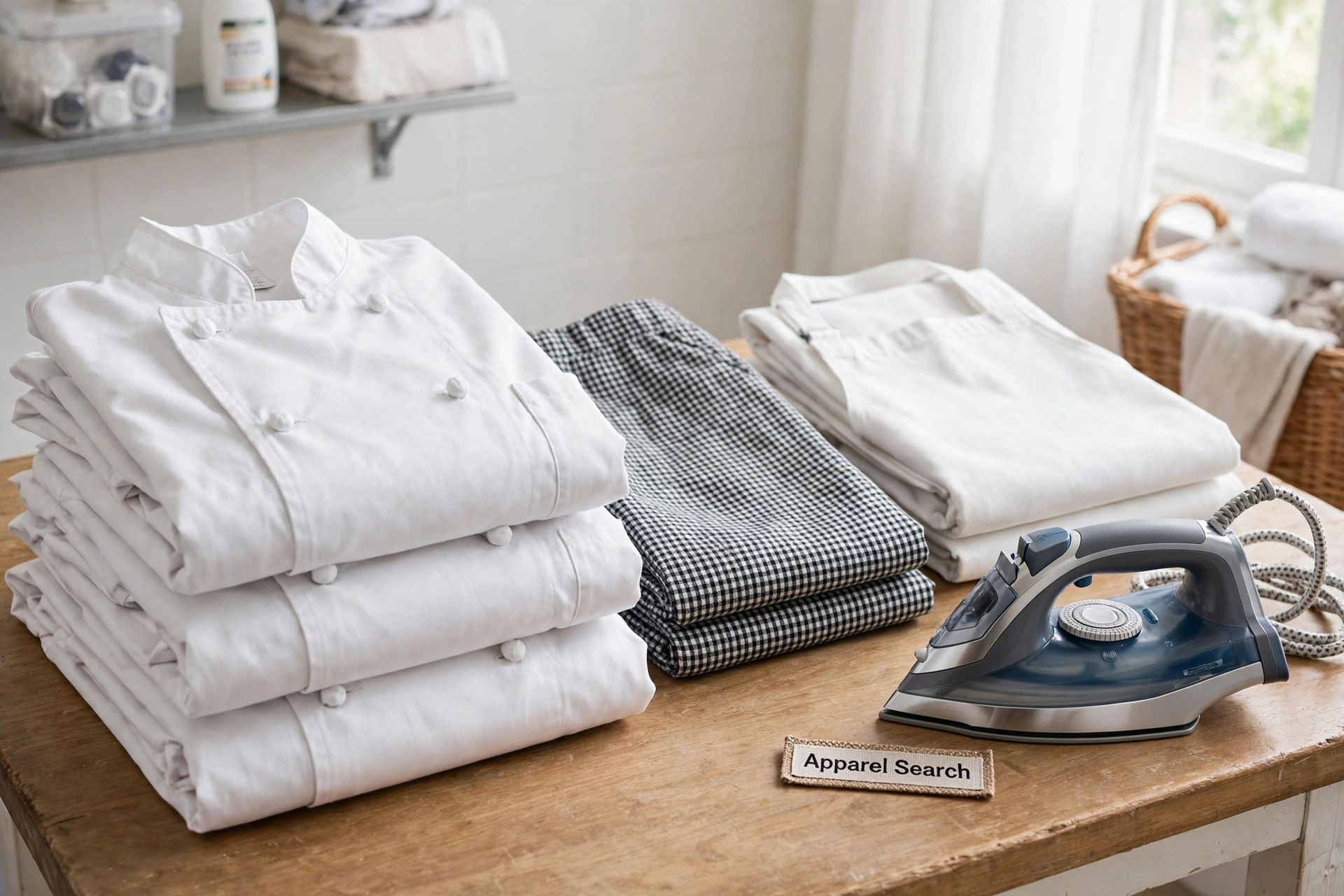 Chef Clothing Fit & CareA working fit for reaching, bending and lifting; heat and fabric choices; and the laundry routine that keeps whites white — bleach matched to fabric, grease stains, ironing and rotation.
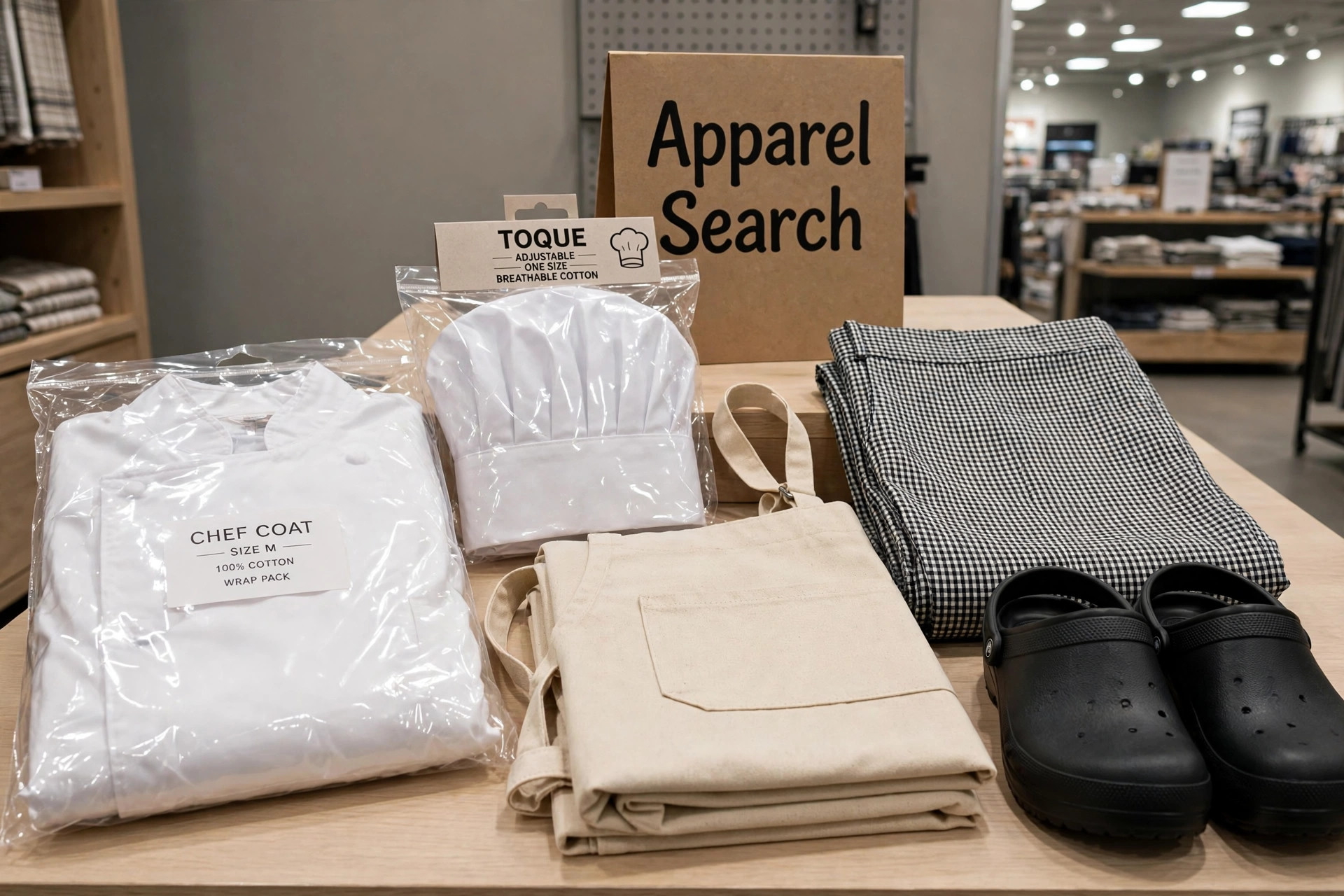 Chef Clothing Buying GuideThe starter kit in order, employer-issued vs. personal kit, quality markers that separate lasting kit from fraying kit, and the store and factory directories for finding it.
The Uniform at a Glance
Six pieces make up the classic kit. Each is covered in full in the uniform anatomy guide; here is the short version.
- The hat — traditionally the tall, pleated toque; today also skull caps, kitchen caps and disposables. It contains hair and absorbs sweat.
- The neckerchief — the triangle at the neck, knotted at the front, originally worn to catch sweat before it reaches the coat.
- The coat — double-breasted, traditionally white, with cloth knot buttons; long or short sleeves, and in modern versions, mesh panels and vents for heat.
- The apron — bib, waist or bistro styles; the washable shield between the cook and the food, changed the moment it is soiled.
- The pants — loose, tapered, traditionally a small black-and-white check that hides stains; drawstring or elastic waists, never a belt-and-fly business trouser.
- The shoes — closed, sturdy, slip-resistant kitchen shoes or clogs, chosen for wet floors and hours of standing. Side towels at the waist complete the working kit.
Who Wears What: The Kitchen Brigade
The classic kitchen brigade — the hierarchy Escoffier organized — is still the skeleton of professional kitchens, and the uniform marks rank within it. Traditionally, the height of the toque and the details of the coat signal seniority.
Executive chef and chef de cuisine
The head of the kitchen wears the full whites, traditionally the tallest toque. In chef-owned restaurants the executive chef may set a house style instead — black coats, branded aprons — but the full uniform remains the default at this level.
Sous chef and chefs de partie
The second-in-command and the station chefs (saucier, pâtissier, garde-manger and the rest) wear the same uniform as the executive chef, traditionally with a slightly shorter toque. Station identity shows in the work, not the wardrobe.
Line cooks and prep cooks
The cooks who run the stations day to day wear the standard kit: coat, apron, pants, hat. Many modern kitchens simplify here — short-sleeve coats, skull caps, house aprons — while keeping the same structure.
Pastry and bakery
Pastry sections wear the same uniform, sometimes with a different hat or apron color by house convention. The workwear logic is identical: washable, heat-tolerant, no loose ends near mixers and ovens.
Dish and stewarding
The dish pit runs wet, so its clothing is chosen for water: sturdy aprons, including the heavy-duty styles covered by our protective aprons guide, and slip-resistant shoes above all. Some houses issue a distinct shirt or apron color.
Culinary students
Schools are the most traditional dressers of all: the full uniform, checked at the door. Students buy the complete kit at once, which is why the buying guide starts with the school and employer dress code.
Out front, the dining room runs on a parallel uniform system — see the server uniforms and hospitality uniforms guides for the front-of-house half of the restaurant wardrobe.
The other great group-ordering tradition in clothing works the same way from the other end of the field: team and club uniforms. Our team uniform ordering guide covers outfitting a whole roster — sizes, decoration, timelines and reorders — for the coaches and club organizers who hold that project.
Why White?
Three reasons are traditionally given, and all three still hold. White shows cleanliness — in a kitchen, a clean uniform is a visible hygiene claim, and a dirty one cannot hide. White survives the wash: plain white cotton can be hot-washed and bleached back to bright in a way colors cannot. And white reflects heat better than dark cloth around ovens and ranges. Black and colored coats are now common, but they trade away the bleach advantage — a trade the fit and care guide covers.
House Rules: The Standards Behind the Uniform
Dress codes are set by each kitchen, but a core of garment-level rules appears in professional kitchens everywhere. Many houses require hair fully restrained or covered, and aprons changed as soon as they are soiled and removed before leaving food areas — into the dining room, on breaks, or on refuse runs. Jewelry above the waist is commonly limited by house rule, and watches and rings are often left off entirely. Cooks in many kitchens change into the uniform at work rather than traveling in it — the chef clothing retailers page has carried that tip for years — and a clean uniform at the start of every shift is the baseline the whole system assumes. The specifics belong to each employer; the uniform is built to make them easy to keep.
Find Chef Clothing: The Directories
Common Questions
What does a chef uniform consist of?
The classic uniform is a toque (or another kitchen hat), a neckerchief, a double-breasted chef coat, an apron, chef pants — traditionally a small black-and-white check — and closed, slip-resistant kitchen shoes, usually with side towels at the waist. Our chef uniform explained page walks through every piece and what it does.
Why do chefs wear white?
White is tradition with practical roots: it signals cleanliness in a workplace where hygiene is visible, it can be bleached back to bright in the wash, and light colors reflect heat better than dark ones around ovens and stoves. Modern kitchens keep white coats but many now allow black and colored coats, hats and aprons.
Do all kitchens require the full uniform?
No. Dress codes are set by each employer, and they range from the full traditional whites in fine-dining and hotel kitchens to a branded apron over ordinary clothes in casual cafés. Culinary schools usually require the full uniform. Always check the house rules of the kitchen you are joining before buying anything.
Where can I buy chef clothing, or find factories that make it?
For stores, start with the Apparel Search chef and cooking clothing retailers directory; for manufacturing, the chefs clothing factory directory lists producers. The chef clothing buying guide explains what to buy first and the quality markers to look for.