Men's Uniforms Guide
A men's uniform is a standardized set of garments issued or specified for a job, service or team: the matched shirts, trousers, jackets and accessories that identify a role and withstand industrial laundering. This guide covers uniforms as products - the fabric blends built for rental and wash programs, the fit standards that let one size system dress a workforce, and the buying decisions for individuals and employers alike.
Shop Men's Uniforms Now
Shop Men's Uniforms on Amazon Shop Men's Uniforms on eBayThe Amazon and eBay links on this page are affiliate links. If you make a purchase through them, Apparel Search may earn a commission.
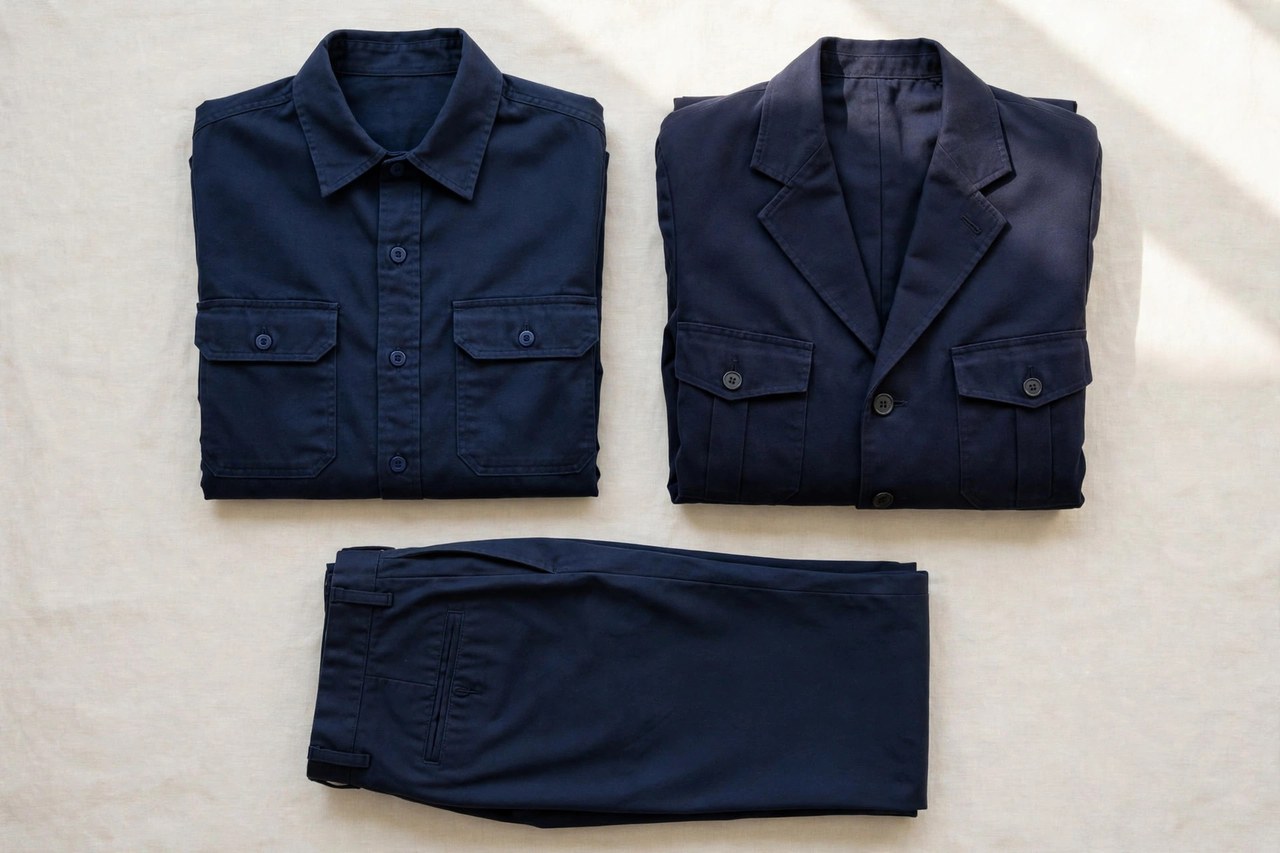
A men's uniform is a standardized set of garments issued or specified for a job, service or team: the matched shirts, trousers, jackets and accessories that identify a role and withstand industrial laundering. This guide covers uniforms as products - the fabric blends built for rental and wash programs, the fit standards that let one size system dress a workforce, and the buying decisions for individuals and employers alike. This guide is built around the questions buyers actually ask: which style, which size, which fabric, and what will it look like after a year of real use - answered in order, with the trade-offs stated plainly.
Styles and Construction
Uniform cloth is engineered differently from fashion cloth. Polyester-cotton poplins and twills dominate because they release soil, resist wrinkles, hold color through hot industrial washes and dry fast; 100% polyester versions serve roles where stain release and colorfastness matter most. Construction follows the work: bar-tacked stress points, soil-release and moisture finishes, action backs and gussets where movement is constant, and closures - snaps, grippers, concealed buttons - chosen so nothing catches machinery or scratches surfaces. Uniform programs divide into rental (the service launders and repairs), purchase, and hybrid, and the garment specifications differ: rental garments are built heaviest because their cost is spread over a service contract's hundreds of washes.
The durable buying order is job, specification, budget - in that sequence. Decide what the garment must do, translate that into fiber, weight, construction and size numbers, and only then shop price. Read labels as specifications, inspect the garment inside out where finishing is unposed, and prefer the maker who publishes measurements to the one who publishes adjectives. A garment that matches your measurements, climate and laundry will be worn; one that misses any of the three becomes expensive storage.
Fit and Sizing
Fit a uniform by the program's size chart, not by your fashion sizes - uniform grading is its own system, usually in even chest and waist numbers with regular and long lengths. A work uniform should allow a full working range (reach, bend, kneel) without the shirttail escaping or the trouser waistband binding; most programs allow one exchange, so test the fit in working motions during the trial. Name and company emblems are placed after fitting, because a logo over a pulling chest advertises the bad fit it sits on.
Measure yourself once a year and keep the numbers - chest, waist, inseam, foot, head - because bodies drift gradually while size habits never do. Shop from measurements, try garments under real conditions (over layers, in your own shoes, late in the day for footwear), and be honest about alterations: lengths and small waist changes tailor beautifully; shoulders, rises and patterns are the garment you bought forever.
Wearing and Care
Home-laundered uniforms last longest washed inside out, warm, with closures fastened, and tumble dried low - industrial finishes are durable but not immortal, and bleach is the usual suspect when colors die early. Employers should audit wear at the known failure points (cuffs, knees, seat, placket) rather than by calendar. An individual buying his own work uniform should buy two sets minimum so one can rest and be laundered properly between shifts.
Five minutes when a garment comes off - shake it out, hang or fold it correctly, note the stain and the loose button - prevents most of the damage later blamed on quality. Keep a small kit where the clothes live: brush, lint roller, conditioner suited to your leathers, black, navy and grey thread. Clothing rarely dies at once; it fades by small neglects, and small attentions reverse the process at the same pace.
Common Questions
What fabric is best for work uniforms?
A polyester-cotton twill for most trades: it balances cotton's comfort with polyester's color retention, wrinkle resistance and soil release through repeated hot washing. For food service and healthcare, higher-polyester or 100% polyester garments with antimicrobial or fluid-resistant finishes serve better; for hot outdoor work, lighter poplins and mesh-backed styles trade some durability for ventilation.
How should a uniform fit?
With working ease: enough room at chest, shoulder and seat for the job's full range of motion, trousers at the natural waist with a hem that breaks once over the work boot, and a shirt long enough to stay tucked when reaching overhead. Uniforms are graded generously compared with fashion garments, so your usual size may feel a half-step large - that is the design, not an error.
Rental or purchased uniform program - which is better?
Rental suits workplaces that need guaranteed clean sets, repairs handled, and no laundry burden, at a higher long-run cost per garment. Purchase suits stable workforces and specialized garments, with lower cost and full control, but the laundering and replacement discipline becomes yours. The deciding factors are headcount stability, soil type, and whether industrial laundering is genuinely available to you.
More in Men's Clothes Guide U
Background and History
Their are many different types of uniforms designed for men ranging from sports to school to prison and beyond. Hopefully, you are not in need of a prison uniform. A uniform is a type of clothing worn by members of an organization while participating in that organization's activity. Modern uniforms are most often worn by armed forces and paramilitary organizations such as police, emergency services, security guards. They are also worn by doctors, students, athletes and inmates in prisons. Other uniforms are trade dresses such as what is worn by members of the post office or the brown uniforms of UPS. Most, if not all, sports teams also wear uniforms, made in the team's distinctive colors. In individual sports like tennis and golf, players may choose any clothing design allowed by the competition rules. To prevent the confusion (for officials, players, and fans) that might result from two opposing teams wearing uniforms (kits) with similar colors, teams have different variations for "home" and "away" games, where typically one is dark
More to Explore on Apparel Search
- Men's Doctor Uniforms
- Medical Uniform Retailers
- Uniform Definition
- Uniform Factories
- Uniform Wholesalers
- Men's Sports Team Jerseys
- Scrubs
- Men's Clothes Guide H-P
- Men's Clothes Guide Q-Z
- Men's Fashion
- Men's Clothing Stores
- Men's Fashion News
- Men's Apparel
- Men's Fashion Brands
- Men's Clothing on eBay
- Men's Clothing on Amazon
Looking for Men's Clothing Stores?
This guide explains men's uniforms. To browse where to buy, visit our men's clothing store directory, where you can find retailers that carry them.