Men's Scrubs Guide
Men's scrubs are the matched uniform sets - a loose V-neck top and drawstring or elastic-waist pants - worn by medical and care professionals for clinical work. The name comes from the scrubbed, sterile discipline of the operating room, but the modern scrub set is a working system: easy to launder at high temperatures, cheap enough to own in rotation, cut for reaching, bending and twelve-hour movement, and color-coded in many workplaces to identify role and department.
Shop Men's Scrubs Now
Shop Men's Scrubs on Amazon Shop Men's Scrubs on eBayThe Amazon and eBay links on this page are affiliate links. If you make a purchase through them, Apparel Search may earn a commission.
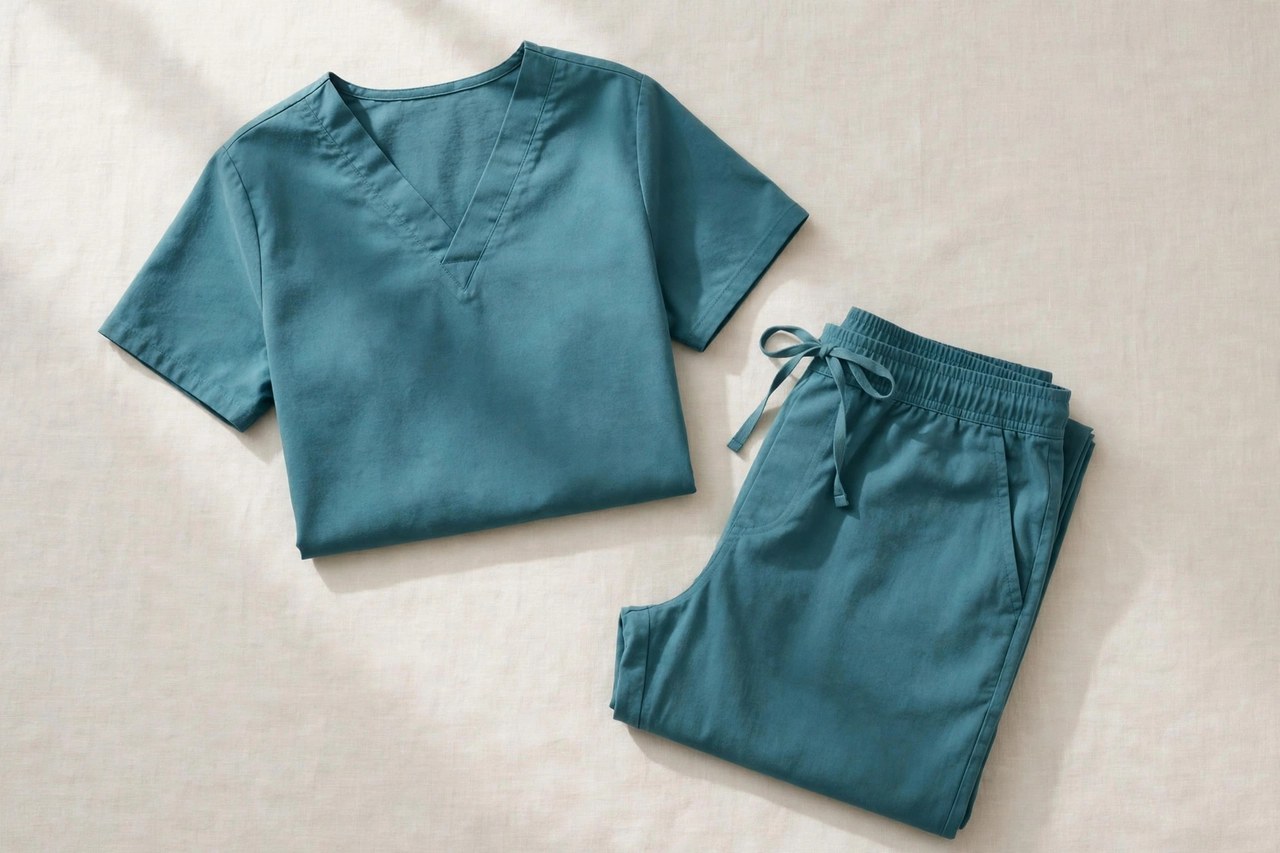
Men's scrubs are the matched uniform sets - a loose V-neck top and drawstring or elastic-waist pants - worn by medical and care professionals for clinical work. The name comes from the scrubbed, sterile discipline of the operating room, but the modern scrub set is a working system: easy to launder at high temperatures, cheap enough to own in rotation, cut for reaching, bending and twelve-hour movement, and color-coded in many workplaces to identify role and department. This guide covers the styles worth knowing, the fit points that decide comfort, the fabrics and construction that separate a good buy from a regret, and the simple care that makes the garment last.
Fabrics and Construction Built for the Laundry
Scrub fabrics are engineered for the laundry, not the mirror. The classic is a cotton-polyester blend that survives industrial washing, holds color and releases stains better than pure cotton; performance scrubs add spandex for stretch and moisture-wicking finishes for long shifts, at a price that only makes sense in a daily rotation. Construction details decide a shift's comfort: side vents on the top for reaching, a chest pocket plus patch pockets sized for what clinicians actually carry, reinforced seams at the pocket corners, and pants with a drawstring backed by elastic (a drawstring alone fails mid-shift; elastic alone creeps). V-neck openings should sit high enough to stay modest when bending, and antimicrobial finishes are a genuine feature in clinical settings, not a gimmick.
A top earns its keep in finishing: seams that hang straight and stay even at eight to twelve stitches per inch, collars and plackets that lie flat after washing, buttons sewn with thread shanks so they sit in their holes without pulling. Hold the cloth to the light - a tight, even weave or knit outwears a loose one at the same labeled weight, and pattern pieces cut on grain keep the garment from twisting around your body by the third wash.
Fit and Sizing
Scrubs are sized generously on purpose - they are worn over underlayers and laundered hot, which shrinks cotton content - so use the maker's size chart against your chest and waist rather than your T-shirt size. Trousers are the fit frontier: choose the inseam for your shoes (scrub pants puddling on a clinical floor is a hygiene problem, not a style), and check the rise by squatting and reaching. Many lines offer tall and short versions; a rotation of one size that fits the rise will serve better than mixed sizes bought on sale.
Fit tops shoulders and chest first, because tailors cannot cheaply move either: the shoulder seam ends at the shoulder bone, the chest closes without pulling, and both arms raise without the hem escaping the waistband. Tucked lengths must stay tucked sitting; untucked lengths should end mid-fly. Sleeves are the cheap alteration, shoulders the permanent one - reject a wrong shoulder for any reason, forgive a long sleeve for many.
Wearing and Care
Scrubs earn their keep in the wash: hot water where the fabric allows, washed separately from household laundry when the work demands it, and inspected each cycle for the stains that set permanently if dried. Replace sets when the color fades unevenly or the drawstring channel wears - a tired-looking uniform reads as carelessness in a clinical setting. Keep one sealed spare set where you work; the day you need it is not a day you can plan.
Launder tops by the label with three defaults: cool or warm water to protect color and trims, dark and printed pieces inside out, and low or line drying, which is the largest single lever on a shirt's lifespan. Fasten buttons and zips before washing to protect the whole load, treat stains before the dryer can set them, and store knits folded so their shoulders keep the shape they were knitted with.
Common Questions
What fabric is best for men's scrubs?
For most clinical work, a cotton-polyester blend: it survives hot, frequent laundering, holds its color, releases stains and dries fast. Cotton-rich blends feel softer but fade and shrink faster; performance scrubs with spandex and wicking finishes cost more and earn it on long, physical shifts. Match the fabric to the laundry your workplace actually runs - institutional washing punishes delicate cloth.
How should scrubs fit?
Loose enough to reach, bend and squat without the top pulling or the trousers binding, tidy enough not to catch on equipment or drag at the hem. The V-neck should stay modest when you lean, the trousers should break at the shoe rather than pool on the floor, and the rise should survive a full crouch. When between sizes, the larger usually serves clinical movement better.
Why are scrubs different colors?
Color is identification. Many hospitals and clinics assign scrub colors by department or role - one color for nursing, another for surgery, another for technicians - so staff and patients can read the room at a glance. Some workplaces let staff choose; others issue a strict code. If you are buying your own, confirm the assigned color before stocking a rotation.
More in Men's Clothes Guide S
Why They Are Called Scrubs
Scrubs are the sanitary clothing worn by surgeons, nurses, physicians and other workers involved in patient care in hospitals. Originally designed for use by surgeons and other operating room personnel, who would put them on when sterilizing themselves - “scrubbing in” - before surgery, they are now worn by many hospital personnel, and their use has extended outside hospitals as well. Whatever doctors wear is fine, as long as the garments are extremely clean and hygienic - professionally cleaned as often as possible, like every day.
Looking for Men's Clothing Stores?
This guide explains men's scrubs. To browse where to buy, visit our men's clothing store directory, where you can find retailers that carry them.