Men's Surgical Clothing Guide
Men's surgical clothing is the complete attire of the operating room and sterile clinical work: scrubs as the base uniform, surgical gowns as the sterile barrier layer, and the caps, masks, gloves and shoe covers that complete the field discipline. Where our scrubs guide takes the base uniform and the cap and mask guides take their pieces, this guide surveys the whole system - what each layer is for, what the barrier ratings mean, and how the ensemble is worn, laundered and governed.
Shop Men's Surgical Clothing Now
Shop Men's Surgical Clothing on Amazon Shop Men's Surgical Clothing on eBayThe Amazon and eBay links on this page are affiliate links. If you make a purchase through them, Apparel Search may earn a commission.
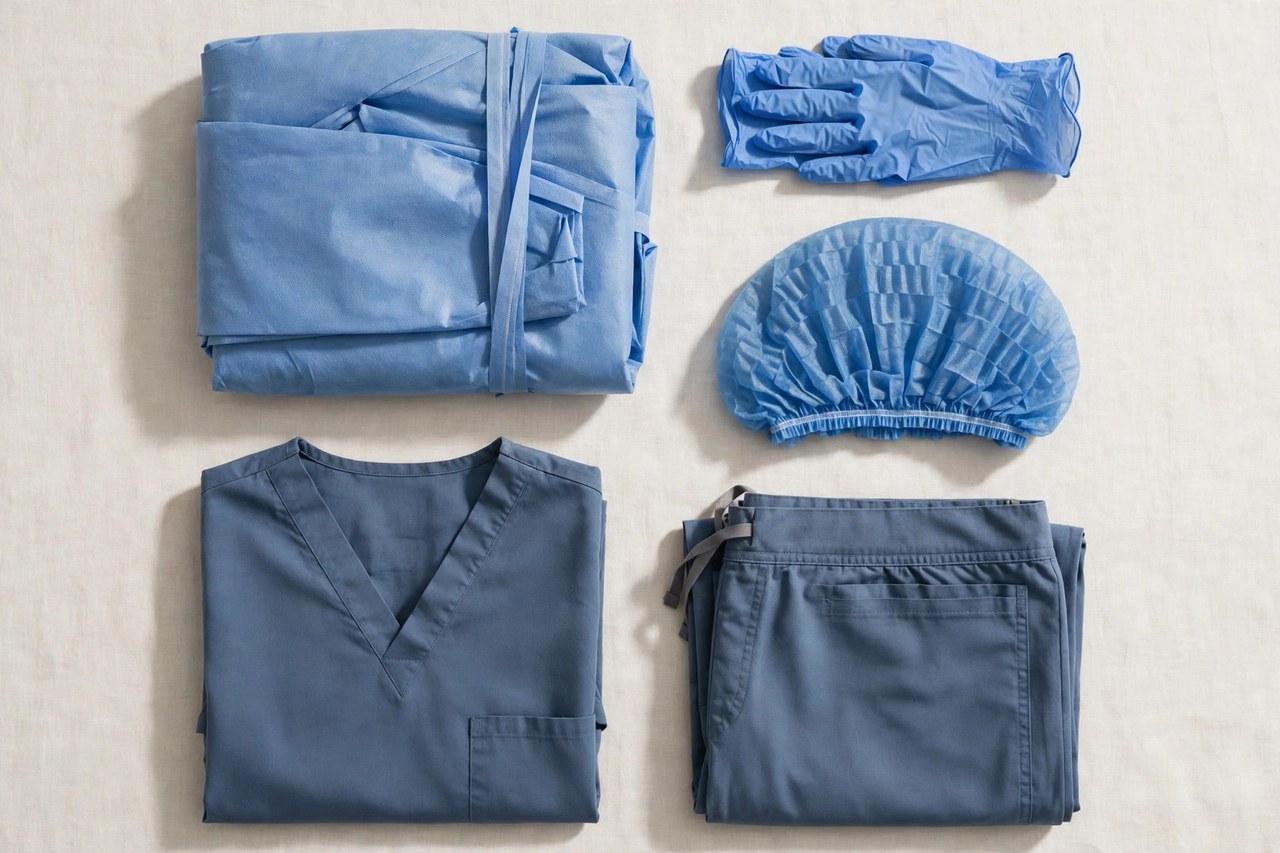
Men's surgical clothing is the complete attire of the operating room and sterile clinical work: scrubs as the base uniform, surgical gowns as the sterile barrier layer, and the caps, masks, gloves and shoe covers that complete the field discipline. Where our scrubs guide takes the base uniform and the cap and mask guides take their pieces, this guide surveys the whole system - what each layer is for, what the barrier ratings mean, and how the ensemble is worn, laundered and governed. This guide is built around the questions buyers actually ask: which style, which size, which fabric, and what will it look like after a year of real use - answered in order, with the trade-offs stated plainly.
The Sterile System and Barrier Levels
The system's logic is the sterile field. Scrubs are the clean base - facility-laundered in proper programs. Over them, the surgical gown is the rated barrier: gowns are classified by barrier performance levels (AAMI levels 1-4, from minimal to high fluid protection), built from SMS polypropylene and reinforced fabrics, with critical zones - chest and forearms - reinforced where exposure concentrates. Caps contain hair, masks protect the field from the wearer and the wearer from splashes, gloves are the sterile contact surface, and shoe covers manage the floor's contribution. Every piece answers the same question - what crosses between the team, the patient and the room - and the system's discipline (what is sterile, what is merely clean, what is neither) is the real subject of surgical clothing.
The durable buying order is job, specification, budget - in that sequence. Decide what the garment must do, translate that into fiber, weight, construction and size numbers, and only then shop price. Read labels as specifications, inspect the garment inside out where finishing is unposed, and prefer the maker who publishes measurements to the one who publishes adjectives. A garment that matches your measurements, climate and laundry will be worn; one that misses any of the three becomes expensive storage.
Fit and Discipline
Fit in surgical clothing is a working fit assessed by the team, not the mirror: gowns sized so the sterile sleeves reach the glove line with the knit cuffs seated, scrub bases loose enough for the long reach and bend, caps containing everything, masks sealed at the nose. Oversized gowns tangle; undersized gowns tear at the shoulder mid-procedure, which is a sterile-field event, not a wardrobe malfunction. Facilities stock by size and level; the wearer's job is honest sizing and the discipline of changing any piece whose barrier is breached, without negotiation.
Measure yourself once a year and keep the numbers - chest, waist, inseam, foot, head - because bodies drift gradually while size habits never do. Shop from measurements, try garments under real conditions (over layers, in your own shoes, late in the day for footwear), and be honest about alterations: lengths and small waist changes tailor beautifully; shoulders, rises and patterns are the garment you bought forever.
Laundering and Care
Care divides by ownership: scrubs and reusable gowns belong to accredited laundries whose wash chemistry and inspection are part of the infection-control system - surgical clothing is never a home-laundry category in a facility program. Disposables are single-use by definition and are retired on schedule, not on appearance. The personal pieces a clinician owns - caps above all - launder hot and daily. The system's whole ethic is that barrier integrity is invisible, so it is protected by routine rather than by inspection after the fact.
Five minutes when a garment comes off - shake it out, hang or fold it correctly, note the stain and the loose button - prevents most of the damage later blamed on quality. Keep a small kit where the clothes live: brush, lint roller, conditioner suited to your leathers, black, navy and grey thread. Clothing rarely dies at once; it fades by small neglects, and small attentions reverse the process at the same pace.
Common Questions
What are AAMI gown levels?
The AAMI (Association for the Advancement of Medical Instrumentation) PB70 standard rates surgical gowns and drapes from Level 1 (minimal fluid barrier, basic care) through Level 4 (the highest, for long, fluid-intense procedures and high-risk work), based on standardized water-resistance and impact tests. The level is chosen by the procedure's expected exposure, and the gown's reinforced critical zones - front and forearms - carry the rating where it matters.
What is the difference between scrubs and surgical clothing?
Scope and sterility. Scrubs are the clean base uniform worn throughout clinical work - one component. Surgical clothing is the complete operating-room ensemble: scrubs plus the sterile gown, cap, mask, gloves and shoe covers, governed by sterile-field discipline. All surgical clothing includes scrubs; most scrub-wearing never enters an operating room. The guides in this letter divide the subject exactly that way.
Why can't surgical scrubs be laundered at home?
Because the laundering is part of the infection-control system. Facility programs use accredited laundries with validated wash chemistry, temperatures, handling and inspection that home washing cannot replicate or document - and home laundering carries the clinical environment's bioburden into a household machine. Many facilities therefore prohibit it outright. The rule is not fussiness; it is the same sterile-discipline logic as the gown levels, applied to cloth.
More in Men's Clothes Guide S
Clothing for the Operation
Surgical clothing is the type of clothes worn by doctors when performing surgery - surgery being the ancient medical specialty that uses operative manual and instrumental techniques on a patient to investigate or treat a pathological condition such as disease or injury, to improve bodily function or appearance, or to repair unwanted ruptured areas. This type of apparel may also be referenced as a scrub, scrubs being the sanitary clothing worn by surgeons, nurses, physicians and other workers involved in patient care. See also our fashion designer directory.
Looking for Men's Clothing Stores?
This guide explains men's surgical clothing. To browse where to buy, visit our men's clothing store directory, where you can find retailers that carry them.