Men's Medical Scrubs Guide
Scrubs are the two-piece working uniform of modern healthcare - a short-sleeved top and a loose pant, named for the scrubbed, sterile environment of the operating suite where the style began. Our wider directory keeps a men's scrubs guide in the S section, and this page is its medical family's own account: the garment set itself, its fabrics, its fits and its colors, treated as the single most-worn uniform in medicine. If a man works in a hospital, he very likely works in scrubs; this is the guide to buying them well.
Shop Men's Medical Scrubs Now
Shop Men's Medical Scrubs on Amazon Shop Men's Medical Scrubs on eBayThe Amazon and eBay links on this page are affiliate links. If you make a purchase through them, Apparel Search may earn a commission.
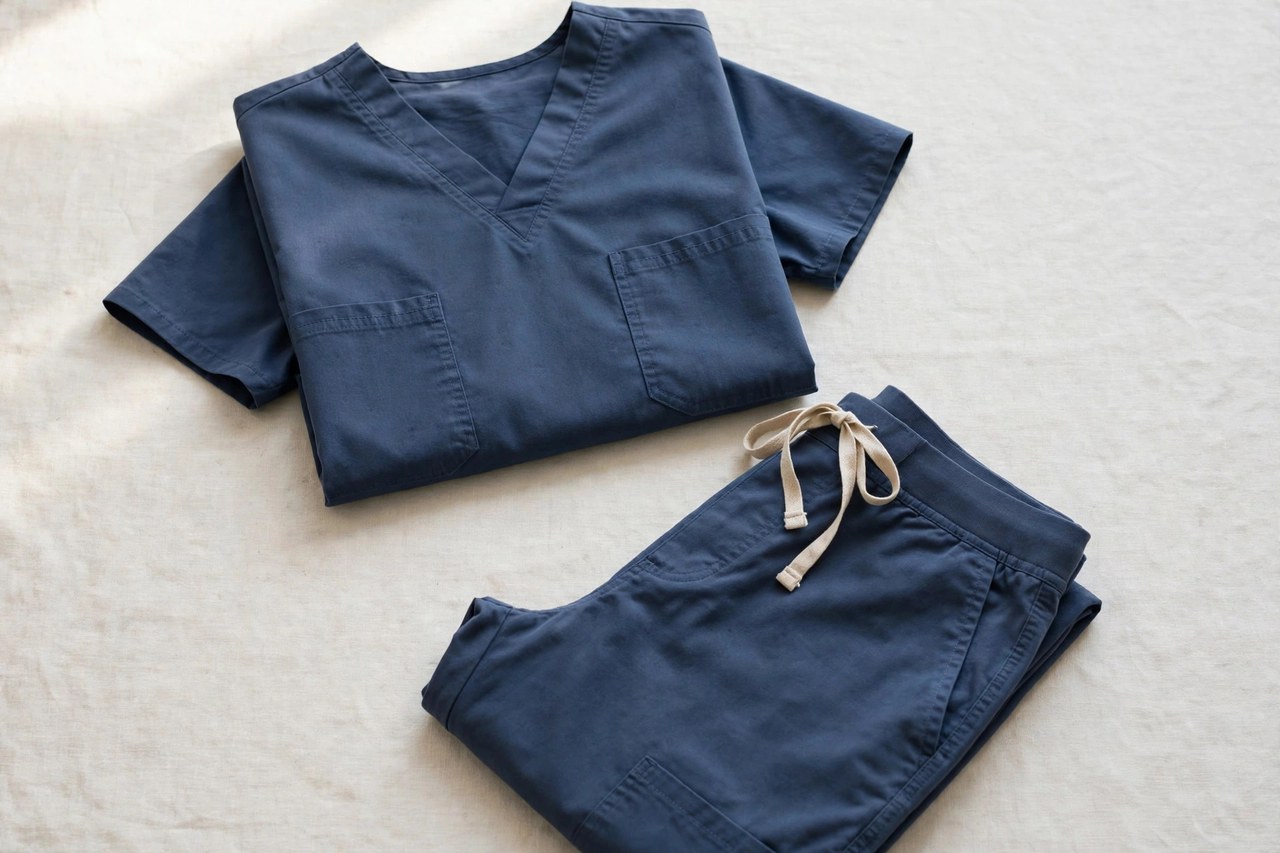
Scrubs are the two-piece working uniform of modern healthcare - a short-sleeved top and a loose pant, named for the scrubbed, sterile environment of the operating suite where the style began. Our wider directory keeps a men's scrubs guide in the S section, and this page is its medical family's own account: the garment set itself, its fabrics, its fits and its colors, treated as the single most-worn uniform in medicine. If a man works in a hospital, he very likely works in scrubs; this is the guide to buying them well. This guide covers the styles worth knowing, the fit points that decide comfort, the fabrics and construction that separate a good buy from a regret, and the simple care that makes the garment last.
Pockets, Necklines and Waistbands
The top is a study in pockets and necklines. The classic V-neck pullover carries one chest pocket; working versions add patch pockets at the hips, pen divisions, badge loops and side vents that let the hem move over the hips. Mock-wrap and zip-front styles dress the silhouette without changing the garment's job. The pant divides by waist: drawstring, elastic, or the hybrid drawstring-over-elastic that stays up without constant tying; cargo versions add the leg pockets technicians live out of. Fabrics run from the traditional poly-cotton twill - durable, colorfast, slow to wrinkle - to four-way stretch performance weaves that move like athletic wear and dry in a fraction of the time. Department color codes decide the palette everywhere else judgment might wander.
Workwear is judged at the stress points, because the job finds them first: bar-tacked pocket corners and belt loops, double or triple-stitched main seams, reinforced knees, elbows and seats, and hardware - zippers, snaps, rivets - rated for daily cycling rather than occasional wear. Fabric weight is a specification, not a brag: heavier cloth resists abrasion and holds shape, lighter cloth breathes and dries, and the right answer is the one matched to the actual shift, climate and laundry the garment will live in.
Men's Cuts Versus Unisex
Men's scrubs fit differently from unisex, and the difference is worth money: wider shoulders, a longer torso that stays tucked or covers the waistband, a rise built for a man's frame, and tall inseams that unisex ranges rarely stock. Fit the top so both arms raise without the shoulders binding or the hem climbing, and the pant so you can kneel and climb a step without the seat pulling or the waistband migrating. Scrubs are cut generously by design; buy the chart size that matches your chest and waist rather than sizing down for a fashion fit - a tight scrub is a failed scrub by the second hour of a shift, and an enormous one catches on every handle and rail on the unit.
Fit workwear in the postures of the job: reach overhead, bend, kneel, climb, sit through a charting session or a cab ride. Seams should never be the thing that stops a movement, waistbands should stay where they were put without a belt doing structural work, and lengths should clear the floor and the machinery. Work garments are sized generously by design - buy your measured size and let the cut do its job, rather than sizing down into a uniform that fights every task.
Bought for the Hundredth Wash
Scrubs are washed more than any garment a man owns, so buy for the hundredth wash: colorfast fabrics that hold the department code, stitching that survives hot water and industrial dryers, drawstrings that do not retreat into their channels. Wash after every wear, sets together so top and pant fade as a pair, and treat stains before the wash rather than after the dryer has set them. Retire sets when the color drifts off-code, the knees and seat thin, or the drawstring channel tears - and keep the rotation at three sets minimum so retirement never forces a shortage.
Work garments earn a laundry system, not a laundry day: wash by the employer's or the label's hygiene rules, treat stains before heat can set them, and inspect as you fold - a pocket corner letting go, a hem fraying, a button hanging by a thread are all two-minute repairs now and garment failures next month. Keep the rotation honest: a spare set washed and ready is what makes daily laundering possible without wearing any single set to death.
Common Questions
What are men's scrubs made of?
Traditionally a polyester-cotton twill: polyester for wrinkle resistance, colorfastness and survival through hot institutional laundering, cotton for comfort against the skin. Newer scrubs use performance polyester and blends with spandex for four-way stretch and moisture management - they move and dry better, and cost more. Either way, judge the fabric by the wash cycle it must survive and the color it must hold, since department codes depend on both.
Should scrubs fit loose or fitted?
Loose enough to work in, fitted enough not to catch. Scrubs are cut generously on purpose: the top should let both arms reach overhead without binding, the pant should kneel and climb without pulling, and neither should billow into equipment or door handles. Men's-specific cuts give the shoulder, torso length and rise that unisex patterns compromise. Buy your measured chart size - the fashionable tight scrub fails its job by mid-shift.
How long do scrubs last?
With daily washing, a quality set typically serves somewhere between one and two years of regular rotation before color drift, thinning at the seat and knees, or tired drawstrings retire it. Rotating three or more sets spreads the washes and extends every set's life. The retirement test is functional, not cosmetic: off-code color, see-through fabric at stress points, or closures that no longer hold.
More in Men's Clothes Guide M
Scrubs in the Medical Family
The garment belongs to the men’s medical clothing guide, and the dedicated men’s scrubs guide in the S section of this directory gives the category its full treatment. The medical uniform stores, wholesale medical clothing, the medical gowns factory and the scrubs and hospital gown definitions are linked below.
More to Explore on Apparel Search
Looking for Men's Clothing Stores?
This guide explains men's medical scrubs. To browse where to buy, visit our men's clothing store directory, where you can find retailers that carry them.