Men's Medical Nurse Uniforms Guide
A nurse uniform is the working dress of the nursing profession - today almost always a scrub set in the facility's color, with the warm-up jacket, shoes and accessories of the ward. The central point: nursing is a profession within the health care sector focused on the care of individuals, families and communities so they may attain, maintain or recover optimal health and quality of life - and while the clothing is not as important as that role, it still matters, not least for sanitary reasons. This guide is about the clothing of men in that profession, in all the settings where nurses now practice.
Shop Men's Nurse Uniforms Now
Shop Men's Nurse Uniforms on Amazon Shop Men's Nurse Uniforms on eBayThe Amazon and eBay links on this page are affiliate links. If you make a purchase through them, Apparel Search may earn a commission.
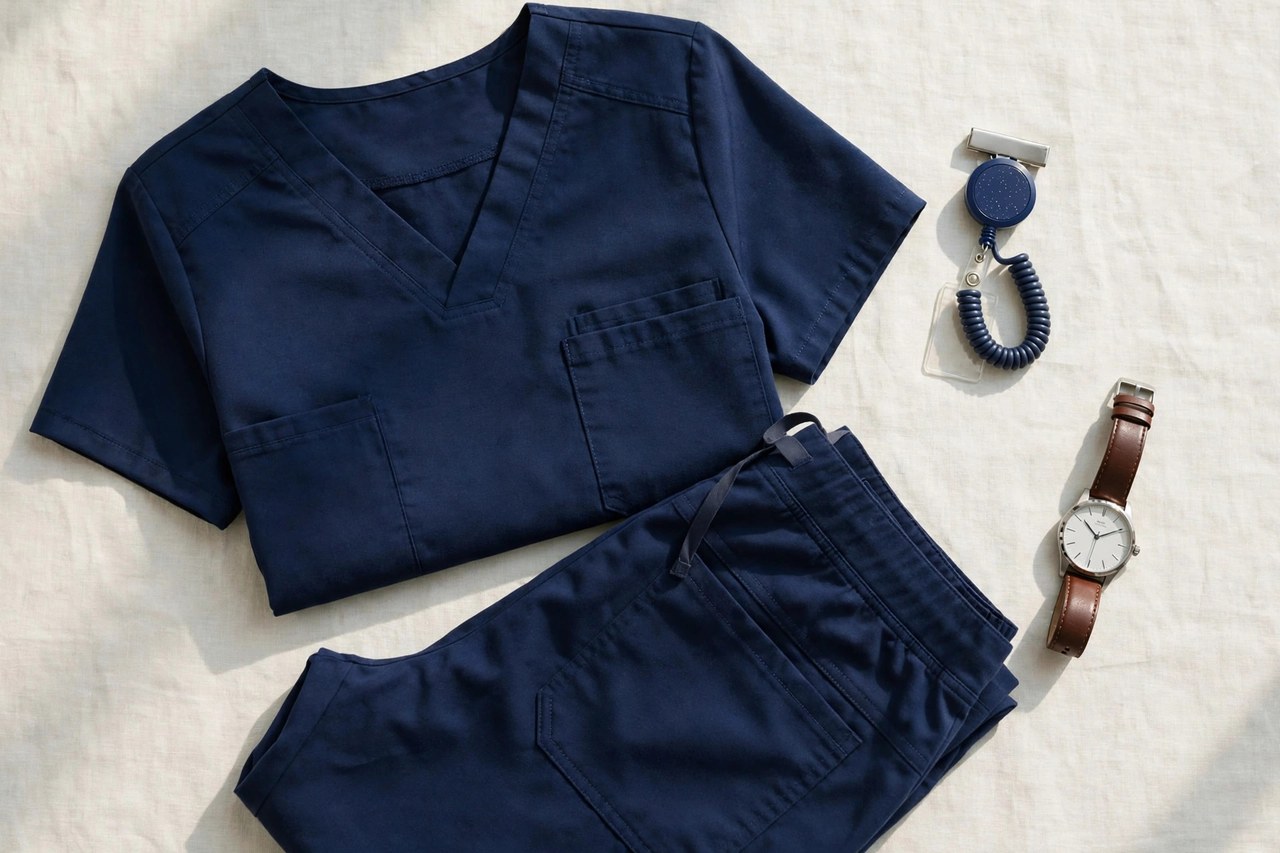
A nurse uniform is the working dress of the nursing profession - today almost always a scrub set in the facility's color, with the warm-up jacket, shoes and accessories of the ward. The central point: nursing is a profession within the health care sector focused on the care of individuals, families and communities so they may attain, maintain or recover optimal health and quality of life - and while the clothing is not as important as that role, it still matters, not least for sanitary reasons. This guide is about the clothing of men in that profession, in all the settings where nurses now practice. This guide walks through the choices that matter - style, fit, fabric and finish - with the practical detail a product listing rarely gives you, and closes with the care habits that keep the garment in service.
The Uniform as a System
The modern uniform is a system. The base is the scrub set, color-coded so patients and colleagues read roles at a glance, cut for men with the shoulder, torso and rise proportions covered in our medical scrubs guide. Over it, the warm-up jacket carries the tools of the round - pens, scissors, tape, phone - in pockets designed for them. Identification rides on the chest: embroidered name and credential or a badge on a retractable reel, placed where a patient in a bed can read it. Footwear comes from the medical footwear family - clogs or slip-resistant shoes - and the accessories from the uniform accessories guide: a watch with a second hand or sweep, compression socks for the long standing hours, and, in many units, a stethoscope that is the nurse's own. Advanced practice nurses add the consultation jacket or lab coat of their setting.
Workwear is judged at the stress points, because the job finds them first: bar-tacked pocket corners and belt loops, double or triple-stitched main seams, reinforced knees, elbows and seats, and hardware - zippers, snaps, rivets - rated for daily cycling rather than occasional wear. Fabric weight is a specification, not a brag: heavier cloth resists abrasion and holds shape, lighter cloth breathes and dries, and the right answer is the one matched to the actual shift, climate and laundry the garment will live in.
Fit for the Round
Fit for nursing is fit for the round: scrubs that let you lift a patient, kneel at a bedside, reach a top shelf and sit to chart without the garment arguing at any point. Men's sets should close at the chest without pulling across the back when both arms reach forward, and the pant should hold at the waist on the drawstring through a full shift - a uniform adjusted fifty times a day is a uniform in the wrong size. Pockets are fit, too: a top whose chest pocket dumps its contents when you bend is a design failure, so test the pockets loaded. Buy to the size chart, in the department's exact color, and keep the tall inseam if you need it rather than accepting a standard that shows sock above every shoe.
Fit workwear in the postures of the job: reach overhead, bend, kneel, climb, sit through a charting session or a cab ride. Seams should never be the thing that stops a movement, waistbands should stay where they were put without a belt doing structural work, and lengths should clear the floor and the machinery. Work garments are sized generously by design - buy your measured size and let the cut do its job, rather than sizing down into a uniform that fights every task.
Laundered Like the Hygiene System It Is
Nurse uniforms are laundered as the hygiene system they are part of: after every shift, hot where the fabric allows, stains treated before heat sets them. The color code is the uniform's information, so wash full sets together and retire a set when top and pant no longer match each other or the department's standard. Keep three sets minimum in rotation, four or five for a five-shift week without laundry stress, and inspect as you fold - drawstrings, pocket corners and hems are the wear points. A nurse's uniform will never be the most important thing about his care; it should simply never be the thing that distracts from it.
Work garments earn a laundry system, not a laundry day: wash by the employer's or the label's hygiene rules, treat stains before heat can set them, and inspect as you fold - a pocket corner letting go, a hem fraying, a button hanging by a thread are all two-minute repairs now and garment failures next month. Keep the rotation honest: a spare set washed and ready is what makes daily laundering possible without wearing any single set to death.
Common Questions
What do male nurses wear as a uniform?
In most modern facilities, a scrub set in the department's assigned color - a men's-cut top and drawstring or elastic pant - with a warm-up jacket, an ID badge worn visibly, and cleanable slip-resistant footwear such as clogs. Advanced practice nurses may add a lab coat or consultation jacket. The historic white uniform survives mainly in ceremonies and a few traditional settings; the scrub system replaced it for hygiene and role identification.
Why do nurses wear color-coded scrubs?
So that anyone - patient, family member or colleague - can tell at a glance who is who in a busy unit: registered nurses in one color, technicians in another, respiratory therapy in a third. The system only works while the garments hold their assigned color, which is why sets are washed together, bought to the facility's exact shade, and retired when fading blurs the code.
How many uniform sets does a nurse need?
Enough to never re-wear an unwashed set: three sets is the floor, and a full-time five-shift schedule is far more comfortable with four or five. Uniforms are washed after every shift, so the rotation size is really a laundry-schedule decision. Buy the sets together if you can - same dye lot, same fit - and replace individual sets as color or fabric gives out.
More in Men's Clothes Guide M
The Profession Behind the Uniform
Nursing is a profession within the health care sector focused on the care of individuals, families and communities so they may attain, maintain or recover optimal health and quality of life; nurses may be differentiated from other health care providers by their approach to patient care, training and scope of practice, and they develop plans of care working collaboratively with physicians, therapists, patients, families and the wider care team. The clothing they wear is not as important as their role in society — but the clothing is still important for sanitary reasons. The medical uniform stores, wholesale medical clothing and the scrubs and hospital gown definitions are linked below.
More to Explore on Apparel Search
- Men's Medical Clothing Guide
- Wholesale Medical Clothing
- Medical Gowns Factory
- Scrubs Definition
- Hospital Gown Definition
- Wholesale Uniforms
- Men's Clothes
- Clothes
- Men's Clothes Guide H-P
- Men's Clothes Guide Q-Z
- Fashion
- Clothing Retail Stores
- Fashion News
- Fashion Employment
- Fashion Designers
- Popular Brands
- Men's Fashion News
- Men's Clothing Stores
- Men's Clothing Wholesalers
- Men's Fashion
Looking for Men's Clothing Stores?
This guide explains men's medical nurse uniforms. To browse where to buy, visit our men's clothing store directory, where you can find retailers that carry them.