Men's Medical Clothing Guide
Medical clothing is the wearer's side of the healthcare wardrobe - the scrubs, coats, gowns, shoes and uniforms a man actually puts on for a shift, organized by the role he works in. Where the medical apparel page treats the category as the industry specifies it, this guide walks the wardrobe garment by garment: what doctors, nurses, technicians, surgeons and support staff each wear, and what separates one role's clothing from the next. The surgical clothing and doctor uniforms guides are linked from here; the family has only grown since.
Shop Men's Medical Clothing Now
Shop Men's Medical Clothing on Amazon Shop Men's Medical Clothing on eBayThe Amazon and eBay links on this page are affiliate links. If you make a purchase through them, Apparel Search may earn a commission.
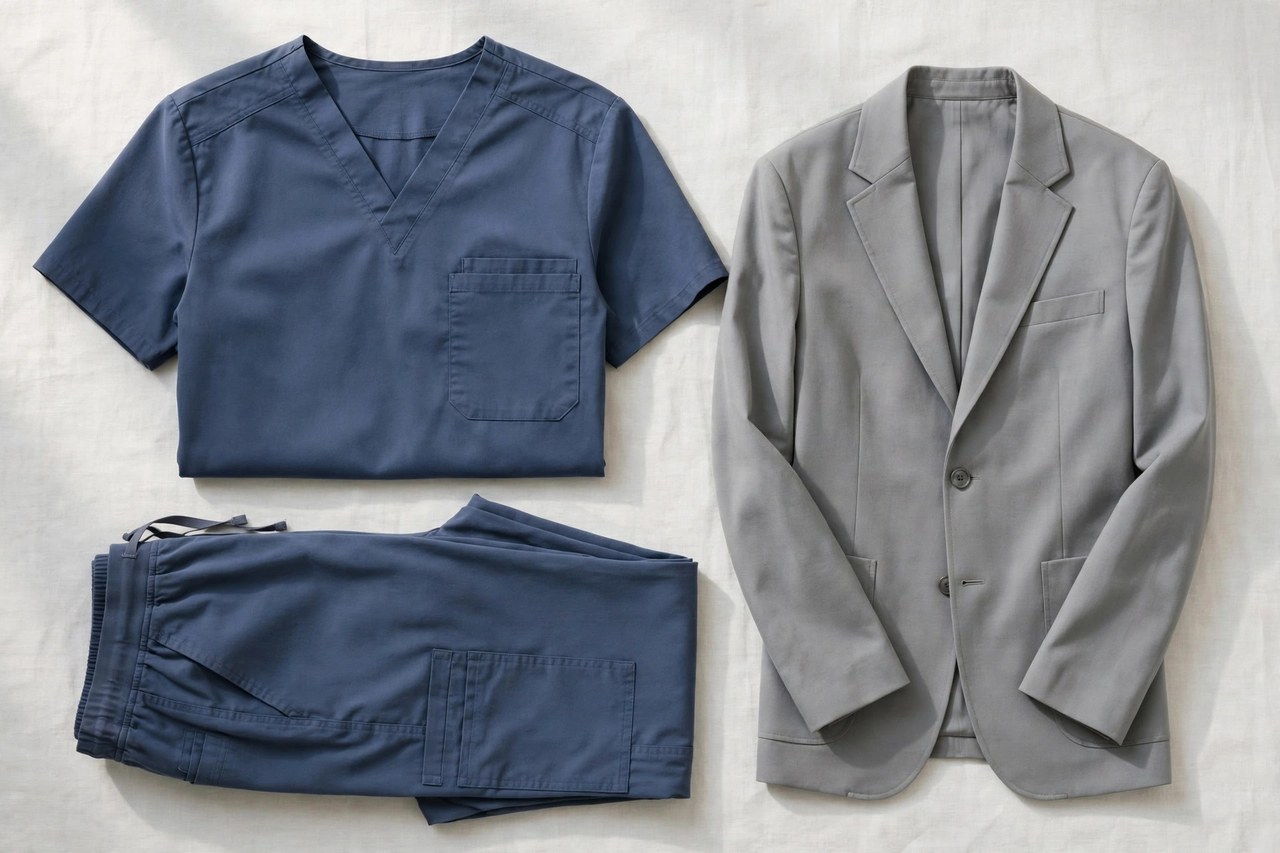
Medical clothing is the wearer's side of the healthcare wardrobe - the scrubs, coats, gowns, shoes and uniforms a man actually puts on for a shift, organized by the role he works in. Where the medical apparel page treats the category as the industry specifies it, this guide walks the wardrobe garment by garment: what doctors, nurses, technicians, surgeons and support staff each wear, and what separates one role's clothing from the next. The surgical clothing and doctor uniforms guides are linked from here; the family has only grown since. This guide covers the styles worth knowing, the fit points that decide comfort, the fabrics and construction that separate a good buy from a regret, and the simple care that makes the garment last.
The Wardrobe by Role
Build the wardrobe by role. Physicians layer a lab coat or consultation jacket over scrubs or street clothes, the coat's length signaling seniority by convention. Nursing and technical staff live in the scrub set, color-coded by department in most institutions, with warm-up jackets for cold wards. Surgical teams add the gowns, caps and masks of the operating suite, covered by the surgical clothing guides in the S section. Under everything sit the shoes - the slip-resistant, cleanable footwear of the medical shoes guide here - and around everything the accessories: badges, stethoscope carriers, compression socks. Each layer is specified by the same three questions: does it protect, does it identify, and can it be washed as hard as the job demands?
Workwear is judged at the stress points, because the job finds them first: bar-tacked pocket corners and belt loops, double or triple-stitched main seams, reinforced knees, elbows and seats, and hardware - zippers, snaps, rivets - rated for daily cycling rather than occasional wear. Fabric weight is a specification, not a brag: heavier cloth resists abrasion and holds shape, lighter cloth breathes and dries, and the right answer is the one matched to the actual shift, climate and laundry the garment will live in.
Working Fit, Measured Honestly
Fit in medical clothing is working fit: scrub tops that raise both arms without the hem climbing out of the waistband, pants whose drawstring holds through a shift of bending without constant retying, coats that button fully over the day's layers. Men's cuts differ from unisex in shoulder width, torso length and rise, and tall sizes matter more here than in fashion because a short scrub pant shows every sock above a clog. Measure chest, waist and inseam honestly and buy the chart's size, not the habitual one - medical clothing is exchanged in bulk by employers precisely because the chart, followed, works.
Fit workwear in the postures of the job: reach overhead, bend, kneel, climb, sit through a charting session or a cab ride. Seams should never be the thing that stops a movement, waistbands should stay where they were put without a belt doing structural work, and lengths should clear the floor and the machinery. Work garments are sized generously by design - buy your measured size and let the cut do its job, rather than sizing down into a uniform that fights every task.
Wash After Wear, No Exceptions
The care rule of the whole wardrobe is wash after wear, without exception and without elegance: hot water where fabric and color allow, stains treated before the dryer, and a strict separation from household laundry where the institution requires it. Color-coded sets fade at different rates, so wash sets together to keep top and pant matched, and replace the set when the code color drifts. Keep the rotation at three sets minimum, inspect hems and drawstrings weekly, and treat the clothing as what it is - part of the hygiene system of the building, not ordinary clothes that happen to be worn at work.
Work garments earn a laundry system, not a laundry day: wash by the employer's or the label's hygiene rules, treat stains before heat can set them, and inspect as you fold - a pocket corner letting go, a hem fraying, a button hanging by a thread are all two-minute repairs now and garment failures next month. Keep the rotation honest: a spare set washed and ready is what makes daily laundering possible without wearing any single set to death.
Common Questions
What clothing do men wear in medical jobs?
By role. Most clinical staff wear a scrub set - a V-neck or similar top with drawstring or elastic-waist pants, often color-coded by department. Physicians add a lab coat or shorter consultation jacket. Surgical teams wear gowns, caps and masks over scrubs in the operating suite. Everyone wears cleanable, slip-resistant footwear, and the accessories - badge reels, warm-up jackets, compression socks - complete the working wardrobe.
Are men's medical scrubs different from unisex scrubs?
Yes, in the places fit lives: men's cuts run wider in the shoulder, longer in the torso and rise, and straighter through the hip than unisex patterns, which are usually a compromise cut closer to a women's block. Tall inseams are also more consistently offered in men's lines. If unisex sets bind at the shoulder or ride at the ankle, a men's-specific cut is the fix, not a larger unisex size.
Why do medical departments color-code clothing?
So a patient's or colleague's eye can read the room instantly: this color is nursing, that one is respiratory therapy, another is environmental services. The code only works while the garments hold their color, which is why sets are washed together, retired when they fade past recognition, and bought to a specification - the color is part of the uniform's information, not its decoration.
More in Men's Clothes Guide M
The Clothing Page of the Section
This page is the section’s garment-level entry. The men’s medical clothing guide that indexes the family, the surgical clothing guide in S and the doctor uniforms guide in D are linked below.
More to Explore on Apparel Search
Looking for Men's Clothing Stores?
This guide explains men's medical clothing. To browse where to buy, visit our men's clothing store directory, where you can find retailers that carry them.