Hospitality Uniforms Guide
Front desk blazers to housekeeping tunics: hotel and hospitality uniforms by department, fabrics that survive daily laundering, and branding done tastefully.
Shop Hospitality Uniforms Now
Shop Hospitality Uniforms on Amazon Shop Hospitality Uniforms on eBayThe Amazon and eBay links on this page are affiliate links. If you make a purchase through them, Apparel Search may earn a commission.
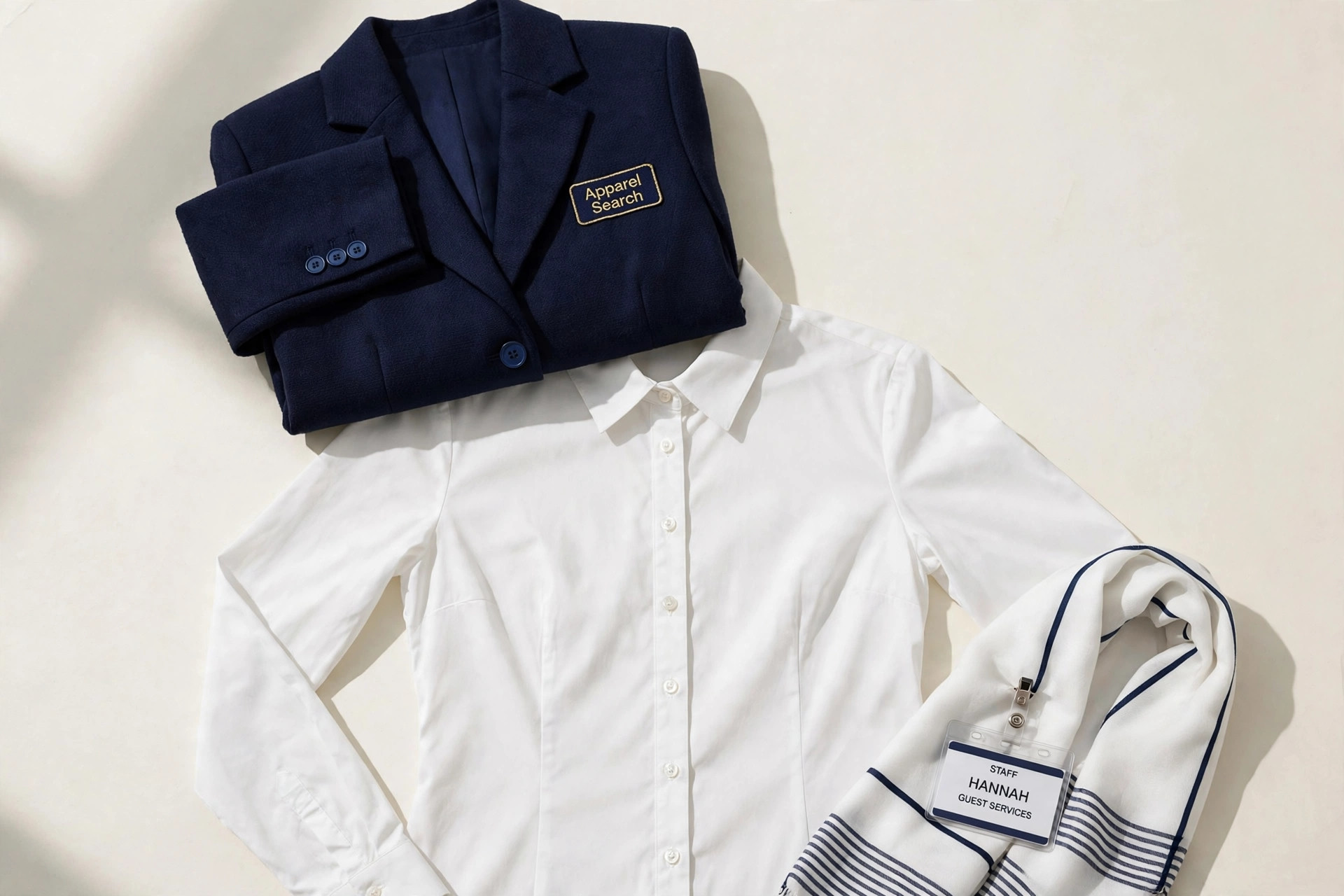
A hotel uniform has to do two jobs at once: tell the guest, instantly, who can help them — and survive being worn, washed and worn again two hundred times a year. Hospitality uniforms cover a whole cast: the front desk agent's blazer, the concierge's tailored suit, housekeeping's practical tunic, the bell attendant's waistcoat, the valet's weatherproof layers and the in-house restaurant team's shirts and aprons. Each role's uniform is designed around what that job actually does all day.
This guide walks the departments in turn, then covers the fabrics, sizing and branding decisions employers and staff face. It joins our healthcare-focused guides — the women's healthcare uniforms and nurse uniforms guides — in mapping the uniform families, and links to the general women's uniforms guide that indexes them all.
Uniforms by Department
Front desk and concierge wear the property's most formal kit: a tailored blazer or suit, shirt or blouse, a scarf or tie in brand colours, and a name badge guests can read at a glance. Housekeeping uniforms prioritise movement and pockets — a tunic or wrap dress in a breathable poly-cotton, with trousers or a skirt designed for bending, lifting and pushing a cart; many properties now offer trousers as the standard for everyone. Bell, door and valet staff need weather range: waistcoats and jackets layered over shirts, with warm, showerproof outer layers for the door in winter.
Food and beverage teams bridge into the server uniforms covered in their own guide: shirts, waistcoats, aprons and black trousers, with banqueting staff a step more formal than the coffee shop. Spa and leisure staff wear tunic-and-trouser sets close to the salon and spa uniforms in this cluster. The design rule across departments: one colour story and logo system, graded formality — guests should read the whole team as one property.
Fabrics, Fit and Sizing a Whole Team
Hospitality fabrics earn their keep in the laundry. Polyester and poly-cotton blends dominate because they release stains, hold colour and dry fast; suiting-weight stretch fabrics serve the desk roles. Anything worn against food, cleaning chemicals or weather needs its care label checked against the property's actual wash temperatures — a uniform that shrinks at 60°C is a replacement order waiting to happen. Soil-release and crease-resistant finishes are worth their premium at scale.
Sizing a team means stocking a real size curve for every piece, plus a tailoring allowance for the tailored roles, and keeping spare stock: uniforms are issued in sets of three to five per person so a clean set exists every shift. Fit sessions and a simple exchange process matter more than any single garment — staff who are comfortable in the uniform wear it with noticeably more care.
Branding, Badges and Care
Branding works best at two scales: the property's colour in scarves, ties and trims, and a small embroidered logo or name badge at the chest. Giant logos cheapen tailored pieces; embroidery outlasts print on anything washed weekly. Badges should pair name with role and, in international properties, languages spoken — a small flag pin is one of hospitality's most useful uniform details.
Care is usually centralised: the property launders or contracts the laundry, and the uniform's design should assume industrial washing from the first sketch. Staff-side, the rules are simple — report damage early, return the full set at issue intervals, and never alter a uniform permanently. Employers replacing a uniform programme should plan a changeover window and a disposal route for the old kit, ideally textile recycling rather than landfill.
Common Questions
What do hotel front desk staff wear?
Typically a tailored blazer or suit in the property's colours, a shirt or blouse, a scarf or tie, and trousers or a skirt, finished with a readable name badge. Luxury properties dress the desk and concierge most formally; the uniform grades down in formality through housekeeping and back-of-house roles.
What fabric is best for hospitality uniforms?
Polyester and poly-cotton blends for most roles: they release stains, resist creasing, hold colour through frequent hot washes and dry quickly. Tailored desk pieces use suiting-weight fabrics with some stretch for comfort across a full shift.
How many uniform sets should each employee get?
Commonly three to five sets per person, so a clean set is available every shift while others are in the laundry. The exact number depends on shift patterns and whether the property launders centrally or staff wash their own.
More Trade Uniform Guides in This Cluster
The other trade uniform guides in this wave — hospitality, security, salon and spa, mechanic and restaurant server uniforms:
Workwear & PPE Guides
Protective workwear systems from Apparel Search — hi-vis, flame-resistant and arc-rated clothing, welding and chainsaw protection, and safety footwear:
More to Explore on Apparel Search
From greeting guests to guarding them — continue to the security uniforms guide.
Next: Men's Security Uniforms Guide: Guard Uniforms & Kit »Looking for Women's Clothing Stores?
This guide helps you choose hospitality uniforms matched to each department's work. To browse where to buy, visit our womens clothing store directory, where you can find retailers that carry them.