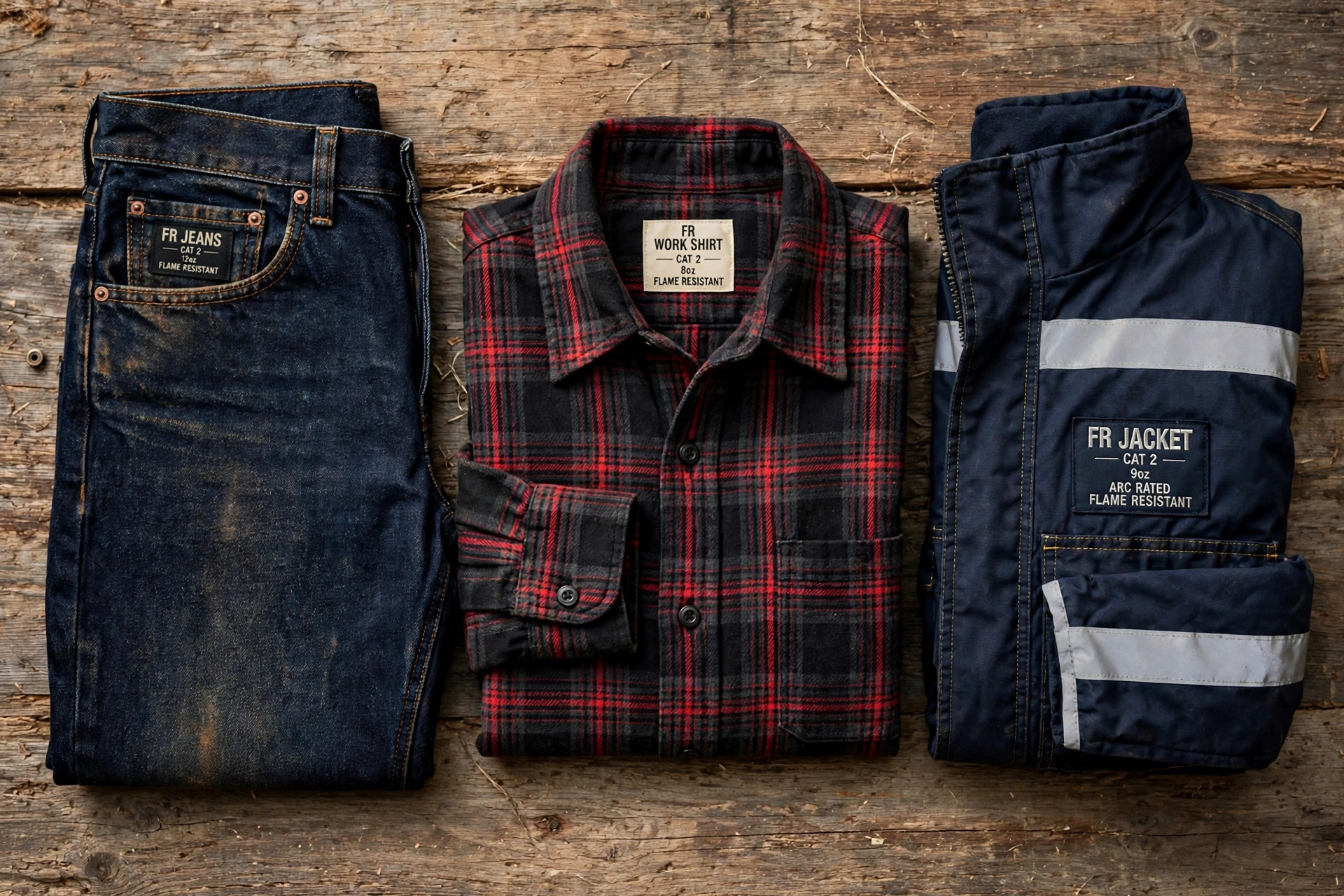
Flame-resistant (FR) clothing is made from fabrics that resist ignition and self-extinguish once the ignition source is removed, rather than continuing to burn or melting against the skin. FR is the foundation layer of protection for two different hazards: flash fire (addressed by NFPA 2112 garments) and electric arc flash (addressed by arc-rated clothing). Note the wording: FR is not “fireproof,” and it differs from older “flame retardant” descriptions of fabrics that may not meet today’s garment standards.
Inherent vs Treated FR
Inherent FR fabrics are flame-resistant because of the fiber chemistry itself — fibers such as aramids and modacrylics, and blends built around them. The protection is part of the fiber, so it does not wash out, though fabric can still be damaged by bleach, contamination, or wear. Treated FR fabrics, most often cotton or cotton blends, receive a chemical treatment that gives the finished fabric FR properties; the treatment is engineered to last the garment’s service life when laundered correctly. Both routes can meet the same garment standards — the label and certification, not the route, tell you what a garment has proven.
Who Wears FR, and Choosing It
Electricians and utility crews, oil, gas and petrochemical workers, refinery and chemical plant staff, welders (see welding apparel), and foundry and smelter crews all wear FR as daily workwear. Choose from the hazard assessment: which hazard (arc, flash fire, molten splash, or a combination), which standard and rating the task requires, then fit and comfort — FR only protects when it is worn, closed, and covers what it should. Shirts worn untucked or with sleeves rolled change the protection picture, so programs specify how garments are worn, not just which are issued.
Care and Limits
Launder FR strictly per the label: typically wash separately, avoid chlorine bleach and fabric softeners unless the manufacturer allows them, and remove flammable contaminants promptly. Inspect for holes, worn areas, and broken closures; repair only with FR fabric and thread to manufacturer instructions, or retire the garment. FR reduces burn injury and buys escape time — it does not make the wearer fireproof, and prolonged exposure, heavy fuel contamination, or wearing meltable synthetics underneath can defeat it.
FAQs
- What is the difference between FR and arc-rated?
- FR is the broader property: the fabric resists ignition and self-extinguishes. Arc-rated garments are FR garments additionally tested for arc flash energy and given an arc rating. Flash-fire work calls for garments certified to NFPA 2112; electrical work calls for arc ratings matched to the assessment.
- Does FR protection wash out?
- Inherent FR is part of the fiber and cannot wash out. Treated FR is designed to last the garment's service life when laundered per the label. Incorrect washing — bleach, softeners, or home laundry mistakes the manufacturer warns against — can degrade either type.
- Can FR clothing be repaired?
- Yes, but only with FR materials and thread, following the manufacturer's instructions, and only where the garment's structure allows. Heavily damaged, contaminated, or worn-through garments should be retired instead.
Workwear & PPE Guides
This guide is part of the Apparel Search workwear and PPE systems series. Browse the full series and the related trade uniform guides below.
- High-Visibility Clothing
- Hi-Vis Classes
- Arc-Rated Clothing
- NFPA 2112
- Welding Apparel
- Chainsaw Chaps
- Cut-Resistant Sleeves
- Disposable Coveralls
- Protective Aprons
- Safety Toe Boots
- Composite Toe Boots
- Specialty Safety Toe Features
- Steel-Toe Boots (Men's Clothes Guide)
Trade Uniform Guides
Apparel Search: explore the Clothes Guide and shopping directory for more workwear and uniform resources.
Please note: Flame-resistant clothing requirements are maintained by bodies including the National Fire Protection Association (NFPA) and the Occupational Safety and Health Administration (OSHA), and revised over time. This page is a general overview provided for information only — it is not legal or compliance advice, and it may not reflect the most current version. Always confirm the current requirements directly with NFPA and OSHA rather than relying on this website.