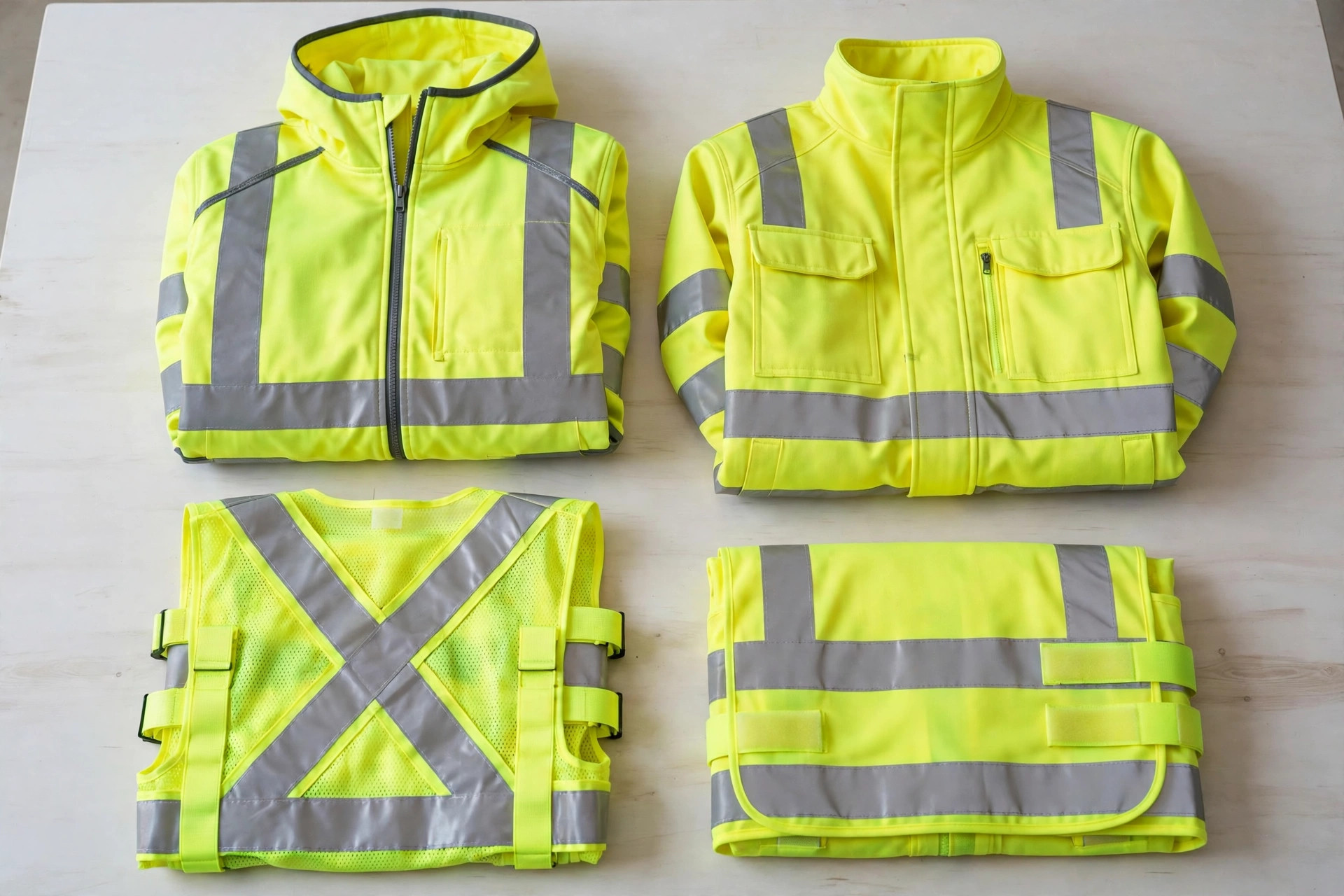
High-visibility clothing (hi-vis) makes a worker stand out against the work environment and traffic, day and night. Garments combine fluorescent background material, which catches the eye in daylight, with retroreflective tape, which returns headlight beams after dark. In the United States the benchmark is ANSI/ISEA 107, which organizes garments by type (where the work happens) and performance class (how much visibility the garment provides).
Types: Where the Work Happens
ANSI/ISEA 107 sorts hi-vis into three types. Type O (off-road) covers workers who are not exposed to roadway traffic — warehouse staff, for example — where vehicles move slowly and visibility needs are lowest. Type R (roadway) is for workers exposed to traffic on public roads and temporary traffic control zones: road crews, utility workers, surveyors, and crossing guards. Type P (public safety) serves police, fire, and emergency responders, with designs that allow access to duty belts and equipment while keeping the wearer conspicuous. The type matters because it sets which performance classes are available and how the garment is cut.
Classes: How Much Visibility
Within each type, performance classes step up the amount of fluorescent background material and reflective tape, the width of that tape, and whether sleeves are covered. Higher classes suit faster traffic, poorer light, and more complex visual backgrounds. Our companion guide, Hi-Vis Classes 1, 2 and 3 Compared, walks through the differences garment by garment.
Choosing and Caring for Hi-Vis
Start from the employer’s hazard assessment: traffic speed, lighting, weather, and how much the background competes for attention. Fluorescent yellow-green is the most common background color, with fluorescent orange-red favored where yellow-green blends into the surroundings or where company color coding helps. Fit matters — a vest worn open, or sleeves pushed up, loses the coverage its class assumes. Wash hi-vis as the label directs and retire it when the fluorescent color fades, the tape cracks or peels, or the garment is heavily soiled: a dirty or faded garment may look intact yet no longer perform. Hi-vis is one layer of a workwear system; pair it with the right safety toe boots and task-specific protection from the guides below.
FAQs
- What is the difference between hi-vis types and classes?
- Type describes where the work happens — off-road (O), roadway (R), or public safety (P). Class describes how much visibility the garment provides through its background material and reflective tape. A garment is specified by both, such as Type R, Class 2.
- Does a hi-vis T-shirt count the same as a vest?
- It can, if it is labeled to the same type and class. What matters is the labeled performance, not the garment style — but a shirt worn under other clothing, or with sleeves covered, may not deliver the coverage its label assumes.
- When should hi-vis clothing be replaced?
- Replace it when the fluorescent color has noticeably faded, reflective tape is cracked, peeling or obscured by dirt or paint, or the garment is torn. Washing per the care label extends its life, but no hi-vis garment lasts forever.
Workwear & PPE Guides
This guide is part of the Apparel Search workwear and PPE systems series. Browse the full series and the related trade uniform guides below.
- Hi-Vis Classes
- Arc-Rated Clothing
- NFPA 2112
- Flame-Resistant Clothing
- Welding Apparel
- Chainsaw Chaps
- Cut-Resistant Sleeves
- Disposable Coveralls
- Protective Aprons
- Safety Toe Boots
- Composite Toe Boots
- Specialty Safety Toe Features
- Steel-Toe Boots (Men's Clothes Guide)
Trade Uniform Guides
Apparel Search: explore the Clothes Guide and shopping directory for more workwear and uniform resources.
Please note: ANSI/ISEA 107 high-visibility requirements are maintained by ANSI and the International Safety Equipment Association (ISEA) and revised over time. This page is a general overview provided for information only — it is not legal or compliance advice, and it may not reflect the most current version. Always confirm the current requirements directly with ANSI and the International Safety Equipment Association (ISEA) rather than relying on this website.